Owner’s manual
 Error Codes


What is the difference between force defrost RD and FD?
On Samsung model RFG297ACRS, RD (refrigerator defrost) runs a defrost cycle focused on the fresh food (refrigerator) evaporator area, while FD (forced defrost) is the broader service defrost used to clear heavier frost conditions that can affect multiple cooling and ice-making functions. See the RFG297ACRS owner's manual for your control-panel button layout.
What each mode is used for
- RD (refrigerator defrost): Use when the fresh food section has frost buildup symptoms (warm fridge, restricted airflow, fan noise from ice contact).
- FD (forced defrost): Use when you need a more complete defrost to address widespread frost or ice-related issues (for example, ice buildup affecting freezer airflow or ice maker operation).
Common symptoms that point to RD vs. FD
- Choose RD when you notice:
- Fresh food temps rising while freezer seems normal
- Frost behind the refrigerator evaporator cover
- Evaporator fan noise that changes when the door opens
- Choose FD when you notice:
- Heavy frost or ice affecting cooling performance overall
- Ice maker problems tied to ice buildup
- Repeated airflow blockage symptoms after normal operation resumes
Quick comparison
| Mode | What it targets | Best for | What you should watch for |
|---|---|---|---|
| RD | Refrigerator (fresh food) defrost system | Fridge-only frost and airflow issues | Fridge temp recovery and fan noise improvement |
| FD | Full forced defrost routine | Deeper, broader frost clearing and service checks | Overall airflow improvement and ice-related recovery |
Why it matters
Using the right defrost mode helps you diagnose the real problem faster. If RD improves refrigerator airflow but FD is repeatedly needed, the issue often points to a defrost-system component or airflow restriction that needs inspection.
Parts that commonly relate to frost and defrost symptoms
If symptoms return after defrosting, these model-compatible parts are commonly involved:
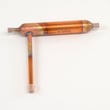
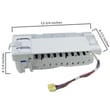
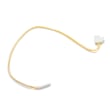
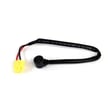
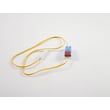
- Refrigerator protector DA47-00243C (defrost bi-metal thermostat style component)
- Kenmore pro refrigerator temperature sensor DA32-10105X (temperature sensing feedback)
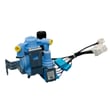
- Refrigerator evaporator fan motor DA31-00146H (moves air across the evaporator)
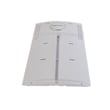
- Refrigerator cabinet drain tube assembly DA97-04049H (helps prevent drain icing and water backup)
You can order replacement parts for RFG297ACRS from the parts list for this model, or search by model number on Sears PartsDirect.
Last updated: February 2026
Is it okay to use a generic water filter in a Samsung refrigerator?
For the Samsung RFG297ACRS refrigerator, we do not recommend using a generic water filter. The owner’s manual specifically instructs using Samsung brand filters to reduce the risk of leaks and water damage, and it also notes the filter should be replaced about every 6 months (then flushed before use). See the owner's manual.
What we recommend for this model
- Use the correct Samsung replacement filter for your RFG297ACRS.
- Replace the filter about every 6 months (sooner if water flow slows or taste changes).
- After installing a new filter, flush water through it before drinking.
- Reset the filter indicator after replacement (your manual explains the exact button sequence).
- Keep water pressure in the proper range so the ice maker and dispenser work correctly.
Compatible replacement part to use
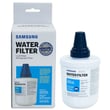
For this model page, the listed replacement filter is:
If you are ordering parts beyond the filter, you can also search by model number on Sears PartsDirect.
Generic vs Samsung brand filter: quick comparison
| Option | Fit and leak risk | Water quality consistency | Best use case |
|---|---|---|---|
| Samsung brand filter | Lowest risk on this model | Most consistent | Recommended for RFG297ACRS |
| Generic “compatible” filter | Higher risk (fit varies) | Varies by brand | Avoid for this model |
Why it matters
A water filter that does not seal correctly can drip inside the fresh food compartment, cause dispenser issues, and reduce ice maker performance. Using the correct filter also helps maintain steady water flow for filling and ice production.
Last updated: February 2026
What is the most common problem with Samsung refrigerators ice?
The most common ice problem we see on Samsung refrigerator model RFG297ACRS is the ice maker freezing up or getting blocked by ice buildup. The most frequent triggers are low water pressure, restricted flow from an overdue filter, or air trapped in the water line after service.
Quick checks that fix most ice issues
- Confirm the ice maker is turned on (not set to No ICE).
- Verify water pressure is 20 to 125 psi (required for proper ice maker fill).
- Dispense water for at least 2 minutes after any water line work to purge trapped air.
- Replace the water filter on schedule to prevent slow fill and small cubes.
- Remove clumped ice and make sure the ice bin is fully seated.
What symptoms usually mean
| Symptom | Most likely cause | What we recommend first |
|---|---|---|
| No ice production | Ice maker off, low pressure, air in line | Turn on ice, confirm pressure, purge air |
| Small or hollow cubes | Restricted water flow | Replace filter, confirm pressure |
| Clumped ice or jam | Partial fill, bin not seated | Clear ice, reseat bin |
| Freezing up | Low fill, repeated partial harvest | Fix water flow, then clear buildup |
Parts that commonly relate to ice and water flow
If the checks above do not restore normal ice production, these model-matched parts are often involved:
- Samsung refrigerator water filter DA29-00003G (restricted flow affects cube size and fill)
- Refrigerator ice maker assembly da97-07365g (ice maker mechanism or internal failure)
- Refrigerator ice bin DA97-11117A (poor fit, cracks, or jams can block dispensing)
Why it matters
Your ice maker depends on steady water pressure and consistent fill volume. When pressure drops below 20 psi or flow is restricted, the ice maker underfills, leading to small cubes, clumping, and freeze-ups.
For model-specific control settings and operating steps, use the RFG297ACRS manual. For parts ordering, use the parts list for this model or search by model number on Sears PartsDirect.
Last updated: February 2026