Installation guide
 Owner’s manual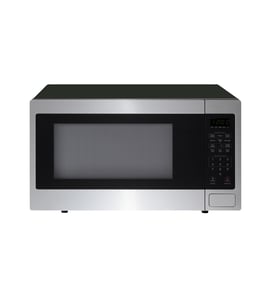




Can you use a hood microwave on the counter?
A hood (over-the-range) microwave is designed to be mounted to a cabinet and wall, not set on a countertop. For safe operation, we recommend using a true countertop model like your Jenn-Air JMC1116AS0 as a countertop unit and following the placement and electrical requirements in the installation guide.
What’s the difference between a hood microwave and a countertop microwave?
Over-the-range (hood) microwaves rely on a specific mounting method for support, ventilation, and safe clearances. Countertop microwaves are built to sit on a flat, stable surface with the required airflow around the cabinet.
Key differences:
- Mounting: hood units mount to cabinetry and wall; countertop units sit on the counter
- Ventilation: hood units are designed to vent through a duct or recirculate through filters
- Clearances: hood units assume specific spacing above a cooktop
- Power cord routing: hood units often assume an upper cabinet outlet
- Stability: hood units are not intended to be “free-standing” on a counter
Safe setup checklist for JMC1116AS0 on a countertop
Use these basics to avoid nuisance shutoffs, overheating, or electrical issues:
- Place the microwave on a level, sturdy surface
- Keep air openings clear (do not block side or rear vents)
- Plug into a properly grounded 3-prong outlet
- Do not use an extension cord or adapter
- Keep the cord positioned so it cannot be pinched or pulled
Electrical and installation notes that matter
Your JMC1116AS0 documentation emphasizes grounding and avoiding extension cords. That guidance is important because microwaves draw significant current and need a reliable ground path to reduce shock risk.
| Setup item | What we recommend | Why it matters |
|---|---|---|
| Outlet type | Grounded 3-prong | Reduces shock risk and nuisance issues |
| Extension cord | Do not use | Prevents overheating and voltage drop |
| Surface | Flat and stable | Prevents vibration and turntable problems |
Why it matters
Using the wrong microwave type in the wrong location can create clearance, ventilation, and stability problems. Using the correct appliance type for the installation keeps heating performance consistent and helps prevent avoidable electrical and airflow issues.
Last updated: February 2026
What is the average life of a countertop microwave?
A countertop microwave like the Jenn-Air JMC1116AS0 typically lasts 7 to 10 years with normal household use. Heavy daily use, poor ventilation, and running it empty can shorten lifespan; consistent cleaning and proper turntable operation help it reach the upper end.
Typical lifespan and what affects it
Most 1.6 cubic foot countertop microwaves land in the same general range, but these factors make the biggest difference:
- Usage frequency: multiple heat cycles per day wears components faster
- Ventilation and clearance: blocked airflow traps heat and stresses internal parts
- Cleanliness: grease and food buildup can cause odors, arcing, and overheating
- Power quality: frequent breaker trips or unstable power can damage electronics
- Turntable system condition: a jammed tray increases strain and can cause noise and uneven heating
Signs it is near end of life
If your JMC1116AS0 shows these symptoms repeatedly, replacement or repair becomes more likely:
- Food heats unevenly or takes much longer than it used to
- Loud humming, grinding, or rattling during operation
- Sparking/arcing inside the cavity (not caused by foil or metal)
- Door does not close firmly or the unit runs only when you push on the door
- Keypad or display becomes intermittent
Quick checks that can extend service life
Use these practical habits to reduce wear:
- Keep the cavity and door seals clean; wipe spills right away
- Never run the microwave empty
- Use microwave-safe containers only
- Confirm the tray rotates freely and sits flat
- Plug into a grounded outlet and avoid extension cords (see the installation guide)
Common turntable parts that wear
If the microwave is noisy, the tray wobbles, or rotation is inconsistent, these parts are often involved:
| Symptom | Common cause | Example part for JMC1116AS0 |
|---|---|---|
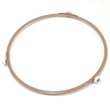
| Tray not turning | worn support or coupler | Microwave turntable tray support W10451792 |
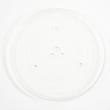
| Tray rocks or slips | damaged tray | Microwave glass tray WPW10451786 |
| Grinding under tray | worn coupler/shaft | Shaft turn WPW10451789 |
Why it matters
Microwaves that are nearing end of life often lose heating efficiency first, which increases cook times and can lead to inconsistent food temperatures. Catching turntable and fit issues early also helps prevent extra vibration and wear.
Last updated: February 2026
What is the most reliable countertop microwave?
For long-term reliability, we recommend choosing a simple, mainstream countertop microwave in the size and power range you actually use most; fewer “combo” features typically means fewer failure points. If you already own the Jenn-Air JMC1116AS0, keeping the turntable system complete and the unit properly powered helps it stay dependable.
What “reliable” means for countertop microwaves
Reliability usually comes down to consistent heating, a door that latches correctly, stable power delivery, and a turntable that runs smoothly.
Common reliability factors we see:
- Stable power: use a dedicated, properly grounded outlet (no extension cord)
- Simple controls: fewer specialty modes means fewer components to fail
- Good airflow: keep vents clear and don’t block the cabinet opening
- Turntable health: tray, support, and coupler must sit flat and rotate freely
- Sensible loads: avoid running the microwave empty and avoid oversized, heavy dishes
Practical buying guidance (what to look for)
When you’re comparing brands and models, these specs and design choices tend to correlate with fewer issues over time.
| What to compare | Best target for reliability | Why it matters |
|---|---|---|
| Wattage | About 900 to 1200 W | Strong performance without pushing long cook times |
| Controls | Straightforward keypad + basic sensor options | Less complexity, easier troubleshooting |
| Turntable design | Standard glass tray with solid support ring | Smoother rotation, less noise and wear |
| Electrical needs | 120 V, 60 Hz on a 15 or 20 A circuit | Reduces nuisance trips and heat stress |
If you own a Jenn-Air JMC1116AS0: quick reliability checks
These are the most common “it’s acting up” causes we see that are easy to correct.
- Confirm the glass tray is seated correctly on the coupler and support
- Replace worn turntable parts if the tray wobbles, drags, or stops
- Plug directly into a grounded outlet; do not use an extension cord
- Keep at least a little clearance around the unit for ventilation
- Clean the cavity and door area so the door closes and latches smoothly
If you need turntable parts for this model, start with the microwave glass tray WPW10451786 and the microwave turntable tray support W10451792. For model-specific operating and care guidance, use the owner's manual.
Why it matters
A “reliable” microwave is one that heats evenly without stressing electrical components or mechanical parts. Keeping the JMC1116AS0 properly powered and the turntable system complete prevents many of the most common performance complaints.
Last updated: February 2026