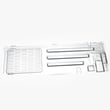
Owner’s manual
 Error Codes



Is GE Café considered high end?
Yes. GE Café is generally considered a high-end line within the mainstream GE family, offering premium styling and upgraded features compared with standard GE models; it is positioned below true luxury built-in lines but above typical mid-range appliances.
GE organizes its refrigerator offerings in tiers; Café typically sits above many standard models in design and feature set.
- GE (standard): core features, value-focused
- GE Profile: premium features and performance upgrades
- GE Café: premium design-forward line with upgraded features and finishes
- GE Monogram: luxury/built-in category
For model-specific features on your GE GDE25ESKNRSS bottom-mount refrigerator, we recommend checking the feature list and specifications in the owner's manual.
“High end” can mean different things depending on whether you care most about appearance, features, or long-term serviceability.
- More premium exterior finishes and hardware styling
- More advanced temperature management and controls
- More convenience features (ice and water options, alarms, lighting)
- Higher parts cost for certain assemblies (controls, doors, dispenser components)
| Category | Typical focus | Typical price tier | Common examples |
|---|---|---|---|
| Mainstream premium | Style + features | Mid-to-upper | GE Profile, GE Café |
| Luxury/built-in | Integrated design + pro features | Upper | GE Monogram, other luxury brands |
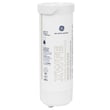
If you are comparing lines or planning a repair, “high end” often correlates with more electronics and specialized parts. For example, water filtration and control components can be more model-specific; for this refrigerator, the GE refrigerator water filter XWFE is a common maintenance item.
Last updated: February 2026
What is the most common problem with a GE refrigerator?
For a GE refrigerator like model GDE25ESKNRSS, the most common service complaint is not cooling properly (fresh food warm, freezer warming, or temperatures swinging). The good news is that many “not cooling” calls trace back to airflow, settings, or a few high-wear parts such as the evaporator fan, air damper, or temperature sensor; see the GDE25ESKNRSS owner's manual for model-specific checks.
- Not cooling or weak cooling: warm fresh food section, soft ice, thawing freezer items
- Strange noises: buzzing, rattling, clicking, or fan-related noise changes
- Ice maker not working: no ice, small cubes, slow production
- Water dispenser issues: slow flow, dripping after dispensing
- Water leaks: puddles under the unit or inside compartments
- Door not sealing or not closing: warm spots, moisture, frost, door alarm
- Confirm controls are set to normal temps (typical targets: 37°F fresh food, 0°F freezer).
- Make sure food is not blocking rear air vents; the manual notes food too close to the back vent can cause freezing or poor airflow.
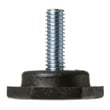
- Check doors and drawers close fully; leveling legs that need adjustment can prevent self-closing.
- If the dispenser drips, hold the glass under the dispenser 2 to 3 seconds after releasing the button; purge air by dispensing water for at least 2 minutes.
- Clean condenser area and ensure good airflow around the cabinet.
If the quick checks do not help, these parts are frequent suspects for temperature complaints:
| Symptom | Common part to check | Example part on this model |
|---|---|---|
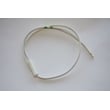
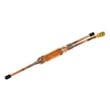
| Warm fresh food, freezer OK or fluctuating | Airflow control | Refrigerator air damper WR60X27396 |
| Warm temps, poor temperature accuracy | Temperature sensing | GE profile refrigerator temperature sensor WR55X10025 |
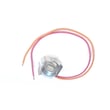
| Frost buildup, warming over time | Defrost control/thermostat | Refrigerator defrost bi-metal thermostat WR50X10069 |
Cooling problems can spoil food quickly and force the compressor to run longer, which increases energy use and can accelerate wear on components like fans, sensors, and control boards.
Last updated: February 2026
How to remove bottom grille on GE refrigerator?
On the GE GDE25ESKNRSS bottom-mount refrigerator, the bottom grille (base grille) typically comes off by releasing its retaining tabs or removing a couple of screws, then pulling the grille straight out from the front. Use steady, even pressure so the plastic clips do not crack.
- Unplug the refrigerator if your hands will be near wiring or the condenser fan area.
- Protect the floor with cardboard or a towel to prevent scratches.
- If you need to pull the refrigerator out, raise the front leveling legs first and pull straight out (not sideways). See the owner's manual.
- Look along the top edge of the grille for screws (some versions use Phillips-head screws).
- If screws are present, remove them and set them aside.
- Grip the grille near both ends.
- Pull the grille straight toward you to pop the clips free.
- If it feels stuck, press in gently near the clip locations while pulling forward (do not twist).
- Check for hidden fasteners near the corners.
- Make sure the doors are closed so they do not interfere with your grip.
- Warm the room slightly; cold plastic clips can be brittle.
Line the grille up with the slots, push straight in until the clips seat, then reinstall any screws.
| What you see | What to do |
|---|---|
| Phillips screws along the top edge | Remove screws first, then pull grille forward |
| No screws, only clip points | Pull straight out to release clips |
Removing the bottom grille gives you access for basic cleaning (dust on the condenser area) and for checking airflow. Good airflow helps the compressor run efficiently and keeps temperatures stable.
Last updated: February 2026