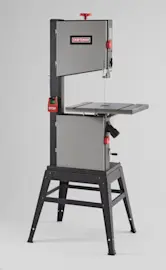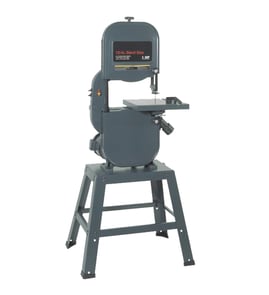

What size blade is on the Ryobi BS-360NR?
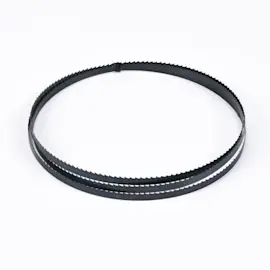
The Ryobi BS-360NR band saw uses a blade that is 59-1/4 to 59-1/2 inches long. When you replace the blade, match the length first, then choose the blade width and tooth count (TPI) based on the material and the type of cut.
When shopping for a replacement band saw blade, we recommend matching these specs in this order:
- Blade length: 59-1/4 to 59-1/2 in.
- Blade width: use the same width as your current blade (common band saw widths vary by saw setup)
- Tooth count (TPI): higher TPI for thinner material and smoother cuts; lower TPI for thicker stock and faster cutting
- Tooth style/material: wood blades differ from metal-cutting blades
- Blade condition: replace if teeth are dull, missing, or the blade is kinked or cracked
| What you’re cutting | Typical blade choice | What you’ll notice |
|---|---|---|
| Curves in wood | Narrower blade, higher TPI | Tighter turning, slower feed |
| Straight cuts in wood | Wider blade, moderate TPI | Straighter tracking |
| Smooth finish cuts | Higher TPI | Less tear-out, slower cutting |
A blade that is even slightly off in length can be difficult to tension correctly, which leads to blade drift, the blade slipping off the wheels, ragged cuts, and slow cutting. Correct length and proper tension help the wheels, tires, guides, and tracking system work the way they should.
If you’re replacing the blade or troubleshooting cut quality, these step-by-step resources help:
- How to replace a band saw blade
- Band saw not cutting straight
- Band saw cutting slowly
- Band saw blade slips off the wheel
Last updated: February 2026
What are the two types of band saws?
The two main types of band saws are vertical band saws and horizontal band saws. On your Ryobi BS-360NR (a vertical-style shop band saw), the workpiece is guided by hand across the table into the blade, which is ideal for curved and straight cuts.
| Type | Blade orientation | How the cut is made | Common uses |
|---|---|---|---|
| Vertical band saw | Vertical loop | You feed and steer the material by hand | Curves, resawing, general woodworking |
| Horizontal band saw | Horizontal loop | The saw head lowers through the material (material is usually clamped) | Metal cutting, repeatable straight cuts |
- Vertical band saw: Has a flat table; you push the stock into the blade.
- Horizontal band saw: Has a vise or clamp; the saw frame pivots or drops to cut.
- Porta-band (portable): A handheld variation; still generally treated as a band saw category, but not the main “two types.”
Choosing the right type affects cut accuracy, safety, and blade selection. Vertical saws like the BS-360NR depend heavily on correct blade tension, tracking, and guide alignment for straight, smooth cuts.
- If cuts feel slow or you have to force the stock, use band saw cutting slowly.
- If the blade wanders or drifts off your line, use band saw not cutting straight.
- For basic repair and maintenance topics, use band saw repair guide landing page.
Last updated: February 2026
Why are band saws so expensive?
Band saws cost more because you are paying for a rigid frame, accurate wheel and guide alignment, and enough motor power to cut consistently without stalling. On a Ryobi BS-360NR band saw, the price reflects the saw’s build quality, cutting capacity, and the parts that keep the blade tracking straight and safely.
- Frame and wheel rigidity: Heavier cast or welded frames reduce vibration and improve cut accuracy.
- Motor and drive system: More horsepower and better pulleys or belt drive components handle thicker stock.
- Blade guidance and tracking: Better guide bearings/blocks, tracking adjustment, and tensioning systems improve straight cuts.
- Cutting capacity: Larger throat width and resaw height typically increase cost.
- Fit, finish, and durability: Better bearings, trunnions, and hardware last longer under load.
- Safety and convenience features: Blade guards, effective dust collection ports, and quick-release tension levers add cost.
| Tier | Typical build | Typical result |
|---|---|---|
| Entry-level benchtop | Lighter frame, simpler guides | Fine for hobby cuts; more tuning needed |
| Mid-range shop saw | Stiffer frame, improved guides | Straighter cuts; better resaw performance |
| Heavy-duty/industrial | Very rigid frame, premium guides and wheels | High accuracy, long duty cycles, less drift |
A band saw that stays aligned cuts faster, wastes less material, and produces smoother edges. When the saw is underbuilt, you often see blade drift, slow cutting, and ragged cuts, which leads to more sanding, rework, and blade wear.
- Match blade width and TPI to the material (fine TPI for thin stock, coarser for thick stock).
- Keep blade tension and tracking set correctly.
- Set the blade guides close to the workpiece.
- Use a sharp blade and replace it when it starts burning or wandering.
- If performance drops, follow our troubleshooting for band saw cutting slowly and band saw not cutting straight.
Last updated: February 2026
Are band saw blades interchangeable?
Band saw blades are only interchangeable when the replacement blade matches your Ryobi BS-360NR band saw’s required length, width, and thickness, and it fits the wheel and guide setup. If any of those specs differ, the blade can slip, track poorly, or cut inaccurately.
When you choose a blade for a band saw, these specs determine whether it will physically fit and run correctly:
- Blade length: must match the saw’s wheel spacing and frame design
- Blade width: must be compatible with the saw’s blade guides and wheel crown
- Blade thickness (gauge): affects how the blade bends around the wheels
- Tooth pattern (TPI): affects cut speed and finish, but does not change fit
- Blade type: wood-cutting vs metal-cutting blades are not interchangeable for safe, effective cutting
Even when a blade fits, the wrong tooth count or width can cause slow cutting, drift, or rough edges.
| Task | Typical blade width | Typical TPI range | What you’ll notice if it’s wrong |
|---|---|---|---|
| Straight cuts in thicker wood | 1/2 in. to 3/4 in. | 2 to 6 | Wandering cuts, burning, slow feed |
| General purpose wood cutting | 1/4 in. to 3/8 in. | 6 to 10 | Ragged edges, vibration |
| Tight curves | 1/8 in. to 3/16 in. | 10 to 18 | Blade binds, stalls, breaks |
Use these steps to avoid ordering a blade that will not track correctly on the BS-360NR:
- Measure the current blade length (or confirm the length printed on the blade)
- Confirm the maximum blade width your guide system can support
- Inspect the tires and wheels for wear that can throw off tracking
- Set blade tension and tracking after installation
- Adjust guide blocks/bearings so they support the blade without pinching it
For step-by-step installation and setup basics, follow our guide: how to replace a band saw blade.
A blade that does not match the saw’s required size can ride off the wheels, cut with heavy drift, or wear out tires and guides faster. Matching blade length and width first gives you stable tracking; then you can choose TPI for the material and finish you want.
Last updated: February 2026
What are the parts of a bandsaw?
A band saw like the Ryobi BS-360NR is built around a continuous blade running on two wheels, guided by blade guides and controlled by tension and tracking adjustments. Most band saws also include a table, fence or miter gauge support, and a drive system (motor, belt, pulleys) that powers the lower wheel.
- Blade: The cutting tool; tooth style and width affect speed, straightness, and finish.
- Upper and lower wheels: Support and move the blade; the lower wheel is typically driven.
- Tires (wheel tires): Rubber or urethane bands on the wheels that help the blade grip and track.
- Blade guides (side guides and thrust bearing): Keep the blade from twisting and limit deflection.
- Tension control: Tightens the blade so it cuts accurately without slipping.
- Tracking control: Centers the blade on the wheels so it stays on during operation.
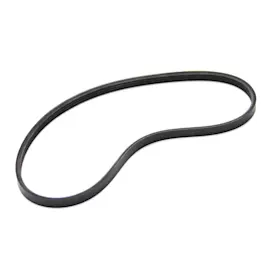
- Motor and drive system (belt and pulleys): Transfers motor power to the lower wheel.
| Area of the saw | Parts you typically find there | What to check first when performance drops |
|---|---|---|
| Upper housing | Upper wheel, tension knob, tracking adjustment, upper guides | Tracking and tension settings |
| Lower housing | Lower wheel, belt/pulleys, motor, lower guides | Belt condition and wheel/tire wear |
| Table area | Table, throat/insert, trunnions (tilt), fence/miter slot | Table square and blade-to-fence alignment |
Knowing the major parts helps you troubleshoot faster. For example, slow cutting usually points to blade condition or feed rate, while drifting cuts often trace back to guide setup, tracking, or blade selection.
- Cuts are slow: dull blade, wrong tooth pitch, too much feed pressure
- Won’t cut straight (drift): guide adjustment, tracking, blade tension, blade type
- Ragged cuts: dull blade, incorrect TPI, guides too loose
For step-by-step troubleshooting by symptom, use our DIY resources like band saw symptoms landing page and band saw not cutting straight.
Last updated: February 2026