 Owner’s manual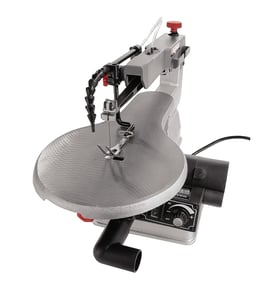
Are all scroll saw blades universal?
No. Scroll saw blades are not universal because scroll saws can use different blade attachment styles and sizes. For the Craftsman 137216100 scroll saw, we use 5-inch long blades and the saw accepts both pin-end and plain-end types; the right blade depends on your cut detail and material.
What fits the Craftsman 137216100
Our 137216100 is designed for 5-inch blades and supports pin-end or plain-end blades.
- Choose narrow blades for tight curves and intricate scroll work
- Choose wider blades for straighter cuts and larger-radius curves
- Match teeth per inch (TPI) to the material and thickness
- Install the blade with teeth pointing downward toward the table
- Tension the blade properly and recheck tension as needed
For the exact blade guidance and safety steps for this model, use the 137216100 owner's manual.
Quick blade selection guide (general)
These are practical starting points that align with how this type of scroll saw is typically used.
| What you are cutting/doing | Blade direction and style | What to prioritize |
|---|---|---|
| Tight inside cuts, small radii | Narrow blade (often higher TPI) | Control and turning radius |
| Straight lines, gentle curves | Wider blade (often lower to mid TPI) | Stability and tracking |
| Thicker wood (over 1 inch) | Stiffer blade, slower feed | Prevent bending and breakage |
| Soft metals, non-ferrous metals | Fine tooth blade, slower speed | Heat control and smoother cut |
Why it matters
Using the wrong blade type or size can cause poor tracking, rough edges, frequent blade breakage, and unsafe workpiece lift. Correct blade selection and correct tooth direction help the saw cut on the downstroke and keep the workpiece controlled.
Buying the right blade
We recommend matching blades by length (5-inch) and end type (pin or plain) first, then choosing width and TPI for your project. You can search blades and other replacement parts by model number on Sears PartsDirect.
Last updated: February 2026
Should I get pinless or pinned scroll saw blades?
For the Craftsman 137216100 scroll saw, we recommend pinless (plain-end) blades for most projects because they allow tighter turns and interior cuts through small starter holes; this model is designed to use both pin-end and plain-end 5-inch blades (set the teeth pointing down and tension the blade properly). See the 137216100 owner's manual for blade installation and tension steps.
Quick pick guide (what to buy)
- Choose pinless (plain-end) for fretwork, puzzles, lettering, and tight-radius curves.
- Choose pinned (pin-end) for fast, basic cuts where you want quick blade changes.
- Use fine, narrow blades for thin stock (about 1/4 inch or less).
- Use wider blades for thicker stock; expect less ability to cut tight curves.
- Avoid dull or bent blades; they cut poorly and increase the chance of blade breakage.
Pinned vs pinless: what changes in real use
| Feature | Pinless (plain-end) | Pinned (pin-end) |
|---|---|---|
| Best for | Intricate detail, inside cuts | Simple curves, general cutting |
| Inside cuts | Excellent (fits smaller pilot holes) | Limited (needs larger hole) |
| Blade changes | Slightly slower | Often quicker |
| Common on | Most modern scroll saw setups | Some older entry-level setups |
Setup tips that matter on the 137216100
- Blade teeth must point downward toward the table.
- Tension the blade properly before starting; recheck tension as needed.
- Clamp or bolt the saw to a firm, level surface to reduce vibration and improve control.
- For best results, plan on cutting wood under 1 inch thick; thicker stock requires very slow feed to avoid twisting or bending the blade.
Why it matters
The right blade end style affects how cleanly you can cut, how small your entry holes can be for interior cuts, and how much control you have on tight curves. On the Craftsman 137216100, pinless blades unlock the most versatility because the saw supports both blade types.
If you need help finding the right blades by size and type, we recommend searching by model number on Sears PartsDirect.
Last updated: February 2026
Where can I buy Craftsman replacement parts?
You can buy replacement parts for your Craftsman scroll saw model 137216100 by using the model-based parts lookup and parts list in the 137216100 owner's manual, then ordering by model number and part number through Sears PartsDirect. This helps ensure the part matches your exact 16-inch scroll saw configuration.
Best way to get the right part for model 137216100
Use the parts list in the manual and order by the identifiers it calls out.
- Find the tool’s full model number: 137216100
- Use the parts list to identify the exact part number and description
- Match the part to the correct location on the saw (base, table, trunnion bracket, blade holders)
- Order using the model number plus the part number (this avoids look-alike hardware)
- If you are replacing an electrical component, use a qualified service technician
What information you should have before ordering
Having these details ready prevents wrong-part returns and delays.
| What to collect | Example for this model | Why it matters |
|---|---|---|
| Model number | 137216100 | Ensures you are in the correct parts list |
| Part number | From the parts list | Identifies the exact replacement |
| Part description | From the parts list | Confirms you are selecting the right item |
| Quantity needed | 1, 2, 3, etc. | Some fasteners/pads are used multiple times |
Why it matters
Scroll saw parts can look similar across models, but mounting hardware, table components, and blade-holder assemblies vary. Ordering by model number and part number is the most reliable way to get a correct-fit Craftsman replacement part.
Last updated: February 2026
What are some common scroll saw mistakes?
On the Craftsman scroll saw model 137216100, the most common mistakes are incorrect blade tension, installing the blade with teeth facing the wrong direction, feeding the work too fast, and running the saw without securing it to a stable bench. These issues cause broken blades, rough cuts, and poor control.
Mistakes we see most often (and what to do instead)
- Blade tension set wrong: Tension the blade properly before starting, then recheck and adjust as needed.
- Blade installed upside down: Make sure blade teeth point downward toward the table.
- Feeding too aggressively: Reduce feed rate; let the blade do the work.
- Twisting the blade in the cut: Turn the workpiece gradually; do not force tight curves with a wide blade.
- Saw not secured: Bolt or clamp the saw to a firm, level surface so it cannot rock or tip.
- Cutting thick stock too fast: For wood thicker than about 1 inch, guide the wood very slowly and avoid bending the blade.
Quick troubleshooting guide
| Symptom | Most likely mistake | What to change |
|---|---|---|
| Blades keep breaking | Wrong tension, overfeeding, twisting | Adjust tension, slow feed, keep work flat and steady |
| Rough or wandering cuts | Dull blade, forcing curves, grain pull | Replace blade, use a narrower blade, slow down |
| Excessive vibration | Poor mounting surface, loose hardware | Clamp/bolt securely, tighten table and mounts |
| Burning or slow cutting | Blade worn out | Replace blade more often |
Why it matters
A scroll saw is a light, precise cutting tool. When tension, blade direction, and feed rate are correct, you get cleaner cuts, longer blade life, and safer control. The 137216100 is designed for 120V, 15-amp operation, so stable mounting and safe electrical practices also help prevent interruptions and hazards.
Two model-specific reminders
- This saw uses 5-inch long pin or plain-end blades; using the wrong blade style leads to poor clamping and breakage.
- Blades wear quickly; for best results, plan on frequent blade changes during detailed work.
For the full setup, safety steps, and operating limits, follow the 137216100 owner's manual. For ordering replacement parts by model number, use the parts list for this model or search on Sears PartsDirect.
Last updated: February 2026
How thick of wood can you cut with a scroll saw?
On the Craftsman 137216100 scroll saw, you can cut wood thicker than 1 inch, but the manual’s cutting recommendations emphasize slower feed and extra care as thickness increases to prevent blade deflection and breakage. For model-specific guidance, use the 137216100 owner's manual.
What the manual recommends for thicker stock
- For wood thicker than 1 inch, guide the workpiece very, very slowly into the blade.
- Avoid bending or twisting the blade in the cut; that is a common cause of breakage.
- Expect more blade wear as thickness increases; dull blades wander and burn.
- Use the blade guard foot adjusted to rest lightly on the workpiece for better control.
- This saw uses 5-inch pin or plain-end blades; match blade style to your holders.
Practical thickness guidelines (what to expect)
Scroll saws are designed for detail work, so thicker wood is possible but slower and less forgiving.
| Wood thickness | Typical results | Best use case |
|---|---|---|
| 1/4 inch or less | Tight curves, fine detail | Ornaments, fretwork |
| 1/4 to 1 inch | Good control and speed | Most scroll-saw projects |
| Over 1 inch | Slow feed, higher drift risk | Simple shapes, gentle curves |
Blade selection and technique tips
- Use narrow blades for tight curves; use wider blades for straighter cuts (wider blades turn less tightly).
- Let the saw do the work; do not force the wood into the blade.
- Plan for more frequent blade changes when cutting thick hardwood, plywood, or particle board.
Why it matters
As wood gets thicker, the blade has more contact area in the kerf. That increases friction and side-load, which makes the blade more likely to deflect, follow grain, and break unless you slow the feed rate.
For replacement parts and accessories for the Craftsman 137216100, check the model’s parts list or search by model number on Sears PartsDirect.
Last updated: February 2026