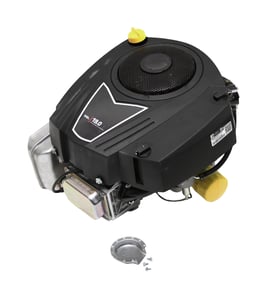

How much horsepower does a Tecumseh HM80-155135C have?
The Tecumseh HM80-155135C is an 8-horsepower (8 HP), 4-cycle lawn and garden engine. That “HM80” designation is commonly used for Tecumseh’s 8 HP horizontal-shaft engine family, which helps when matching tune-up and repair parts by model.
Quick specs at a glance
| Item | What to expect for HM80-155135C |
|---|---|
| Rated power | 8 HP |
| Engine type | 4-cycle (gas) |
| Typical orientation | Horizontal shaft |
Why horsepower matters when ordering parts
Horsepower affects which components fit and perform correctly, especially on an 8 HP engine like the HM80-155135C:
- Carburetor and governor settings: correct fuel delivery and speed control
- Recoil starter and flywheel: proper starting and ignition timing
- Muffler and exhaust: correct backpressure and mounting
- Belts and pulleys on the equipment: correct load handling for an 8 HP powerplant
How to confirm you have the right engine model
Use the engine’s ID label (often on the blower housing or near the starter) and match it exactly:
- Model: HM80-155135C
- Spec/serial numbers: use these to narrow down exact part variations
- Shaft style and diameter: confirm before ordering rotating parts
A reliable way to avoid mismatches is to use our model number search tips in how to find your appliance model number (and what it means for parts).
Why this answer is solid
Tecumseh’s HM80 series is widely identified as an 8 HP engine family, and your specific model number HM80-155135C falls within that series. That makes 8 HP the correct horsepower rating to use for troubleshooting and parts matching.
Last updated: February 2026
What year did they stop making Tecumseh engines?
Tecumseh largely stopped making new small gasoline engines when its engine manufacturing operations shut down in late 2008 (with remaining engine-related assets and parts support transitioning in 2009). For your Tecumseh HM80-155135C 8-hp 4-cycle engine, that means the engine itself is typically older, but many service parts can still be sourced by model and spec.
What this means for HM80-155135C owners
Even though new Tecumseh engines were no longer being produced after the 2008 to 2009 transition period, HM80-series engines remain very serviceable. The key is matching parts by the exact model and any spec numbers stamped on the engine shroud or ID tag.
Common maintenance and repair items to plan for:
- Carburetor cleaning or rebuild (hard starting, surging)
- Ignition tune-up (spark plug, ignition coil testing)
- Fuel system refresh (fuel line, filter, fresh fuel)
- Governor and throttle linkage inspection (hunting, overspeed)
- Oil leak checks (crank seals, valve cover area)
Quick timeline (high-level)
| Milestone | Typical timeframe | What you may notice today |
|---|---|---|
| Engine manufacturing winds down | 2007 to 2008 | Fewer “new engine” options in the market |
| Manufacturing operations close | December 2008 | Production effectively ends |
| Parts and remaining assets transition | 2009 | Parts availability varies by model and supplier |
Why it matters when buying parts
Knowing Tecumseh engine production ended around 2008 to 2009 helps set expectations: you usually repair these engines by replacing wear items and tuning the fuel and ignition systems, not by looking for brand-new OEM engine assemblies.
For the most accurate match, we recommend confirming the full engine ID information before ordering; our guide on how to find your appliance model number (and what it means for parts) shows what to look for and why it affects fit.
Last updated: February 2026
Why are Tecumseh engines so hard to start?
Tecumseh engines like the HM80-155135C are usually hard to start because the engine is not getting the right fuel-air mix or a strong spark at cranking speed. The most common causes are stale fuel, carburetor varnish, choke/primer issues, or weak ignition and compression.
Most common causes (and what to check first)
- Old fuel or water in fuel: Drain the tank and carburetor bowl; refill with fresh fuel.
- Carburetor restriction: A dirty main jet or emulsion tube causes lean starting and repeated pulling.
- Choke not fully closing: Linkage binding or a misadjusted choke plate prevents cold starts.
- Primer not working (if equipped): Cracked primer bulb or blocked primer passage means no enrichment.
- Fouled or worn spark plug: Replace or clean and set the gap to spec for your plug.
- Restricted fuel flow: Check the fuel line, in-tank screen, and any inline fuel filter.
- Low compression: Worn rings, cylinder wear, or valve sealing issues make cold starts difficult.
Quick diagnostic: symptom-to-likely-cause table
| What you notice | Most likely cause | What to do next |
|---|---|---|
| Starts on spray/prime, then dies | Fuel starvation or clogged carb | Clean carb passages; verify fuel flow |
| Only starts with choke partly on | Lean condition (jet clog, air leak) | Clean jet; check intake gasket |
| Backfires while pulling | Timing/ignition or lean mix | Inspect flywheel key; verify spark |
| Pull cord feels “too easy” | Low compression | Do a compression test; inspect valves |
Steps we recommend for a reliable fix
- Refresh fuel: Use fresh fuel and consider stabilizer for storage.
- Verify spark: Check for a strong blue spark while cranking.
- Confirm choke/primer operation: Choke should fully close cold; primer should push fuel.
- Clean the carburetor thoroughly: Remove the bowl, clean the main jet and passages.
- Check compression: Most 4-cycle small engines typically show roughly 60 to 120 PSI depending on design and test method.
Why it matters
Hard starting is usually a sign the engine is running too lean, has weak ignition, or has low compression. Fixing the root cause prevents plug fouling, repeated recoil wear, and no-start situations when you need the engine most.
For help matching the correct Tecumseh parts and diagrams to HM80-155135C, use the model lookup on Sears PartsDirect.
Last updated: February 2026