Owner’s manual
 Error Codes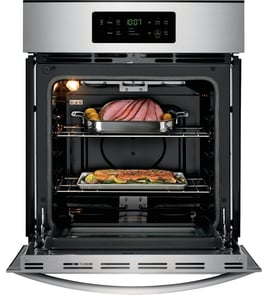




Does a wall oven need a special outlet?
Yes. A built-in electric wall oven like Kenmore model 91140161792 typically needs a dedicated 240-volt circuit (not a standard 120V receptacle). The exact wiring method (hardwired vs. cord and receptacle) and breaker size depend on the oven’s electrical rating and your home’s wiring; confirm the requirements in the 91140161792 owner's manual.
What “special outlet” usually means
Most 24-inch electric wall ovens use a 240V supply and are installed on a dedicated circuit so the oven can heat properly and safely.
Common characteristics:
- Dedicated 240V circuit (no other appliances on that circuit)
- Double-pole breaker in the electrical panel
- Copper conductors sized for the circuit amperage
- Proper grounding (and neutral if required by the wiring method)
Typical wiring you may see
Wall ovens are commonly connected one of two ways:
| Connection type | What you’ll see | Common in | Notes |
|---|---|---|---|
| Hardwired | Junction box with a strain relief | Many built-in installs | No “outlet” visible |
| Cord and receptacle | 240V receptacle and matching cord | Some remodels | Receptacle type must match cord |
Quick checks before you install or replace an oven
- Verify the circuit voltage is 240V at the junction box or receptacle.
- Confirm the breaker size matches the oven’s nameplate rating.
- Make sure the oven is securely mounted in the cabinet and the wiring is protected from heat.
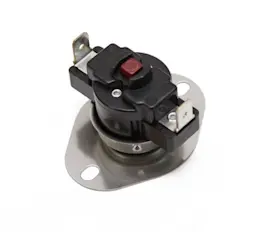
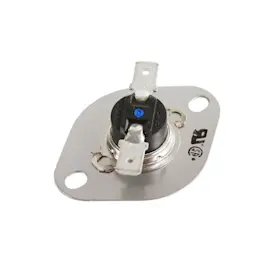
- If the oven is dead or keeps shutting off, check for an open thermal safety device such as the wall oven thermal fuse WB24K5046.
Why it matters
Using the correct 240V circuit prevents weak heating, nuisance breaker trips, and overheating at connections. It also helps protect key components like the bake element, broil element, and temperature sensor.
Last updated: February 2026
What are the parts of an electric oven?
A Kenmore electric wall oven like model 91140161792 is built around a heating system (bake and broil elements), temperature sensing and control components, and basic cavity parts such as racks, door glass, and the oven light. These parts work together to heat, regulate temperature, and keep cooking safe and consistent.
Core parts you will find in most electric wall ovens
- Bake element: the lower heating element used for most baking and roasting
- Broil element: the upper heating element used for broiling and top browning
- Oven temperature sensor: monitors oven temperature so the control can cycle heat on and off
- Oven control and touch pad: sets bake, broil, timer, and other functions
- Oven racks and rack guides: support cookware and help position food for even cooking
- Oven light and lamp holder: illuminates the cavity for visibility
- Door assembly parts: glass panels, insulation retainers, and trim that help hold heat in
Parts on this model that match those functions
Here are examples of parts we list for Kenmore 91140161792 that map to common oven components:
| Oven function | Example part on this model | What it does |
|---|---|---|
| Temperature sensing | Sensor WB21X5301 | Helps regulate oven temperature during baking and broiling cycles |
| Baking heat | G.e. range bake element WB44K5013 | Provides lower-oven heat for bake cooking |
| Broiling heat | G.e. range broil element WB44K5009 | Provides upper-oven heat for broil cooking |
| Overheat protection | Wall oven thermal fuse WB24K5046 | Opens the circuit if unsafe temperatures occur |
| Door viewing window | Glass WB36X779 | Center door glass for visibility and heat containment |
Why these parts matter
- The sensor and control keep temperatures steady by cycling the elements.
- The bake and broil elements create the heat your recipes depend on.
- The door glass and insulation-related parts help maintain heat for better results.
- The oven light improves safety by letting you check food without opening the door.
Quick tips when identifying parts
- Match parts by model number 91140161792 first.
- Use the diagrams and part names to confirm location (upper element vs lower element).
- If the oven is not heating correctly, the most common checks are the bake element, broil element, and temperature sensor.
For model-specific component locations and operating details (like bake and broil temperature ranges and rack positions), use the owner's manual.
Last updated: February 2026
What is a common problem of the electric oven?
A very common problem on an electric oven like the Kenmore 91140161792 is a heating failure, where the control powers on but the oven will not bake or broil correctly. The most frequent causes are a failed bake or broil element, a bad temperature sensor, or a blown thermal fuse (often after overheating).
Most common symptoms and what they usually point to
- Oven will not heat at all: failed element, blown fuse, or power supply issue
- Bakes unevenly or takes too long: weak bake element, blocked vent, or foil/rack placement problems
- Broil does not work well: weak broil element, wrong rack position, or door left open during broiling
- Control shows an “F” code: a range malfunction; clear it and retry after cooling
- Oven light works but heat does not: heating circuit issue (element, sensor, fuse)
Quick checks we recommend first (no parts swapping)
- Confirm power: check the household circuit breaker or fuse box.
- Avoid blocked airflow: keep the oven vent clear and never block it.
- Stop using foil on the oven bottom: foil can cause poor baking and can create a safety hazard.
- Use correct technique: preheat for baking; do not preheat for broiling.
- Review model-specific guidance in the owner's manual.
Parts that commonly fix “not heating” complaints
If basic checks do not help, these model-listed parts are common fixes:
| Symptom | Likely part to check | What it does |
|---|---|---|
| Oven temperature is erratic or inaccurate | Sensor WB21X5301 | Tells the control the oven temperature |
| No bake heat | G.e. range bake element WB44K5013 | Provides primary baking heat |
| No broil heat | G.e. range broil element WB44K5009 | Provides top heat for broiling |
| Oven dead after overheating | Wall oven thermal fuse WB24K5046 | Opens to protect the oven from overheating |
Why it matters
Heating problems are usually straightforward to diagnose, and fixing the correct component restores safe, consistent temperatures for baking and broiling. Keeping the vent clear and avoiding foil misuse also prevents repeat failures.
Last updated: February 2026
Why is my Kenmore oven not turning on?
If your Kenmore 91140161792 electric wall oven is completely dead (no display, no heat), the most common causes are a loss of household power to the oven circuit or a safety device or control failure inside the oven. Start with the breaker and power supply checks, then move to simple control resets and key parts.
Quick checks first (fastest fixes)
- Check the home circuit breaker or fuse for the oven circuit; reset the breaker fully OFF then back ON.
- Confirm the oven is plugged in (if your installation uses a cord and receptacle).
- If the display shows an error like F plus a number/letter, press CLEAR/OFF, let the oven cool for 1 hour, then try again.
- If the display flashes ERR, press CLEAR/OFF to clear an invalid setting and re-enter the bake or broil temperature.
- If the control is unresponsive but the oven has power, a failed touch/control area is possible.
What to do if the display is blank
A blank display usually means the oven is not getting power or power is being interrupted.
Most likely causes
| Symptom | Most likely cause | What to check next |
|---|---|---|
| No lights, no display, no heat | No power to oven | Breaker/fuse, wiring, plug connection |
| Display flashes F code | Control detected a malfunction | Clear/reset; if it returns, service is needed |
| Power present but oven still dead | Internal safety or control issue | Thermal fuse, wiring, control |
Parts that commonly stop an oven from powering up
These parts are commonly involved when an oven will not run at all:
- Thermal fuse: If it opens, the oven can go totally inoperative. For this model, see the wall oven thermal fuse WB24K5046.
- Oven temperature sensor: A failed sensor can cause control problems and error conditions; see the sensor WB21X5301.
- Wiring/connectors: Heat-damaged or loose connections can interrupt power to the control.
Why it matters
A no-power condition is often a simple supply issue (breaker, plug, wiring). If power is good, checking the thermal fuse and related wiring prevents repeated shutdowns and helps you avoid replacing the wrong control or heating part.
For control display behavior, error codes, and the CLEAR/OFF reset steps, use the owner's manual.
Last updated: February 2026