



What is the life expectancy of a Goodman furnace?
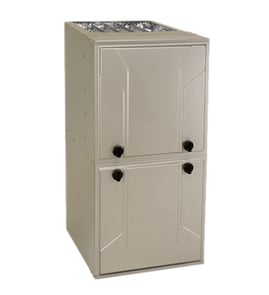
A Goodman gas furnace like model GMNT060-3B typically lasts 15 to 20 years with normal use and routine maintenance. In homes with consistent upkeep and correct airflow, it’s common to see 20+ years; poor maintenance can shorten life to 10 to 12 years.
Typical lifespan ranges (what to expect)
| Condition | Typical life expectancy | What usually drives it |
|---|---|---|
| Well maintained | 20 to 25 years | Clean burners, correct airflow, stable ignition |
| Average maintenance | 15 to 20 years | Normal wear on inducer, igniter, controls |
| Neglected or airflow restricted | 10 to 12 years | Overheating, short cycling, repeated lockouts |
What extends the life of a Goodman furnace
- Replace or clean the air filter on schedule to protect the blower and heat exchanger.
- Keep supply and return vents open to prevent overheating and limit switch trips.
- Have a yearly inspection and cleaning of burners, flame sensor, and venting.
- Address ignition problems early (delayed ignition and repeated retries add stress).
- Fix inducer and pressure-switch issues promptly to avoid nuisance shutdowns.
Parts that commonly affect “end of life” decisions
These parts often fail before the cabinet and duct connections do; replacing them can restore reliable heat when the furnace is otherwise in good shape:
- Furnace hot-surface ignition control board B1809913S
- Igniter B1401018S
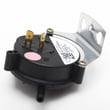
- Furnace air pressure switch B1370176
- Furnace temperature limit switch B1370198
Why it matters
A furnace near the end of its expected lifespan is more likely to short cycle, struggle to ignite, or shut down on safety switches. Catching airflow, ignition, and venting problems early helps protect major components like the heat exchangers and keeps heating performance steady.
Last updated: February 2026
What is the most common part to fail on a furnace?
The most common “failure point” on a gas furnace like the Goodman GMNT060-3B is usually maintenance-related: a dirty air filter that restricts airflow and trips safety limits. For true part failures, ignition components and safety switches are among the most frequent culprits.
Most common causes (in order we see most often)
- Dirty/clogged air filter causing overheating and a shutdown
- Ignition problems (hot-surface igniter, flame-sensing issues)
- Safety switch trips (limit switch or roll-out switch opening)
- Draft/venting problems (pressure switch not proving draft)
- Inducer or blower issues (motor not starting, weak airflow)
Parts on the GMNT060-3B that commonly relate to “no heat”
If your furnace has power but will not ignite or will not stay running, these model-matched parts are common suspects:
| Symptom | What it often points to | Example model-matched part |
|---|---|---|
| No ignition attempt, odd cycling | Control/ignition sequence problem | Furnace hot-surface ignition control board B1809913S |
| Inducer will not run or is noisy | Draft inducer motor issue | Motor 0131M00002PSP |
| Starts then shuts down quickly | Safety trip from flame rollout/overheat | Furnace burner roll-out limit switch B1370145 |
| Won’t prove draft | Pressure switch or venting restriction | Furnace air pressure switch B1370176 |
| Runs hot, short cycles | High-limit opening from airflow/heat | Furnace temperature limit switch B1370198 |
Quick checks we recommend before replacing parts
- Replace the air filter and make sure all supply and return vents are open
- Confirm the thermostat is calling for heat (and has good batteries if applicable)
- Check the furnace door switch is fully engaged
- Look for a blocked intake/exhaust or a clogged condensate drain (if applicable)
- If you have a meter, verify power at the furnace and check for a blown fuse on the control board
Why it matters
Most furnace shutdowns are the furnace protecting itself. Airflow restrictions and ignition proving problems can repeatedly trip safety controls, which feels like a “bad furnace” but is often a filter, venting, or a single component such as an igniter, pressure switch, or limit switch.
Last updated: February 2026
What is the most expensive part to fix on a furnace?
For a Goodman GMNT060-3B gas furnace, the most expensive repair is typically replacing a heat exchanger because it is labor-intensive and safety-critical. After that, high-cost repairs commonly include the inducer (vent) motor, blower components, and the ignition control board.
Typical “most expensive” furnace repairs (what usually tops the list)
- Primary heat exchanger replacement is usually the costliest job (part plus significant labor).
- Secondary heat exchanger replacement can also be very expensive on condensing-style systems.
- Inducer (vent) motor replacement is a common high-dollar repair when the furnace will not vent properly.
- Ignition control board replacement can be costly because it controls the entire ignition sequence.
- Blower wheel or blower assembly work can add up when access is tight or the wheel is damaged.
GMNT060-3B parts that are often involved in high-cost repairs
| Repair area | Example part for this model | Why it gets expensive |
|---|---|---|
| Heat exchanger | Furnace primary heat exchanger, 24.5-in 4821404S | Major disassembly and careful reassembly; long labor time |
| Inducer/venting | Furnace inducer vent motor assembly 0131M00002PSP | Critical to safe venting; failure stops heat |
| Controls/ignition | Furnace hot-surface ignition control board B1809913S | Manages ignition and safety timing; diagnosis time matters |
How we recommend deciding whether to repair or replace
- Compare the repair total to the furnace age (many gas furnaces last 15 to 20 years).
- If the heat exchanger is involved, prioritize a qualified diagnosis before buying parts.
- If the furnace is short-cycling or overheating, check airflow basics first (filter, registers, duct restrictions).
- If the inducer is noisy or the furnace will not prove draft, inspect the venting and pressure switch tubing.
- If ignition is intermittent, confirm power, grounding, and wiring condition before replacing controls.
Why it matters
The “most expensive part” is usually expensive because it combines a high-value component (like a heat exchanger or motor) with long, careful labor and safety checks. Getting the right diagnosis first prevents replacing the wrong part and repeating the service call.
Last updated: February 2026
How much does it cost to replace a blower motor in a Goodman furnace?
Replacing a blower motor in a Goodman GMNT060-3B gas furnace typically costs $450 to $1,200 total (parts plus labor). The final price depends on whether you need only the motor or additional airflow parts, plus local labor rates and access to the blower assembly.
Typical cost breakdown
- Blower motor part: commonly $150 to $600
- Labor: commonly $250 to $600 (about 1.5 to 3.5 hours)
- Service call/diagnostic: commonly $75 to $150 (sometimes applied to the repair)
- Optional add-ons: capacitor, blower wheel, wiring repair, or control troubleshooting
| Cost item | Typical range | What changes it most |
|---|---|---|
| Motor (part) | $150 to $600 | OEM vs aftermarket, motor type, availability |
| Labor | $250 to $600 | Access, rusted fasteners, duct/plenum clearance |
| Total installed | $450 to $1,200 | Motor price + labor + any add-ons |
Parts that can affect the total on GMNT060-3B
If the blower is noisy, wobbling, or moving less air, we often see related parts replaced at the same time:
- A weak run capacitor can prevent the motor from starting reliably; see capacitor CAP125000370RPP.
- A damaged blower wheel can cause vibration and poor airflow; see blower fan wheel D6723311S or furnace blower fan wheel D6723306S.
- If the furnace is failing to ignite and the blower never gets a proper call to run, ignition controls may be involved; see furnace hot-surface ignition control board B1809913S.
Quick checks that help you avoid unnecessary parts
- Confirm the thermostat is calling for heat and the furnace has steady power.
- Check the air filter and return vents; restricted airflow can overheat the furnace and stress the blower.
- Listen for a hum with no spin (often capacitor or seized motor).
- Look for burnt wiring or loose spade connectors at the motor and capacitor.
- If you have a meter, verify capacitor rating and motor windings; use how to use a multimeter to test electrical parts video.
Why it matters
A failing blower motor can reduce heat output, trip limit switches, and increase energy use. Fixing the airflow problem promptly helps protect the heat exchanger and keeps the Goodman furnace running safely and efficiently.
Last updated: February 2026