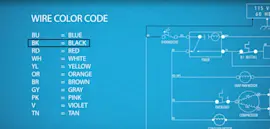
Installation guide
 Owner’s manual
 Error Codes



What are the four basic types of electric cooktops?
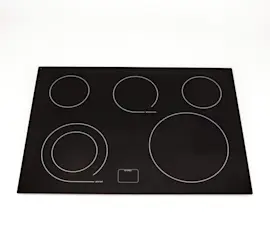
The four basic cooktop types you will see most often are radiant electric (smooth-top), coil electric, induction, and downdraft cooktops. Your KitchenAid KECD867XSS00 is a 36 inch electric downdraft cooktop, which combines electric surface heating with a built-in vent fan.
The 4 cooktop types at a glance
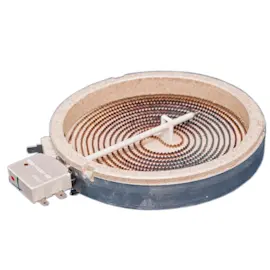
- Radiant electric (ceramic glass smooth-top): Heats cookware using radiant elements under a glass surface.
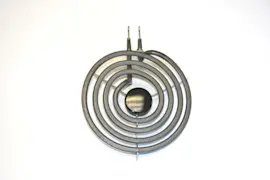
- Coil electric: Uses exposed metal coil elements that heat up directly.
- Induction: Uses magnetic energy to heat the pan itself (the cooktop surface stays cooler).
- Downdraft cooktop: A cooktop style with a built-in ventilation system that pulls smoke and steam downward.
Quick comparison table
| Type | How it heats | Cookware needs | What customers notice most |
|---|---|---|---|
| Radiant electric | Element heats glass, glass heats pan | Flat-bottom works best | Smooth surface, slower cool-down |
| Coil electric | Coil heats pan directly | Most cookware works | Simple, visible coils |
| Induction | Magnetic field heats pan | Magnetic (often a magnet test) | Fast response, efficient |
| Downdraft | Any cooktop heat type plus built-in vent | Same as its heat type | Helps vent without overhead hood |
Why it matters when choosing parts or troubleshooting
Knowing the cooktop type helps us match the right repair path and parts. For example, radiant and downdraft models like KECD867XSS00 commonly involve:
- Surface heating components (radiant elements)
- Element control switches
- Downdraft vent parts (grease filter, grille, fan switch)
Model-specific notes for KECD867XSS00
This model uses a downdraft ventilation system with a fan control (LOW, MED, HIGH, OFF) and a grease filter that should be cleaned often to prevent grease buildup. For operating and cleaning details, use the KECD867XSS00 owner’s manual.
Last updated: January 2026
What's the difference between an electric cooktop and an induction cooktop?
An electric cooktop like the KitchenAid KECD867XSS00 uses radiant heating elements under a ceramic-glass surface to heat the glass, then the pan. An induction cooktop uses a magnetic field to heat the pan directly, so it typically heats faster and keeps the cooktop surface cooler.
How each type heats your cookware
Electric radiant (your KECD867XSS00):
- Heat comes from a radiant element beneath the ceramic glass.
- The glass gets hot and stays hot after cooking; the hot surface indicator can remain on until the surface cools.
- Works with most cookware materials (as long as the bottom is flat).
Induction:
- Heat is created in the pan itself using electromagnetic energy.
- The cooktop surface usually stays cooler (it can still get warm from the hot pan).
- Requires magnetic cookware (many stainless steels and cast iron work; aluminum and glass usually do not unless they have a magnetic base).
Quick comparison
| Feature | Electric radiant cooktop (KECD867XSS00) | Induction cooktop |
|---|---|---|
| Heating speed | Moderate | Fast |
| Surface temperature | Hot during and after cooking | Cooler overall (warm from pan) |
| Cookware compatibility | Broad (flat-bottom recommended) | Magnetic cookware required |
| Temperature control | Steady, but slower to respond | Very responsive |
| Cleaning | Smooth glass, spills can bake on | Smooth glass, less baked-on spillover |
Why it matters
If you are deciding between electric radiant and induction, the biggest day-to-day differences are speed and control (induction wins) versus cookware flexibility and familiarity (electric radiant wins). For the KECD867XSS00 specifically, the manual also highlights features like indicator lights and dual-size element operation that affect how you cook and how long surfaces stay hot.
Tips for best results on your electric radiant cooktop
- Use flat-bottom cookware with straight sides and medium-to-heavy thickness.
- Match pan size to the element size when possible (especially on dual-circuit elements).
- Turn controls off when finished cooking and rely on the hot surface indicator to know when it is safe.
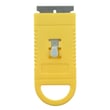
- For stuck-on spills, use a cooktop-safe scraper such as the cooktop scraper WA906B.
For model-specific operating details (indicator lights, dual-circuit element use, downdraft ventilation), follow the guidance in the KECD867XSS00 owner’s manual.
Last updated: January 2026
What type of electric cooktop is best?
For most homes, the best electric cooktop is a radiant (smooth-top) ceramic-glass model because it heats evenly, is easy to wipe clean, and works with most flat-bottom cookware. Your KitchenAid KECD867XSS00 is a 36-inch electric downdraft cooktop, so ventilation and cabinet fit matter as much as burner performance; confirm requirements in the installation guide.
Quick comparison: which electric cooktop type fits your needs?
| Type | Best for | Pros | Trade-offs |
|---|---|---|---|
| Radiant (smooth-top) | Everyday cooking | Easy cleaning, even heat, modern look | Can scratch, spills can bake on if not cleaned promptly |
| Induction | Fast boiling, precise control | Very fast, efficient, cooler surface | Needs magnetic cookware, higher upfront cost |
| Coil element | Budget replacements | Simple, durable, inexpensive | Harder to clean, less even heating |
What we recommend for a downdraft cooktop like KECD867XSS00
Downdraft models add airflow and ducting considerations that can affect real-world performance.
- Choose a cooktop that matches your countertop cutout and cabinet clearances.
- Plan the vent path (duct size, turns, wall cap) before you buy.
- Use flat-bottom, medium-to-heavy cookware for best contact and heat transfer.
- If you cook greasy foods often, prioritize easy-to-clean vent filters and grilles.
- Make sure your electrical supply matches the cooktop requirements (dedicated circuit, correct wiring method).
Why it matters
The “best” electric cooktop is the one that fits your kitchen and cooking style. On a 36-inch downdraft cooktop like KECD867XSS00, proper installation and venting help the fan capture steam and smoke effectively, and correct electrical setup helps the elements heat consistently.
Helpful add-ons for daily use
| Need | What helps | Example part |
|---|---|---|
| Keep the glass top looking new | Use the right scraper and cleaner routine | Cooktop scraper WA906B |
| Better downdraft performance | Keep the grease filter clean and seated correctly | Cooktop downdraft vent grease filter W10177003 |
Last updated: January 2026
How much is it to replace an electric stove top?
Replacing an electric stovetop (cooktop) typically costs $300 to $1,500 for the cooktop, plus $200 to $600 for installation. For KitchenAid KECD867XSS00 (a 36-inch electric downdraft cooktop), installation can cost more because venting and a dedicated 40-amp electrical circuit are involved; confirm requirements in the installation guide.
What drives the total cost
- Cooktop type: radiant electric vs. downdraft models (downdraft usually costs more)
- Cutout and countertop work: resizing stone or laminate adds labor
- Electrical work: this cooktop style uses a separate 40-amp circuit (3-wire or 4-wire, 120/240V)
- Venting changes: reusing existing ducting is cheaper than rerouting
- Haul-away: removal and disposal fees vary
Replace the whole cooktop vs. repair a burner or control
If only one element is failing, repairing is often far less expensive than replacing the entire cooktop.
| Scenario | Typical parts cost | Typical labor | Best when |
|---|---|---|---|
| Replace one radiant element | $100 to $300 | $150 to $350 | One burner will not heat or heats unevenly |
| Replace an element control switch | $120 to $250 | $150 to $350 | Burner stays on high, will not turn on, or cycles incorrectly |
| Replace entire cooktop | $300 to $1,500 | $200 to $600+ | Multiple failures, cracked glass, major venting issues |
Common KECD867XSS00 repair parts include the range radiant surface element W11171119 and the cooktop element control switch WPW10222828.
Quick checklist before you decide
- Verify the problem is not cookware related (warped pans can mimic heating issues).
- Check whether multiple burners are affected (points to wiring or power supply).
- Inspect for signs of heat damage at terminals (requires power disconnected).
- If the downdraft fan is involved, confirm the vent grille and grease filter are clean.
- Use the wiring diagram and electrical specs in the owner's manual to guide safe troubleshooting.
Why it matters
A downdraft cooktop like KECD867XSS00 ties together heating, venting, and a high-amperage electrical supply. Pricing swings widely based on whether you are swapping a single radiant element, replacing a control switch, or changing the entire cooktop and modifying ducting or wiring.
Last updated: January 2026