

Are radial arm saws worth anything?
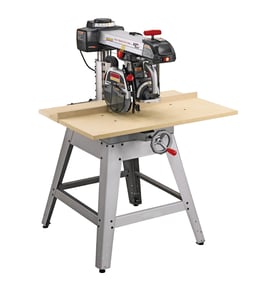
Yes. A Craftsman radial arm saw like model 11329430 can be worth money and still be useful, mainly for accurate crosscuts, repetitive cut setups, and some dado work; resale value depends most on completeness, condition, and how well the arm and carriage can be tuned.
What affects the value most
- Completeness: guard, table/fence pieces, yoke and carriage parts, and any original hardware
- Mechanical condition: smooth carriage travel, minimal arm play, solid column lock, tight yoke indexing
- Motor health: starts quickly, runs without excessive sparking, no burning smell, no unusual vibration
- Accuracy potential: can be aligned to 90 degrees and hold alignment after locking
- Cosmetics and rust: surface rust is common; heavy pitting or bent components lowers value
Typical used-price ranges (what we see most often)
These are common ranges for older 10-inch radial arm saws in the U.S. market when sold locally; exceptional condition and accessories can push higher.
| Condition | What it usually includes | Typical range |
|---|---|---|
| As-is / incomplete | missing guard or table parts, unknown motor | $0 to $50 |
| Working / average | runs, mostly complete, needs tune-up | $50 to $150 |
| Clean / tuned | aligned, smooth travel, complete, good table | $150 to $300 |
Quick checks before you buy or sell
- Unplug it; pull the carriage through its full travel and feel for binding or slop
- Lock the arm and yoke; try to twist the motor carriage (excess movement suggests wear)
- Inspect the cord, switch, and strain relief; replace damaged wiring before use
- Verify the guard and anti-kickback components are present and functional
- Plan on a new blade; use a blade intended for radial arm saw use (negative or low hook angle)
Why it matters
Radial arm saws can do excellent crosscuts, but they demand correct setup and safe technique. A complete, tunable saw holds value because it can be made accurate and predictable; an incomplete or loose saw is harder to use safely and is worth less.
For help confirming you have the right model number before pricing parts or diagrams, use how to find your appliance model number (and what it means for parts).
Last updated: February 2026
What are the common problems with radial arm saws?
Common radial arm saw problems on a Craftsman 11329430 10" accra-arm radial saw include inaccurate cuts (out-of-square or drifting), rough carriage travel, excessive vibration, weak starting or power loss, and electrical issues like a bad switch or damaged cord. Most problems trace back to alignment, wear, or wiring.
Most common issues (and what they look like)
- Cuts not square or repeatable: crosscuts are out of 90 degrees, bevel angles do not match the scale
- Carriage binds or feels gritty: arm rollers or tracks are dirty, worn, or out of adjustment
- Vibration or chatter: dull blade, bent blade, loose arbor hardware, or loose motor mount
- Motor struggles to start: worn brushes (if equipped), failing switch, or low voltage at the outlet
- Burning smell or intermittent power: damaged cord, loose connections, or overheating motor
- Blade coasts too long or feels unsafe to approach: normal coast-down can be long; always wait for a full stop before reaching near the blade
Quick checks we recommend before buying parts
- Unplug the saw and lock the arm and carriage.
- Confirm the blade is sharp, correct type, and installed correctly.
- Check for loose fasteners at the yoke, motor mount, arm clamp, and table fence.
- Clean pitch and dust from the arm tracks and rollers, then recheck travel.
- Inspect the power cord and switch area for cracked insulation, heat marks, or loose terminals.
Symptom-to-cause guide
| Symptom | Most likely cause | What to do first |
|---|---|---|
| Cut is not 90 degrees | Arm/yoke alignment off | Re-square the arm and fence, then verify with a reliable square |
| Carriage sticks | Dirty/worn rollers or track | Clean track, check roller adjustment, lubricate only if your procedure calls for it |
| Heavy vibration | Dull/warped blade or loose arbor | Replace blade, tighten arbor hardware, check for play |
| No start / intermittent | Switch, cord, or wiring | Inspect wiring, then test continuity with a meter |
Why it matters
Radial arm saws can pull through a cut; if alignment is off or the carriage does not travel smoothly, you get inaccurate cuts and a higher chance of binding, kickback, or loss of control. Always keep loose clothing and hair secured, and wait for the blade to fully stop before making adjustments.
For electrical troubleshooting steps and safe meter use, follow our how to use a multimeter to test electrical parts video.
Last updated: February 2026
When did Craftsman stop making radial arm saws?
Craftsman radial arm saws (including model 11329430) are legacy tools; new Craftsman radial arm saws have not been a mainstream Sears offering since the early 1990s. The practical takeaway today is focusing on maintenance, alignment, and safe operation rather than expecting new-production replacements.
What “stop making” can mean (and what to use instead)
People use this question in a few different ways; here is how we recommend thinking about it:
- Stopped being widely sold new: radial arm saws largely disappeared from typical retail lineups as miter saws became more common.
- Stopped being widely manufactured: production of many consumer radial arm saw lines ended decades ago.
- Stopped being supported: parts availability shifts over time; some items remain available, others become discontinued.
How to estimate the age of a Craftsman 11329430
Dating a specific saw is most accurate when you use the identification markings on the tool.
- Confirm the ID plate shows 11329430 exactly
- Record the serial number and any date code on the tag
- Check the motor nameplate (volts, amps, RPM) for originality
- Note whether the saw has updated guarding or a replacement switch/wiring
| Where to look | What to record | Why it matters |
|---|---|---|
| Model/serial tag | Model and serial/date code | Helps narrow the build era |
| Motor nameplate | Voltage and amperage | Helps with wiring and overheating issues |
| Arm/carriage area | Wear and play | Points to alignment and bearing needs |
Why it matters
Radial arm saw performance and safety depend heavily on alignment, carriage travel, and sound wiring. Knowing the saw’s era helps you prioritize common age-related issues like switch wear, brittle cords, and mechanical looseness.
Helpful DIY resource
For safe electrical testing steps that apply to many older power tools, use: how to use a multimeter to test electrical parts video.
Last updated: February 2026
Where can I buy Craftsman replacement parts?
You can buy replacement parts for your Craftsman model 11329430 (10-inch Accra-Arm radial saw) through our parts lookup on Sears PartsDirect. Using the exact model number helps match the correct diagrams and part listings so you order the right component the first time.
Best way to shop for the right part
Even when a tool is older, the fastest path is to search by the full model number and then confirm the part by location in the diagram (guard area, carriage, yoke, motor, switch box).
- Use the full model number: 11329430
- Compare the part description to where it mounts on the saw
- Check whether the part is left-hand or right-hand specific (common on guards and brackets)
- Confirm electrical ratings for switches, cords, and capacitors (volts/amps)
- Order any related hardware you will disturb (nuts, washers, retaining rings)
What information to gather before ordering
Having these details ready prevents wrong-part returns and delays.
| What to check | Where to find it | Why it matters |
|---|---|---|
| Model number | Model tag on the saw | Ensures the correct parts list |
| Part location | Exploded view/diagram | Confirms fit and orientation |
| Electrical specs | On the old part label | Prevents mismatched switch/cord parts |
| Quantity needed | Your teardown notes | Avoids reordering small hardware |
Why it matters
Radial arm saw parts are often design-specific (carriage rollers, arm locks, guards, and switch components). Matching by model 11329430 and diagram position helps ensure safe fit, smooth travel on the arm, and proper alignment after reassembly.
Helpful DIY reference
If you are diagnosing a power issue before ordering parts, use how to use a multimeter to test electrical parts video to check the cord, switch, and connections.
Last updated: February 2026