Installation guide
 Owner’s manual
 Error Codes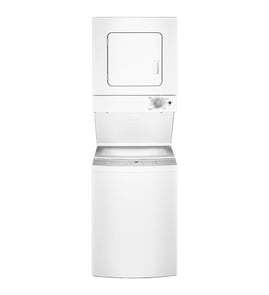




Does Speed Queen have stackable washers and dryers?
Yes. Speed Queen makes stacked washer/dryer units (often called a stacked laundry center) designed to deliver full-size washing and drying performance in a single, space-saving footprint. Your ATEE9ASP175TW01 is one of these stacked washer/dryer designs; it is built to operate as one combined unit (not as separate machines). See the installation guide for installation and placement requirements.
What “stackable” means for this model
For the Speed Queen ATEE9ASP175TW01, “stackable” means the washer and dryer are factory-stacked and intended to stay together.
- The washer and dryer are not designed to be operated as separated, side-by-side units.
- The unit should be installed on a ground or basement floor, preferably concrete.
- Avoid installing on carpeting, soft tile, or weakly supported structures.
- Plan your move-in path so the unit is within about 4 feet of the final install location before positioning.
Installation basics to plan for
Stacked units save space, but they are less forgiving about leveling, venting, and utility hookups.
| Item to plan | What to check | Why it matters |
|---|---|---|
| Floor and surface | Smooth, non-slip, strong enough for vibration | Reduces movement, noise, and out-of-balance issues |
| Leveling | Unit sits solid with no rocking | Helps prevent excessive vibration and wear |
| Dryer exhaust | Properly connected, not kinked or restricted | Improves drying and helps prevent overheating |
| Electrical and gas (if applicable) | Correct connections before operation | Prevents no-heat and safety-related shutdowns |
Why it matters
A stacked laundry center like the ATEE9ASP175TW01 is engineered as a single system. Installing it on the right surface and keeping the dryer vent clear helps the washer spin smoothly and the dryer heat and dry efficiently.
Last updated: February 2026
How to use Speed Queen heavy duty washer?
To use the washer in your Speed Queen laundry center model ATEE9ASP175TW01, add detergent, load clothes evenly, choose your cycle and settings, then press Start. For the exact cycle names, options, and control steps for your unit, follow the owner's manual.
Basic steps (every load)
- Sort laundry by fabric type, color, and soil level.
- Add the correct detergent amount (HE detergent if your manual specifies it).
- Load the washer loosely; do not pack items down.
- Close the lid/door fully.
- Select the cycle, water temperature, and any options.
- Press Start; unload promptly when the cycle ends.
Setup checks that affect “heavy duty” performance
A heavy duty cycle cleans best when the unit is installed correctly and stable.
- Plug the washer directly into a properly grounded outlet (no extension cords or adapters).
- Use a dedicated 120V, 60Hz, 15A circuit for the washer.
- Install on a smooth, non-slip surface; avoid carpeting or weak flooring.
- Level the unit so it stays stable at high-Speed spin.
Quick reference: what to choose
| Laundry situation | Best cycle choice | Key setting |
|---|---|---|
| Heavily soiled cottons, workwear | Heavy duty (or longest wash) | Warm/hot if safe for fabric |
| Mixed everyday loads | Normal | Warm/cold |
| Towels/jeans (bulky) | Heavy duty or bulky | High spin if allowed |
| Delicates | Delicate/gentle | Cold, low spin |
Why it matters
Correct loading, detergent use, and a stable, properly powered installation help the washer agitate and spin as designed. That improves cleaning, reduces vibration, and helps prevent out-of-balance spinning.
Last updated: February 2026
What is the lifespan of a Speed Queen washing machine?
Most Speed Queen washers are built to run about 25 years in typical home use. For your Speed Queen ATEE9ASP175TW01 stacked laundry center, lifespan depends most on installation (stable floor, correct hookups) and routine care; our ATEE9ASP175TW01 owner's manual covers the key use and safety practices.
Typical lifespan and what affects it
Speed Queen laundry equipment is designed with commercial-style durability, so the most common reasons a washer is replaced early are installation issues, chronic overloading, and neglected maintenance.
- Installation quality: a solid, level, non-slip floor reduces vibration and wear
- Load habits: frequent overloading shortens bearing, suspension, and drive life
- Water conditions: hard water and sediment increase valve and tub residue problems
- Detergent use: too much detergent can cause buildup and odor, leading to extra stress on components
- Vent and dryer performance (on stacked units): restricted venting can increase heat and vibration in the cabinet over time
What “25 years” means in practical terms
Here is a simple way to think about service life for a durable washer like the one in your ATEE9ASP175TW01.
| Usage pattern | What we typically see | What helps most |
|---|---|---|
| Light (few loads/week) | Often exceeds 20 years | Correct leveling, avoid long-term moisture exposure |
| Average family use | Around 20 to 25 years | Don’t overload, keep hoses and drain path clear |
| Heavy (many loads/week) | Can be under 20 years | Strict load sizing, fast repair of leaks/noise |
Why installation matters more on a stacked laundry center
Because the washer and dryer share one cabinet, vibration and movement can feel worse when the unit is not installed to spec. A floor that is not strong enough or a surface that is slick or uneven can make the machine shake, walk, and wear faster. The installation guide explains the floor and surface requirements that prevent those problems.
Signs your washer is nearing end-of-life
- Increasing vibration even after leveling
- Loud rumbling during spin (bearing wear)
- Repeated leaks from the tub area
- Frequent cycle interruptions or inconsistent operation
Why it matters: Planning around a 20 to 25-year lifespan helps you decide when a repair is worth it, especially on a stacked unit where access and labor can be higher than on a standalone washer.
Last updated: February 2026
What are common problems with Speed Queen dryers?
Common problems on the Speed Queen ATEE9ASP175TW01 dryer include long dry times from restricted venting or lint buildup, no-heat conditions from a failed heating component, noisy operation from worn drum support parts, and “Er/ro” shutdowns when the motor overload protector trips. See the owner's manual for model-specific troubleshooting steps and maintenance intervals.
Most common symptoms and what they usually mean
- Long drying times: restricted exhaust duct, crushed or kinked vent, blocked weather hood damper, or lint buildup inside the cabinet
- No heat or weak heat: failed heating element, heater kit component, or a temperature-sensing issue
- Noisy dryer (squeal, thump, rumble): worn belt, idler wheel, idler lever, or drum rollers; sometimes a foreign object in the drum
- Won’t start or stops mid-cycle: door switch issue, motor overload protector tripping, or a control/switch problem
- Wrinkling: overdrying, wrong heat setting, or load too large to tumble properly
Quick checks we recommend first (safe, high-impact)
- Clean the lint filter and confirm strong airflow at the outside vent hood.
- Inspect the vent path for kinks, crushing, or heavy lint restriction.
- Make sure the dryer is level; uneven leveling can cause vibration and noise.
- Check the drum for foreign objects (coins, nails, pins) that can create scraping or rattling.
- If the display alternates “Er” and “ro”, let the motor cool, then clear and restart per the manual.
Parts that commonly fix noise or heat issues on this model
If cleaning and leveling do not solve the problem, these model-matched parts are common repair paths:
| Symptom | Common part to inspect/replace | Example part for ATEE9ASP175TW01 |
|---|---|---|
| Squealing or drum not turning | Drum belt | Commercial dryer drum belt D511255P |
| Squeal, chirp, or tension issues | Idler wheel/bearing | Idler wheel and bearing assembly D510142P |
| Thumping/rumbling | Drum support roller | Cylinder roller D510708P |
| No heat | Heating element or heater kit | Dryer heating element D510329P or heater kit 964P3 |
Why it matters
Restricted venting and lint buildup do more than slow drying; they can also overheat the dryer and trigger the motor overload protector. Following the maintenance guidance in the manual (including periodic duct inspection and internal cleaning by a qualified service person) helps keep drying performance consistent.
Last updated: February 2026