Installation guide
 Owner’s manual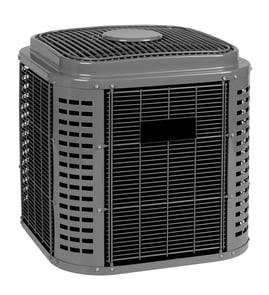



What is the average life of a Carrier air conditioner?
A Carrier central air conditioner like model 38TDB036300 typically lasts 15 to 20 years. You get the longest life when airflow stays unrestricted, the air filter stays clean, and the system is operated correctly through the thermostat as outlined in the owner's manual.
Typical lifespan and what changes over time
Most split-system central air conditioners deliver reliable cooling for 15 to 20 years; after that, efficiency often drops and repairs become more frequent.
| Age of system | What you commonly see | What we recommend |
|---|---|---|
| 0 to 10 years | Strong cooling, fewer repairs | Keep up with filter changes and coil cleaning |
| 10 to 15 years | Wear starts showing | Annual tune-ups, watch for electrical and airflow issues |
| 15 to 20 years | More breakdown risk | Compare repair cost vs. replacement value |
| 20+ years | Higher operating cost | Plan for replacement if major components fail |
What most affects life expectancy
The manual highlights several items that directly shorten life when ignored. Focus on these:
- Keep a clean air filter installed; a clogged filter raises operating cost and shortens unit life.
- Keep supply and return registers unblocked (drapes, furniture, toys restrict airflow).
- Maintain unrestricted outdoor airflow; do not cover the outdoor unit or let debris build up.
- Keep at least 12 inches of clearance around the outdoor unit from tall grass, vines, and shrubs.
- Use the thermostat as the control center; avoid switching power on and off to control temperature.
- Avoid operating the system below 55°F outdoor temperature unless it has been modified for low-ambient operation.
Why it matters
Airflow and correct operation protect the compressor, condenser fan motor, and coils from overheating and stress. When airflow is restricted or the unit is cycled improperly, the system runs hotter and longer, which accelerates wear and shortens the service life.
Quick signs your system is nearing end of life
- Cooling takes longer than it used to at the same thermostat setting
- Rising electric bills without a usage change
- Frequent service calls for electrical or motor issues
- Unusual noises from the outdoor unit (buzzing, grinding, rattling)
Last updated: February 2026
What is the most expensive part to replace on an AC unit?
On most central AC systems, the compressor is the most expensive single component to replace because it is the core of the refrigerant cycle and the repair often includes significant labor and refrigerant handling. For your Carrier 38TDB036300, keeping airflow and maintenance on schedule helps prevent the high-cost failures that lead to major repairs (see the owner's manual).
Typical “most expensive” AC repairs (and why)
- Compressor: highest part cost and labor; often the biggest bill on a split-system air conditioner.
- Outdoor coil (condenser coil): can be expensive if replacement is needed due to corrosion or severe damage.
- Control board or electronics: can be costly on some systems; price varies by design.
- Fan motor: usually less than a compressor, but still a major repair on many outdoor units.
- Refrigerant leak repair: cost can climb quickly because it involves leak finding, repair, evacuation, and recharge.
What we see on the Carrier 38TDB036300 parts list
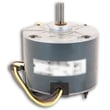
Some higher-cost items on this model’s parts list are electrical and fan components, for example the central air conditioner condenser fan motor HC35GE237 and the circ board HK38EA013. These are not always the most expensive repairs overall, but they are common “big ticket” parts compared to items like a capacitor or contactor.
| Component type | Why it gets expensive | Common symptom |
|---|---|---|
| Compressor | High part cost plus sealed-system labor | Hums, trips breaker, no cooling |
| Condenser fan motor | Motor cost plus diagnostic time | Outdoor fan not spinning, overheating shutdown |
| Control board | Electronics cost, sometimes intermittent faults | Random shutdowns, no response to calls |
| Coil or refrigerant repair | Labor-intensive, requires specialized tools | Icing, low cooling, hissing/oily residue |
Why it matters (how to avoid the biggest repair)
The manual guidance for systems like the 38TDB036300 is clear: restricted airflow and poor maintenance put extra strain on the compressor and other components. We recommend these habits to reduce the chance of a compressor-level repair:
- Check and replace or clean the indoor air filter regularly (commonly every 3 to 4 weeks in heavy use).
- Keep supply and return registers open and unblocked.
- Maintain unrestricted outdoor airflow; keep debris off the unit and allow clearance around it.
- Schedule periodic professional inspection of coils, wiring connections, and overall operation.
Last updated: February 2026
Is it hard to get Carrier parts?
For the Carrier 38TDB036300 split-system air conditioner, getting the right replacement part is usually straightforward when you match the exact model number and the failed component. Availability varies by part type; common electrical parts are often easier to source than model-specific panels or bases. Use the 38TDB036300 owner's manual to confirm what you need before ordering.
What makes Carrier parts seem “hard to get”
- Model and serial matching matters; HVAC parts are not one-size-fits-all.
- Some items are stocked, others are special-order (especially cabinet and base components).
- Correct diagnosis takes time; a bad capacitor can look like a bad motor.
- Safety steps add time; power must be disconnected at all disconnects before opening panels.
Common parts for this model (examples)
These are frequently replaced on outdoor condensing units like the 38TDB036300:
- Circ board HK38EA013 (control board related to unit operation)
- Propeller LA01RA027 (fan blade; damage can cause vibration and poor airflow)
- Central air conditioner condenser fan motor HC35GE237 (outdoor fan not running or overheating)
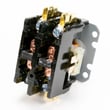
- Run capacitor (weak capacitors cause hard starts and humming; match the exact rating)
Quick availability expectations (typical)
| Part type | Typical availability | What you may notice when it fails |
|---|---|---|
| Fan motor, propeller | Often available but higher cost | Fan not spinning, overheating, vibration |
| Control boards | Sometimes limited | Intermittent operation, no response |
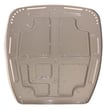
| Base/pan and cabinet parts | More likely special-order | Rust, water damage, mounting issues |
Why it matters
Ordering by model number and confirming the exact part reduces downtime and prevents wiring or fit problems. The manual also stresses disconnecting power to both indoor and outdoor equipment before service.
Last updated: February 2026