
What does 4.0 SCFM at 90 psi mean?
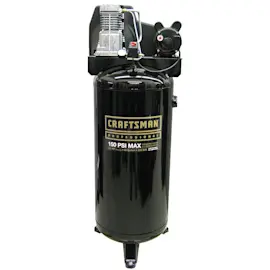
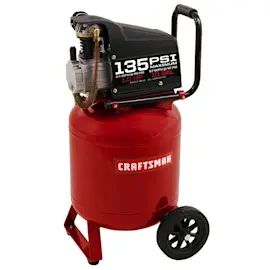
4.0 SCFM at 90 PSI means your Craftsman air compressor model 10217028 can deliver about 4 standard cubic feet of air per minute while maintaining 90 PSI at the outlet. It is the key airflow rating we use to match the compressor to air tools that run around 90 PSI.
How to use that number to pick tools
Most pneumatic tools list an air requirement in SCFM (or CFM) at 90 PSI. For reliable performance, we match the tool’s requirement to the compressor’s rating.
- If a tool needs 3.0 SCFM at 90 PSI, this compressor output is a good fit.
- If a tool needs 5.0 to 6.0 SCFM at 90 PSI, the compressor will run constantly and pressure will drop.
- Short-burst tools (brad nailers, staplers) usually work with lower SCFM.
- Continuous-use tools (DA sanders, grinders, HVLP spray guns) usually need higher SCFM.
- Hose length, small fittings, and restrictive quick-connects reduce real airflow.
SCFM vs PSI (what each one tells you)
| Spec | What it measures | What you’ll notice in use |
|---|---|---|
| SCFM | Air volume (flow) | Whether the tool keeps running without bogging down |
| PSI | Air pressure (force) | Whether the tool hits/turns/sprays with enough power |
Why “standard” matters
SCFM is measured under a defined baseline (standard temperature, pressure, and humidity) so different compressors can be compared fairly. Actual delivered airflow changes with altitude, heat, and restrictions, but SCFM is the best apples-to-apples rating.
Why it matters
If your tool’s SCFM demand is higher than the compressor’s SCFM at the same PSI, the tank pressure drops faster than the pump can refill it. That leads to weak tool performance, longer recovery time, and more frequent cycling.
If performance still seems low
Use these quick checks before assuming the pump is worn:
- Set the regulator above the tool’s minimum requirement.
- Check for leaks at the coupler, hose, drain valve, and fittings.
- Confirm the tank builds to normal cut-out pressure, then holds.
- Drain moisture from the tank; water reduces usable air volume.
- If it will not build or hold pressure, follow air compressor won't build tank pressure.
For parts and diagrams for Craftsman 10217028, start with the model parts list, or search by model on Sears PartsDirect.
Last updated: February 2026
How to read compressor model number?
For a Craftsman air compressor like model 10217028, the model number is the identifier we use to match the correct parts list and diagrams; it is not a universal “code” that reliably tells tank size, PSI, or voltage across all brands. Start by using the full model number exactly as printed on the data label, then use Sears PartsDirect to pull the correct parts breakdown.
Where to find the model number on an air compressor
Most air compressors list the model number on a data label located on one of these spots:
- The tank near the motor/pump assembly
- The frame or handle upright
- Near the regulator and gauges panel
- On the shroud or motor cover (less common)
Write it down exactly, including any dashes or extra suffix characters.
How to interpret what you see (what matters most)
Air compressor labels often show multiple identifiers. Use this quick guide:
- Model number: the main lookup key for parts and diagrams (example: 10217028)
- Serial number: production identifier; helpful for confirming revisions
- Electrical rating: volts (V), amps (A), and phase; used for pressure switch and motor matching
- Pressure ratings: max tank PSI and cut-in/cut-out settings (often listed separately)
Common label fields and what they’re used for
| Label field | What it tells you | Why you need it |
|---|---|---|
| Model number | Which parts list applies | Prevents ordering the wrong valve, switch, or gauge |
| Serial number | Build/run information | Helps confirm version changes |
| Voltage/amps | Electrical requirements | Helps match motor, cord, pressure switch |
| Max PSI | Tank pressure limit | Helps diagnose safety valve popping and regulator issues |
Why “digit-by-digit decoding” usually doesn’t work
Some refrigeration compressors (and some industrial components) use standardized nomenclature where digits map to voltage or certification. Consumer air compressors, including many Craftsman units, do not follow one universal digit map. The reliable approach is matching by model number and then confirming the part description in the diagram.
Why it matters
Using the correct model number prevents mismatches on high-impact parts like the pressure switch, check valve, regulator, and tank pressure gauge, which can cause no-start, no-pressure, or constant-leak symptoms.
Related troubleshooting and repair help
Last updated: February 2026
What company makes Craftsman air compressors?
Craftsman is a brand name, so Craftsman air compressors (including model 10217028) have been built by different original equipment manufacturers (OEMs) over the years. The actual maker depends on the model and production run; you can confirm it by checking the data plate and matching the model and code information when ordering parts through Sears PartsDirect.
How to identify the OEM for your Craftsman 10217028
Look for the compressor’s data plate (usually on the tank or frame). The most useful details are:
- Model number: 10217028
- Manufacturing code or prefix (often near the model/serial)
- Serial number (helps narrow production run)
- Voltage and amperage (helps match motor and pressure switch specs)
- Tank size and max PSI (helps match regulator and safety valve ranges)
Common OEMs you may see on Craftsman air compressors
Different OEMs have produced Craftsman compressors depending on the era and design. These names are commonly associated with Craftsman-branded units:
| What you see | What it means | Why it matters for parts |
|---|---|---|
| Craftsman on the shroud/tank | Brand label | Does not identify the OEM by itself |
| OEM name on data plate | Actual manufacturer | Helps match pump, motor, and valve styles |
| Model/prefix codes | Production family | Helps avoid ordering look-alike parts |
Why it matters
Air compressor parts like the pressure switch, check valve, regulator, tank pressure gauge, and safety valve can look similar across brands but differ in thread type, cut-in/cut-out settings, and port layout. Identifying the OEM prevents mismatched parts and repeat failures.
If you’re troubleshooting instead of parts shopping
These DIY guides help narrow the failure to a specific system (power, pressure control, pump, or leaks):
- Air compressor won't start
- Air compressor won't build tank pressure
- Air compressor air leaks
- How to replace an air compressor pressure switch
Last updated: February 2026
What is the most common cause of air compressor failure?
The most common cause of air compressor failure on a Craftsman air compressor like model 10217028 is poor maintenance that leads to overheating and accelerated wear (dirty intake filter, restricted cooling airflow, loose fittings, and neglected draining). Those conditions quickly trigger leaks, hard starting, and pump damage.
Most common failure causes (what we see most often)
- Overheating from blocked cooling fins, poor ventilation, or long run times
- Dirty or clogged intake filter that makes the pump work harder
- Moisture left in the tank (not draining) that promotes internal corrosion and valve issues
- Air leaks at fittings, regulator, hose connections, or the tank drain
- Electrical issues such as a weak start capacitor, failing pressure switch, or damaged cord
- Worn pump components (reed valves, piston seal, cylinder) that reduce compression
Quick checks you can do before replacing parts
- Confirm power and reset: verify the outlet, extension cord gauge, and any reset button.
- Listen at shutoff: a constant hiss after the motor stops often points to a check valve or unloader issue.
- Check for leaks: spray soapy water on fittings and look for bubbles.
- Watch the gauges: if tank pressure rises slowly or stalls, suspect pump wear or a major leak.
- Inspect airflow: clear dust from the pump and shroud so the unit can cool properly.
Symptom-to-cause guide
| What you notice | Most likely cause | What to do next |
|---|---|---|
| Won’t start | Power issue, pressure switch, capacitor, motor overload | Follow air compressor won't start |
| Runs but won’t build pressure | Leak, worn pump valves/seals, bad check valve | Follow air compressor won't build tank pressure |
| Tank loses pressure sitting | Leak at fittings, drain valve, regulator, tank check | Follow air compressor tank won't hold air |
| Safety valve pops | Overpressure, faulty pressure switch, restricted airflow | Follow air compressor safety valve keeps popping open |
Why it matters
Overheating and leaks force the pump and motor to run longer than designed. That increases current draw, raises operating temperature, and wears valves and seals faster, which is why basic upkeep prevents most “sudden” compressor failures.
For model 10217028 replacement parts and diagrams, start with the parts list for your model, or search by model number on Sears PartsDirect.
Last updated: February 2026
What is the average lifespan of an air compressor?
Most homeowner and DIY air compressors last about 5 to 10 years with normal use and basic maintenance; heavier-duty shop units often run 10 to 20 years. For a Craftsman 10217028 air compressor, lifespan depends most on run time, heat, moisture control, and how quickly leaks are fixed.
Typical lifespan by compressor type
These ranges reflect what we see most often in the field for common compressor designs.
| Compressor type | Typical use | Typical lifespan |
|---|---|---|
| Small portable (DIY) | Brads, inflators, light tools | 5 to 10 years |
| Belt-drive piston (shop) | Frequent tool use | 10 to 15 years |
| Rotary screw (commercial) | Continuous duty | 15 to 20 years |
What shortens lifespan fastest
If you want the longest service life, focus on the items below first.
- Overheating from poor ventilation or long continuous run time
- Moisture left in the tank (internal rust and contamination)
- Air leaks that force extra cycling and heat
- Dirty intake filter that increases wear and reduces output
- Incorrect pressure switch or unloader behavior that causes hard starts
Maintenance habits that extend life
These are the highest-impact habits for most Craftsman air compressors.
- Drain tank moisture after each use (or at least daily in humid conditions)
- Keep the compressor in a clean, well-ventilated area so it runs cooler
- Check fittings and hoses for leaks and repair them promptly
- Verify the pressure switch cuts out normally and the unit restarts smoothly
- Reduce noise and vibration by keeping the unit level and tightening fasteners
Why it matters
A compressor that runs hot, cycles too often, or stores water in the tank wears out the pump faster and can also damage controls like the pressure switch and check valve. Preventing extra cycling and moisture is the simplest way to protect performance and extend service life.
Helpful DIY troubleshooting and repair resources
If your compressor is already showing signs of wear, these guides help you pinpoint the cause and decide what to repair.
If you need replacement parts for Craftsman 10217028, start with the parts list for this model, or search by model number on Sears PartsDirect.
Last updated: February 2026