Owner’s manual
 Error Codes



How to hard reset kenmore washer?
To hard reset your Kenmore washer model 11021112022, unplug it (or switch off the breaker) for 2 minutes, then restore power and run a cycle. This clears many temporary control glitches; if problems return, run the model’s diagnostic or calibration steps in the 11021112022 owner's manual.
Hard reset steps (power reset)
- Press Power/Cancel to stop the cycle.
- Unplug the washer or turn OFF the circuit breaker.
- Wait 2 minutes (this lets the control fully discharge).
- Restore power.
- Select a normal cycle and press Start.
If the washer still acts up: do these quick checks
A reset will not fix a mechanical failure or a drain or fill problem. Before you chase parts, we recommend:
- Confirm the washer is plugged into a grounded 3-prong outlet (no extension cord).
- Make sure both water faucets are fully open and inlet hoses are not kinked.
- Verify the lid closes firmly; a lid lock issue can look like a “won’t start” problem.
- If the washer will not drain, check the drain hose routing and standpipe height.
- If the washer is shaking or walking, re-level the feet (leveling reduces noise and vibration).
Common “reset didn’t help” symptoms and likely causes
| Symptom after reset | What to check first | Related part (if needed) |
|---|---|---|
| Won’t start or stops immediately | Lid lock engagement, lid strike alignment | Lid lock-sol W11700916, washer lid strike W11457841 |
| Won’t fill or fills slowly | Screens in inlet valve, water pressure, hose kinks | Washer water inlet valve W11165546 |
| Won’t drain | Drain hose, pump obstruction, pump operation | Pump assembly, drain W11399437 |
Why it matters
A hard reset is a fast way to clear a control-board “hang” after a power flicker or interrupted cycle. If the same symptom returns, the washer is usually reacting to a real condition (lid lock, draining, filling, or leveling) that needs correction.
Last updated: January 2026
What is the life expectancy of a Kenmore washer?
Most Kenmore washers, including model 11021112022, typically last 10 to 15 years with normal household use. Lifespan depends most on load size, detergent choice (HE detergent), installation, and routine maintenance such as hose replacement and periodic cleaning outlined in the 11021112022 washer installation & care manual.
Typical lifespan ranges (what we see most often)
These ranges help set expectations for a residential washer like the Kenmore 11021112022.
- 10 to 15 years: typical life expectancy for most Kenmore washers
- 8 to 12 years: heavy use (large families, frequent bulky loads)
- 12 to 18 years: lighter use plus consistent care (proper leveling, correct detergent, good ventilation)
- 5 years for inlet hoses: replace to reduce risk of hose failure (a common preventable issue)
| Usage pattern | What usually shortens life | What helps most |
|---|---|---|
| Heavy, daily loads | Overloading, frequent unbalanced spins | Smaller loads, redistribute items |
| Normal household use | Skipping cleaning and inspections | Monthly cleaning routine |
| Occasional use | Long periods of non-use with water left in system | Non-use and vacation care steps |
Maintenance that extends washer life
We recommend following the care steps in your manual and focusing on the items that most often cause early failures.
- Use High Efficiency (HE) detergent and avoid over-dosing
- Keep the washer level to reduce vibration and drivetrain wear
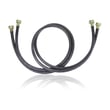
- Inspect fill hoses for bulges, kinks, cuts, wear, or leaks
- Replace inlet hoses at 5 years and mark the replacement date
- Run a cleaning cycle periodically to reduce residue and odors
- Avoid storing or operating the washer below 32°F to prevent freeze damage
Parts that commonly wear as a washer ages
If performance changes over time (no spin, won’t drain, loud noise), these are common wear items on many Kenmore top-load platforms.
- Drive belt W11239857 (slipping, squealing, weak spin)
- Pump assembly, drain W11399437 (won’t drain, slow drain, humming)
- Washer water inlet valve W11165546 (no fill, slow fill, hot or cold water issues)
- Lid lock-sol W11700916 (won’t start, lid won’t lock)
Why it matters
A washer that is installed correctly and maintained (especially hoses and cleaning) usually reaches its full expected lifespan and avoids sudden leaks, drain problems, and vibration-related wear.
Last updated: January 2026
What does F-22 mean on a washing machine?
On a Kenmore washer like model 11021112022, the F-22 code points to a door or lid lock system problem (the control is not sensing the lock correctly). The most common fixes are checking the lock, strike, and wiring, then restoring power.
What to check first (quick, safe steps)
- Unplug the washer for 2 minutes, then plug it back in (this resets the control).
- Make sure the lid closes fully and nothing is caught between the lid and top.
- Inspect the lid strike for cracks, looseness, or misalignment.
- Listen for the lock to click when you start a cycle.
- Confirm the outlet is a grounded 3-prong outlet and avoid extension cords (power issues can cause false lock errors).
For model-specific operating and safety guidance, follow the troubleshooting and electrical notes in the 11021112022 owner's manual.
Parts that commonly cause an F-22 style lock error
If the lid will not lock, locks then immediately unlocks, or the washer will not start, these parts are common suspects:
- Lid lock-sol W11700916 (lock mechanism and lock sensing)
- Washer lid strike W11457841 (the plastic strike the lock grabs)
- Lower wiring connections (loose plug, corrosion, pinched harness)
Symptoms and likely causes
| What you notice | Most likely cause | What we recommend |
|---|---|---|
| Won’t start, no lock “click” | Lid lock not engaging | Check strike alignment; test/replace lid lock |
| Starts then stops with F-22 | Intermittent lock signal | Reseat connectors; inspect harness; replace lock if worn |
| Lid closes but feels “off” | Broken/loose strike | Replace strike; verify lid closes squarely |
Why it matters
The lid lock is a safety system. If the washer cannot confirm the lid is locked, it may stop to prevent spinning with the lid open, which protects you and prevents damage to the basket and drive system.
Last updated: January 2026