Owner’s manual
 Error Codes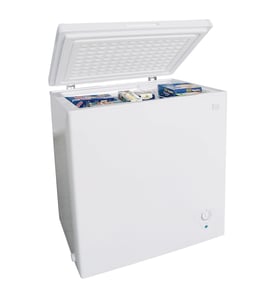



How many cubic feet is a Kenmore freezer model 25318702210?
Kenmore chest freezer model 25318702210 is a 7.0 cubic foot chest freezer. You can confirm the rated capacity and other specifications in the 25318702210 owner's manual.
Where to verify the capacity (fastest checks)
Look in these common spots in the 25318702210 owner's manual:
- Product specifications or features section
- Model and serial tag information (often referenced in the manual)
- Electrical and performance specifications
- Any page labeled “specifications” or “technical data”
What 7.0 cu ft means for storage
A 7.0 cu ft chest freezer is typically considered a compact-to-medium size; it is a good fit for bulk buys and overflow frozen foods.
| Capacity class | Typical cu ft range | Common use |
|---|---|---|
| Compact | 5 to 7 | Small households, limited space |
| Medium | 7 to 10 | Weekly bulk shopping, meal prep |
| Large | 10 to 15 | High-volume storage |
Why it matters
Knowing the exact cubic feet helps you plan food storage, choose the right organization baskets, and avoid overloading, which supports steady temperatures and efficient compressor run time.
Parts that help maintain usable space and temperature
If you are trying to maximize storage and keep temperatures consistent, these model-matched parts are commonly involved:
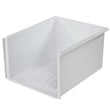
- Freezer basket 5304439835 (organizes food so air can circulate)
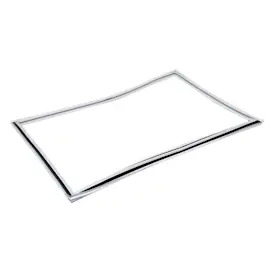
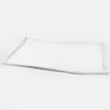
- Freezer lid gasket 5304489973 (helps prevent warm air leaks that reduce performance)
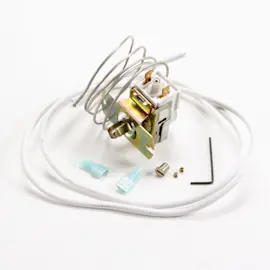
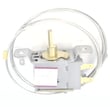
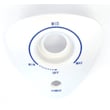
- Frigidaire freezer temperature control thermostat 5304476700 (regulates cooling cycles)
Last updated: February 2026
How to move a heavy chest freezer?
To move a heavy Kenmore chest freezer model 25318702210, we unplug it, empty it, and move it upright using an appliance dolly with straps. Keeping it upright protects the sealed refrigeration system and helps it cool normally after the move. See the handling and transport notes in the 25318702210 owner's manual.
Safe moving steps (what we do)
- Empty the freezer (food, baskets, loose items) to reduce weight and prevent damage.
- Unplug and defrost if there is ice buildup; dry the interior so water does not spill.
- Tape or secure the lid so it cannot swing open while you tilt the cabinet.
- Use an appliance dolly; tilt the freezer slightly and slide the dolly toe plate under the base.
- Strap the freezer to the dolly at two points (upper cabinet and lower cabinet).
- Move slowly over thresholds; have a second person spot the load and protect floors.
Upright vs. on its side (quick guidance)
| Position during move | Recommended? | Why |
|---|---|---|
| Upright | Yes | Best for compressor oil control and normal restart |
| On its side | Avoid | Oil can migrate; cooling issues can follow |
After you place it in the new spot
- Set it upright and level.
- Wipe the lid seal and rim; a poor seal can cause warm temps and frost.
- If the freezer struggles to hold temperature after the move, the temperature control can be a likely suspect; for this model, the freezer temperature control thermostat 5304476700 is a common control component.
Why it matters
A chest freezer is top-heavy and awkward; using a dolly and straps prevents tip-overs, cabinet damage, and lid misalignment that can lead to air leaks and temperature problems.
Last updated: February 2026
What can cause a chest freezer to stop working?
A Kenmore chest freezer model 25318702210 can stop working because it is not getting power, the compressor is not starting, airflow and heat removal are restricted, or a control component (like the thermostat) is failing. Start with power and temperature settings, then check sealing and frost buildup.
Quick checks first (fastest fixes)
- Confirm the outlet has power (try a lamp); reset the breaker or GFCI if tripped.
- Make sure the control is not set to “off” or the warmest setting; re-set to a mid-range setting.
- Listen for the compressor: a steady hum is normal; repeated clicking often points to a start problem.
- Check the lid closes fully and the gasket is making contact all the way around.
- Look for heavy frost or ice that could block cooling; manual defrost if needed.
Common causes and what you’ll notice
| Likely cause | Typical symptom | What to do next |
|---|---|---|
| No power or bad cord/outlet | No lights, no sound | Verify outlet power and cord condition |
| Dirty condenser area / poor ventilation | Runs a lot, weak cooling | Clean dust, improve clearance around freezer |
| Overpacking or blocked air circulation | Warm spots, slow freezing | Reorganize contents; leave space for airflow |
| Lid not sealing (gasket leak) | Frost near rim, moisture, longer run time | Inspect/clean gasket; replace if torn (freezer lid gasket 5304489973) |
| Failed temperature control | Won’t cycle correctly, too warm or too cold | Test/replace thermostat (frigidaire freezer temperature control thermostat 5304476700) |
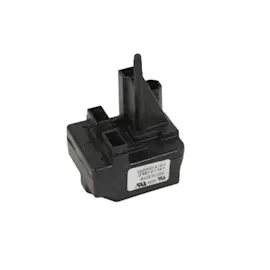
| Compressor start issue (relay) | Clicking, compressor won’t stay on | Follow how to replace a freezer compressor start relay |
Why it matters
When a chest freezer cannot remove heat efficiently (dirty condenser area, poor airflow, bad lid seal) or cannot start and control the compressor (start relay, thermostat), temperatures rise quickly and food safety can be affected.
Model-specific tip
Use the wiring and control location diagrams in the 25318702210 owner’s manual to identify the thermostat/control area and safe access points before testing or replacing parts.
Last updated: February 2026
Why is my chest freezer leaking water from the bottom?
Water under a Kenmore 25318702210 chest freezer is almost always from condensation or defrost meltwater that has nowhere to go, or from warm, humid air leaking past the lid seal and turning into water. We focus on clearing ice buildup, improving the lid seal, and confirming the freezer is level.
Quick checks that fix most leaks
- Unplug the freezer before inspecting or melting ice.
- Look for a sheet of ice on the bottom; when it melts, it can run out and puddle.
- Check the lid is closing fully and not hitting baskets or packages.
- Verify the freezer is level; a slight forward tilt can help the lid seal consistently.
- Reduce humid air entry: limit lid-open time and wipe moisture from the rim.
Most common causes and what to do
| What you see | Likely cause | What we recommend |
|---|---|---|
| Water only after opening the lid a lot | Humid air condensation | Minimize lid-open time; wipe rim dry; keep food organized |
| Ice on the floor of the freezer | Warm-air leak at lid or heavy humidity | Defrost fully; check gasket contact all around |
| Water appears near one corner | Freezer not level or lid not aligned | Level the cabinet; confirm lid closes evenly |
| Persistent sweating around lid | Lid gasket not sealing | Inspect and replace the gasket if torn or flattened |
Parts that commonly solve the problem
If the lid seal is cracked, loose, or permanently flattened, replacing it stops warm air from entering and creating condensation.
If temperatures swing (too warm, then refreezing meltwater), the control can be a contributor.
Why it matters
Water leaks are usually a symptom of warm air getting in. That forces longer run times, increases frost, and can lead to soft food, freezer burn, and higher energy use.
Model-specific reference
Use the 25318702210 manual for the correct defrosting method, leveling guidance, and any model-specific notes about moisture control and normal condensation.
Last updated: February 2026