
Are all table saw arbor nuts the same size?
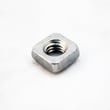
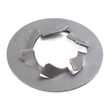
No. Table saw arbor nuts are not all the same size because arbor shaft diameter, thread size, and thread direction vary by saw design. On the Craftsman 113241730 9" direct-drive table saw, you need to match the nut to the exact arbor threads and flange setup, not just the blade bore.
What actually has to match
Arbor nuts are defined by more than “table saw” or “9-inch”:
- Arbor shaft diameter (common sizes include 5/8 inch on many saws)
- Thread pitch (fine vs coarse threads)
- Thread direction (right-hand vs left-hand threads)
- Nut style (hex nut, flange nut, or a nut used with a separate washer)
- Arbor length and flange thickness (affects how much thread engagement you get)
Quick reality check: blade bore vs arbor nut
Many blades share common bore sizes, but that does not make arbor nuts universal.
| Item | What’s often “standard” | What varies a lot |
|---|---|---|
| Saw blade bore (center hole) | Commonly 5/8 inch on many table saw blades | Some blades use 1 inch bore or reducer bushings |
| Arbor nut | No true universal standard | Diameter, pitch, direction, thickness, flange style |
How we recommend confirming the correct arbor nut
Use these steps to avoid cross-threading or a loose blade:
- Confirm the model number is 113241730 on the saw’s ID tag
- Remove the blade and inspect the arbor threads for damage or flattening
- Use a thread gauge (or compare to known nuts) to identify thread pitch
- Note whether the nut tightens clockwise or counterclockwise
- When ordering, search by model number on Sears PartsDirect so the nut matches the correct Craftsman arbor assembly
Why it matters
The arbor nut is a primary blade-retention fastener. If the nut is the wrong thread or style, it can loosen during cutting, damage the arbor threads, or prevent the blade from clamping flat against the arbor flange.
Last updated: February 2026
How much is a Craftsman professional table saw 113241730?
A Craftsman 113241730 9" direct-drive table saw typically sells in the used market because it is an older model; most working units land around $150 to $400, with price driven mainly by condition and whether key safety parts are included.
What affects the price most
- Overall condition: smooth height/tilt adjustment, flat table, no excessive arbor play
- Motor health: starts quickly, no burning smell, no heavy sparking at the brushes
- Fence and miter gauge: complete, straight, and locks securely
- Safety equipment: blade guard, splitter/riving-style parts, anti-kickback pawls (if included)
- Included extras: stand, dado insert, extra blades, push stick, original hardware
Quick pricing guide (common scenarios)
| Condition / package | What you usually see | Typical price range |
|---|---|---|
| Parts-only / not running | Missing fence or motor issues | $25 to $125 |
| Running, basic setup | Usable but worn, limited accessories | $150 to $250 |
| Clean, tuned, complete | Fence locks well, guard included | $250 to $400 |
How we recommend valuing your exact saw
- Confirm the model tag reads 113241730 (not a close variant).
- Check the top for rust pitting and verify the blade raises, lowers, and tilts smoothly.
- Make a short test cut in hardwood; listen for bogging or beltless direct-drive chatter.
- Price higher only if the fence is solid and the saw includes the guard and throat plate.
Why it matters
Table saw value is tied to accuracy and safety. A complete Craftsman 113241730 with a dependable fence and intact guarding is worth significantly more than a similar saw missing those parts because replacements can be hard to match correctly.
For help confirming the exact model number before you shop for parts, use how to find your appliance model number (and what it means for parts).
Last updated: February 2026
How to get rid of an old table saw?
If you are getting rid of an old Craftsman 113241730 9-inch direct-drive table saw, the best options are to sell or donate it if it still runs, or recycle it through a local scrap-metal or e-waste program if it does not. Before transport, remove the blade and secure the cord so it cannot start accidentally.
Best disposal options (from most to least value)
- Sell or give away: List it locally as “working” or “for parts” and include the model number 113241730.
- Donate: Many community shops, schools, and reuse programs accept working power tools.
- Recycle as scrap metal: Most table saws contain a lot of steel and aluminum that scrap yards accept.
- E-waste drop-off: If the motor, switch, or wiring is damaged, an e-waste facility can route it properly.
- Junk removal: Use this when you cannot transport it safely.
Safety steps before you move or dispose of it
- Unplug the saw and remove the blade.
- Lower the blade fully and lock any height or bevel adjustments.
- Remove loose accessories (miter gauge, rip fence, throat plate) and bag the hardware.
- Tape or tie the power cord to the cabinet so it does not snag.
- If the cord insulation is cracked or wires are exposed, avoid handling the damaged area; wear gloves.
Blade handling: what to do with it
Saw blades are sharp and should be handled separately from the saw.
| Item | What to do | Why |
|---|---|---|
| Steel blade | Wrap in cardboard and tape closed; recycle with scrap metal if accepted | Prevents cuts and makes recycling easier |
| Carbide-tipped blade | Wrap and label “sharp”; many scrap yards still accept it | Carbide tips can change how it is processed |
| Rusted or damaged blade | Wrap and dispose per local rules | Reduces injury risk during handling |
Why it matters
A table saw is heavy, has sharp edges, and includes electrical components. Disposing of it through reuse or recycling keeps metal out of landfills and reduces the chance of injuries during curbside pickup.
For help confirming the exact model number on your saw before listing it or ordering replacement items, use how to find your appliance model number (and what it means for parts).
Last updated: February 2026
Can you use an 8 inch blade on a 10 inch table saw?
Yes; you can use an 8-inch blade on a 10-inch table saw (including many Craftsman saws like model 113241730) if the blade’s arbor hole matches the saw’s arbor and the blade RPM rating meets or exceeds the saw’s no-load speed. You will lose cutting depth.
What changes when you switch to an 8-inch blade
An 8-inch blade is smaller, so the saw behaves a little differently:
- Maximum cut depth decreases by about 1 inch compared with a 10-inch blade
- The blade may sit lower relative to the guard, splitter, or riving knife; alignment must be checked
- The throat plate opening may not support the smaller blade well for narrow offcuts
- Cut quality can change depending on tooth count and grind (rip vs crosscut vs combination)
Compatibility checklist (do these before you install)
Use this quick check to avoid vibration, binding, or unsafe setups:
- Arbor hole size matches your saw (many 10-inch blades are 5/8 inch arbor)
- Blade RPM rating is at least the saw’s no-load RPM
- Blade clears the throat plate at full height and at bevel angles
- Guard, splitter, or riving knife can be installed and aligned with the smaller blade
- Blade kerf is compatible with the splitter/riving knife thickness (to reduce kickback risk)
8-inch vs 10-inch blade: practical differences
| Item | 8-inch blade on a 10-inch saw | 10-inch blade on a 10-inch saw |
|---|---|---|
| Max cut depth | Lower | Higher |
| Typical use | Thin stock, specialty cuts | General-purpose cutting |
| Safety setup | May require extra checks | Usually straightforward |
Why it matters
Blade diameter affects cut capacity and how well the safety hardware lines up. Confirming arbor fit, RPM rating, and splitter or riving-knife alignment helps prevent binding and kickback.
For help confirming you have the exact model information when selecting accessories, use how to find your appliance model number (and what it means for parts).
Last updated: February 2026