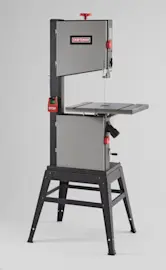
Owner’s manual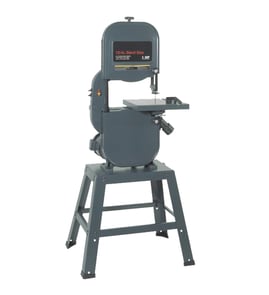

How do I know the size of my bandsaw blade?
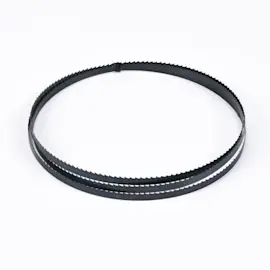
For your Craftsman band saw model 351214191, the blade size is defined by length, width, and teeth-per-inch (TPI). The owner's manual lists a 62-inch blade length; you can confirm width and TPI by measuring the blade you have installed.
Blade size for Craftsman 351214191
From the model specifications, we size blades using these key measurements:
- Blade length: 62 inches (the loop length)
- Blade width: measured from tooth tip to the back edge of the blade
- Blade pitch (TPI): teeth per inch, which affects cut speed and finish
| Measurement | What it means | How to check it |
|---|---|---|
| Length | Total loop length | Use the manual spec (62 inches) or measure the loop |
| Width | Tooth tip to back of blade | Measure across the blade with a ruler/caliper |
| TPI | Teeth per inch | Count teeth in 1 inch (or count 1/2 inch and double) |
How to measure your current blade (safe method)
If you are replacing an unknown blade, measuring the old one is the fastest way to match it.
- Unplug the band saw and open the wheel covers
- Wear work gloves; band saw teeth are sharp
- Find the weld (or mark any spot) as your starting point
- Lay the blade out in a large loop and measure the full loop length with a tape measure
- Measure width from the tooth tip to the back edge
- Count TPI over 1 inch for an accurate pitch
Choosing the right width and TPI for the cut
The manual explains that blade width affects rigidity and turning radius, and TPI affects smoothness.
- Wider blades track straighter for rip cuts and resawing
- Narrower blades handle curves better
- For soft materials, a typical choice is 6 to 8 TPI
- For harder materials, a typical choice is 8 to 12 TPI
- Keep at least 3 teeth in the cut to reduce tooth stripping and rough cutting
Why it matters
Using the correct blade length (62 inches) keeps tension and tracking in range, and matching width and TPI helps prevent slow cutting, wandering cuts, and ragged edges.
For step-by-step blade swap and setup tips, use our guide: how to replace a band saw blade.
Last updated: February 2026
What are the parts of a bandsaw?
On the Craftsman band saw model 351214191, the main parts include the frame, table and miter gauge, the upper and lower wheel system that carries the blade, and the tension, tracking, and blade guide adjustments that keep cuts accurate. For labeled diagrams, use the owner's manual.
Main band saw parts (and what they do)
- Frame/cabinet: Supports the wheels, table, and guide assemblies
- Upper wheel and lower wheel: Carry the blade; the lower wheel is the driven wheel
- Blade: The cutting band; blade width and tooth pitch affect speed and cut quality
- Table assembly: Supports the workpiece; includes the blade slot and tilt/squaring adjustments
- Miter gauge assembly: Guides angled cuts on the table
- Blade tension control: Sets blade tension for stable tracking and straighter cuts
- Tracking control (often with a tracking window): Centers the blade on the wheels
- Blade guides: Keep the blade aligned at the cut; adjust before operation
Drive system parts you will see on many benchtop band saws
This style of Craftsman band saw commonly uses a belt-and-pulley drive to turn the lower wheel.
| Assembly | Typical components | What it affects |
|---|---|---|
| Wheel system | Upper wheel, lower wheel, wheel band (tire) | Tracking, vibration, blade stability |
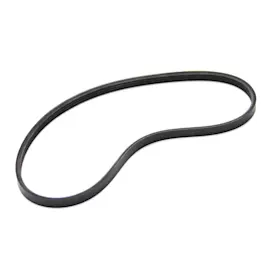
| Drive system | Motor pulley, driven pulley, belt, shafts | Power transfer and cutting performance |
| Work support | Table, table stop, locking handle, miter gauge | Accuracy and repeatability |
Why it matters
When you know which assembly does what, troubleshooting gets faster. Crooked or rough cuts usually trace back to the blade, guide adjustment, tracking, or table alignment.
Quick safety and setup reminders
- Turn the saw off, unplug it, and wait for the blade to stop before clearing jams
- Wear ANSI Z87.1 safety goggles
- Mount the saw to a stable, level bench using the base mounting holes
- Tension and track the blade, then adjust blade guides before operating
For common symptoms and fixes, use our band saw repair guide landing page.
Last updated: February 2026
What is the 3-tooth rule for bandsaws?
For the Craftsman band saw model 351214191, the 3-tooth rule means you keep at least three blade teeth in contact with the workpiece during the cut. This prevents blade shocking (each tooth taking too big a bite), which can strip teeth and make cuts rough; see the blade pitch section in the owner's manual.
How to apply the 3-tooth rule (quick method)
Pick a blade pitch (TPI, teeth per inch) based on the material thickness at the cut line so 3 or more teeth are engaged.
- Measure thickness where the blade enters the material.
- Choose a TPI that puts 3+ teeth in that thickness.
- If the blade chatters or grabs, switch to a finer TPI.
- If sawdust packs in the gullets or the cut slows, switch to a coarser TPI.
- Keep a steady feed rate; forcing the cut increases shocking and drift.
Blade pitch guidance from the manual (351214191)
The manual ties pitch selection to material hardness and tooth engagement.
| Material type | Manual guidance (TPI) | Why it helps |
|---|---|---|
| Soft materials | 6 to 8 TPI | Clears chips well while keeping enough teeth engaged |
| Hard materials | 8 to 12 TPI | Reduces shocking in tougher cuts |
Why it matters
With fewer than three teeth in the cut, each tooth hits too much material at once. That impact increases vibration, can strip teeth, and makes it harder to keep the blade tracking straight.
If the saw still cuts poorly
These checks commonly solve rough cuts or slow cutting even with the right TPI:
- Set the upper blade guide just above the workpiece.
- Adjust guide blocks close to the blade (very small clearance).
- Set the thrust bearing just behind the blade.
- Reduce feed pressure and let the blade cut.
- Replace a dull blade.
For step-by-step troubleshooting, use band saw cutting slowly and the band saw repair guide landing page.
Last updated: February 2026
Who makes 351214191 Bandsaw?
The 351214191 band saw is a Craftsman bench top band saw sold under the Craftsman brand; the documentation for this model identifies Sears Brands Management Corporation as the company behind the product documentation and warranty. For model-specific identification details, use the 351214191 operator's manual.
What the manual tells us for this exact model
In the first pages of the manual for Craftsman model 351214191, we see it labeled as a bench top band saw and tied to Sears branding and documentation.
Key identifiers you can use:
- Model number: 351214191
- Product type: bench top band saw
- Brand: Craftsman
- Documentation publisher: Sears Brands Management Corporation
Why you may see other names mentioned online
Craftsman tools are commonly produced through manufacturing partners over time, so you may see other companies referenced in general discussions. For repairs and parts matching, the most reliable approach is to use the model number (351214191) and the parts list in the manual.
What to match when buying parts
Use these fields together to avoid ordering the wrong item:
- Model number (351214191)
- Part number from the parts list (for example, the manual lists items like the motor, belt, wheels, and bearings)
- Description (example: “belt”, “motor”, “idler wheel”)
Quick reference: brand vs. model vs. manufacturer
| Item | What it means | What to use for parts lookup |
|---|---|---|
| Craftsman | Brand name on the saw | Use for general category filtering |
| 351214191 | Exact model identifier | Use for exact-fit parts matching |
| Manual parts list | Official part breakdown | Use to select the correct part number |
Why it matters
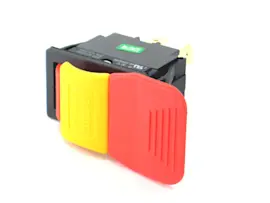
Band saw parts like the blade (62" length), belt, bearings, and switch components vary by design. Matching by model 351214191 prevents fit issues and helps you follow the correct adjustment and safety steps.
Last updated: February 2026