
How do I get rid of an old table saw?
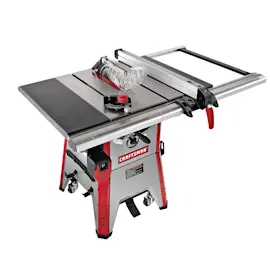
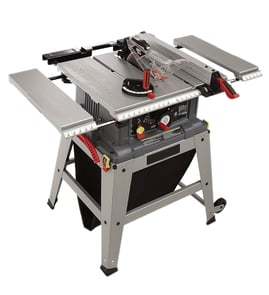
If your Craftsman 137271060 10" table saw still runs, the best way to get rid of it is to sell or donate it; if it is unsafe or non-working, recycle it as metal and dispose of the blade separately so it cannot injure anyone handling it.
Best options (in order)
- Sell it if it powers on and the fence, blade guard, and switch work normally.
- Donate it only if it is complete and safe to use (guard and riving knife present, no exposed wiring).
- Give it away for parts if the motor runs but alignment, arbor, or elevation/tilt mechanisms are worn.
- Recycle as scrap metal if it is broken, missing key safety parts, or has a damaged frame.
- Use a bulk pickup or junk-haul service if you cannot transport it.
Make it safe before it leaves your shop
- Unplug the saw and remove the power cord from the work area.
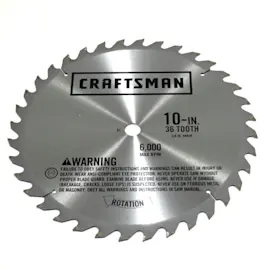
- Remove the blade and pack it separately.
- Lock down moving parts (lower the blade fully; set bevel to 0 degrees).
- Bag small hardware (throat plate, miter gauge, arbor nut, washers) so nothing becomes a hazard.
Blade disposal quick guide
| Item | Safer handling step | Typical destination |
|---|---|---|
| Saw blade | Wrap teeth with cardboard and tape; label “sharp” | Metal recycler or tool/blade recycling program |
| Table saw body/stand | Remove loose parts; tape down cord | Scrap metal yard or bulky-item recycling |
Why it matters
Table saws are heavy and have sharp, high-injury components (blade teeth, cast edges, springs). Securing or separating those parts prevents injuries during loading, transport, and recycling.
Helpful related reading
If you are not 100% sure you have the correct model number before listing it or ordering parts, use how to find your appliance model number (and what it means for parts).
Last updated: February 2026
What size blade is a Craftsman 137271060 table saw?
The Craftsman 137271060 is a 10-inch table saw, so it uses a 10-inch blade (commonly a 5/8-inch arbor hole on most 10-inch saw blades). For best results, match the blade type to your cut (rip, crosscut, or combination).
How to confirm the blade will fit
Before you buy or install a blade, check these fit points on your saw and blade packaging:
- Blade diameter: 10 inches
- Arbor hole size: most 10-inch blades are 5/8 inch
- Blade kerf: thin-kerf blades reduce load; full-kerf blades are more rigid
- Max RPM rating: blade rating should meet or exceed the saw’s no-load speed
- Tooth count: fewer teeth for ripping, more teeth for smoother crosscuts
Quick blade selection guide
| What you’re doing | Typical tooth count (10-inch blade) | What to expect |
|---|---|---|
| Ripping lumber | 24T to 30T | Faster cuts, rougher finish |
| General purpose | 40T to 50T | Balanced speed and finish |
| Crosscut/plywood | 60T to 80T | Smoother finish, slower feed |
Why it matters
Using the correct 10-inch blade helps your Craftsman table saw cut straighter, reduces burning and kickback risk, and keeps the motor from working harder than it should.
Helpful related DIY reading
Last updated: February 2026
Are all table saw miter slots the same?
No. Many 10-inch table saws use a standard miter slot that fits common miter gauges, but miter slot size and the slot profile are not universal. For your Craftsman 137271060 table saw, the right way to confirm fit is to measure your slot before buying a miter gauge, sled runner, or featherboard.
What to measure on your Craftsman 137271060
Use a caliper or a good tape measure and check these points:
- Slot width at the top opening (side-to-side)
- Slot depth (top surface down to the bottom of the slot)
- Any undercut or T-slot lip (a wider area below the opening)
- Runner bar thickness your accessory requires
- How many slots you have and their spacing (helps with crosscut sleds)
Common miter slot sizes you will see
Most accessories are built around a few common standards. Use this as a quick comparison, then verify with your measurements.
| Slot style | Typical opening size | What it affects |
|---|---|---|
| Standard slot | 3/4 in. wide | Fits many miter gauges and sled runners |
| T-slot | 3/4 in. wide with undercut | Allows T-bolts, hold-downs, some featherboards |
| Non-standard/proprietary | Varies | May require brand-specific runners or adjustable bars |
Why it matters (fit and safety)
A loose-fitting miter bar can cause slop in crosscuts and miters; a too-tight bar can bind and pull the workpiece off line. Getting the slot size right helps your miter gauge track smoothly, improves cut accuracy, and reduces kickback risk.
Buying tips that prevent returns
- Choose a miter gauge with an adjustable expansion bar if your slot is slightly oversized.
- If you use a crosscut sled, consider UHMW plastic runners you can plane/sand to a perfect fit.
- If your saw has a T-slot, confirm the accessory is designed for T-slots (not just standard slots).
- When in doubt, search accessories by your model number on Sears PartsDirect so you can compare options more confidently.
Last updated: February 2026
What is the best table saw out there?
The best table saw depends on how you will use it: jobsite portability, shop accuracy, safety features, and budget. For most people, the “best” choice is the saw that matches your work style (portable jobsite vs. contractor vs. cabinet) and has a stable fence, adequate rip capacity, and reliable blade alignment.
How to choose the “best” table saw for your needs
When we help customers with a Craftsman 137271060 10" table saw, we focus on the same decision points that matter for any brand.
- Type of saw: jobsite (portable), contractor, hybrid, or cabinet
- Safety features: riving knife, blade guard, anti-kickback pawls, and a large paddle switch
- Fence quality: locks parallel, stays square, and adjusts smoothly
- Rip capacity: common ranges are about 24 to 32-1/2 in. on many jobsite saws
- Power source: corded (common for 10-inch saws) vs. cordless convenience
- Dust collection: improves visibility and reduces cleanup
Quick comparison: which “best” fits which user?
| If you are… | Best fit | Why it fits |
|---|---|---|
| Moving saws often | Jobsite/portable | Lighter, folding stand options, fast setup |
| Building furniture in a shop | Hybrid or cabinet | Better stability, smoother cuts, stronger fences |
| Prioritizing injury prevention | Safety-focused saw | Advanced safety systems plus standard guarding |
| On a tight budget | Value jobsite saw | Solid basics if fence and alignment are good |
What to check on your current saw before upgrading
If your Craftsman 137271060 is cutting poorly, the issue is often setup or wear, not the “brand.” Check these first:
- Blade condition: dull or pitch-loaded blades cause burning and wandering cuts
- Fence parallelism: fence must be parallel to the blade to reduce binding and kickback
- Blade-to-miter-slot alignment: misalignment hurts accuracy and increases kickback risk
- Riving knife/guard installed and aligned: improves safety and cut quality
- Arbor bearings and belt (if equipped): noise or vibration points to wear
Why it matters
A table saw is only “best” when it cuts accurately and safely for your projects. Matching the saw type to your workspace and keeping the fence, blade, and safety hardware properly aligned reduces kickback risk and improves cut quality.
For general repair and safety guidance before DIY work, use are diy appliance repairs safe.
Last updated: February 2026
Will a 10-inch table saw cut a 4x4?
Yes, a 10-inch table saw can cut a 4x4, but the cut is usually not one pass. On the Craftsman 137271060 10-inch table saw, the max depth of cut at 90° is 3 inches; a 4x4 is about 3-1/2 inches thick, so you finish by flipping the lumber.
What determines one-pass vs two-pass
A “4x4” is nominal sizing; the actual thickness is typically about 3-1/2 inches. The deciding spec is maximum depth of cut at 90° (blade fully raised).
- 3-1/2 inches or more: one-pass cut
- Less than 3-1/2 inches: flip cut (two passes)
- Blade diameter (10-inch) does not guarantee 4x4 capacity
- A sharp blade and correct fence alignment reduce burning and binding
Quick reference
| Item | Typical value | What it means |
|---|---|---|
| Actual 4x4 thickness | 3-1/2 inches | Target depth to cut through |
| Craftsman 137271060 max depth at 90° | 3 inches | Requires a flip cut |
How to do a flip cut safely
- Set the blade to full height and lock the height adjustment.
- Use the rip fence (not the miter gauge) for ripping; keep the board tight to the fence.
- Make the first pass, then rotate the 4x4 180° keeping the same face against the fence.
- Complete the cut with a steady feed rate; use a push stick for the last 12 inches.
- If the kerf starts to close, stop feeding and correct alignment to reduce kickback risk.
Why it matters
Trying to force a one-pass cut when the saw’s depth is shorter can pinch the blade and increase kickback risk. Using a controlled flip cut matches the Craftsman 137271060’s 3-inch capacity and produces a straighter, safer cut.
For help confirming you have the correct model number before looking up specs or ordering parts, use how to find your appliance model number (and what it means for parts).
Last updated: February 2026