 Installation guide
 Owner’s manual
 Error Codes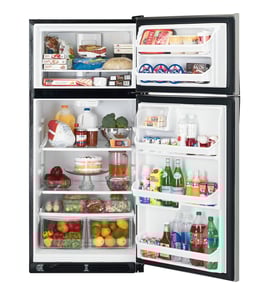




What are the disadvantages of a top mount fridge?
A top-mount refrigerator like the Frigidaire FFHI1835VS1 puts the freezer on top and the fresh-food section below; the main disadvantages are less convenient access to everyday items, fewer premium organization features, and fewer built-in dispenser options compared with many bottom-freezer designs.
Common drawbacks you will notice day to day
- More bending for fresh food: the refrigerator compartment is lower, so you reach down more often.
- Less “grab-and-go” organization: many top-mounts have fewer wide deli drawers, door bins, and flexible shelving than higher-end layouts.
- Fewer dispenser features: top-mount models are less likely to include external water and ice dispensing.
- Smaller freezer usability: the top freezer can feel tighter for bulky items, depending on shelf and bin layout.
- Door-seal sensitivity: if the cabinet is not level or the doors are misaligned, sealing issues show up quickly (warm spots, frost, moisture).
What you can do to reduce the downsides (FFHI1835VS1 tips)
Use these setup steps to improve access and performance:
- Level the cabinet and keep a slight tilt so doors close fully (about 1/4 inch front-to-back).
- Confirm the door seals contact the cabinet on all sides.
- Keep the toe grille and lower front area clear for airflow.
- Follow the recommended installation clearances (typically 3/8 inch sides and top, 1 inch rear).
- Avoid placing the refrigerator where room temps drop below 50°F or rise above 110°F.
For the exact leveling points, clearances, and door checks for this model, use the installation guide.
Quick comparison: top-mount vs bottom-freezer
| Feature | Top-mount (FFHI1835VS1 style) | Bottom-freezer style |
|---|---|---|
| Fresh-food access | Lower, more bending | Eye-level, easier access |
| Organization | Often simpler | Often more flexible |
| Dispensers | Less common | More common |
| Cost and complexity | Often lower | Often higher |
Why it matters
Most “top-mount disadvantages” are really convenience tradeoffs. If the refrigerator is installed level with proper clearances and good door sealing, a top-mount design still cools reliably and efficiently for everyday use.
Last updated: February 2026
What is the upper part of a fridge called?
On a Frigidaire FFHI1835VS1 top-mount refrigerator, the upper compartment is called the freezer. It’s the section designed to keep foods frozen, and on some models it also houses the ice maker and freezer temperature control (see the owner's manual).
What the freezer does
The freezer compartment is built to maintain below-freezing temperatures so you can store frozen foods safely and longer-term.
Common freezer functions include:
- Freezing and long-term storage of food
- Making and storing ice (if equipped with an ice maker)
- Circulating cold air to help cool both compartments
- Running automatic defrost cycles (you may see a red glow in freezer vents during defrost)
Freezer vs. refrigerator compartment (quick comparison)
| Compartment | Typical location on this model style | Primary purpose | Common controls |
|---|---|---|---|
| Freezer | Top | Keeps food frozen | Freezer control (often left at recommended) |
| Fresh food (refrigerator) | Bottom | Keeps food cold (not frozen) | Refrigerator temperature control |
Why it matters
Knowing the correct name helps when you’re using the controls, reading troubleshooting steps, or ordering the right replacement parts for the correct compartment (for example, a freezer door seal vs. a refrigerator door seal).
Related tips for this model
For best performance in the freezer and fresh food sections:
- Adjust temperatures gradually and allow time to stabilize
- Don’t block air vents with food items
- Keep doors aligned and sealing properly
- If your ice maker is not connected to water, turn the ice maker off to prevent noise
Last updated: February 2026
Can I look up Frigidaire parts by model number?
Yes. We recommend looking up Frigidaire parts by entering your full model number (for this refrigerator, FFHI1835VS1) so you get the correct parts list and diagrams for your exact top-mount refrigerator, including items like gaskets, sensors, and control boards.
How to find the model number on your refrigerator
Your model number is on the serial plate. On many Frigidaire top-mount refrigerators, the serial plate is inside the fresh food compartment (often on a side wall) or near the crisper area. The owner's manual shows where to look and what information to record.
Tips for an accurate lookup
- Use the full model number exactly as shown (letters and numbers).
- Add the revision if shown (for example, a dash or suffix).
- Double-check similar characters (0 vs O, 1 vs I).
- Use the parts diagrams to confirm the part location and shape.
- Match the part description to your symptom (cooling, lighting, door sealing, ice maker).
What you can find when you search by model number
Searching by model number pulls up model-specific diagrams and compatible replacement parts for FFHI1835VS1.
| What you need | What the model lookup gives you | Example for FFHI1835VS1 |
|---|---|---|
| Fix a symptom | Likely related parts categories | Cooling, door seal, lighting |
| Confirm fit | Model-matched part list | Correct gasket or sensor |
| Plan a repair | Exploded-view diagrams | Where the part installs |
Common parts customers replace on FFHI1835VS1
These are examples of model-matched parts that often come up during troubleshooting:
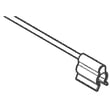
- Refrigerator door gasket 5304528903 (warm spots, moisture, poor sealing)
- Electrolux refrigerator temperature sensor 5303918645 (temperature swings)
- Refrigerator light bulb 5304522314 (no interior light)
Why it matters
Model-number lookup prevents ordering the wrong part. Even within the same Frigidaire refrigerator family, door gaskets, controls, and sensors can vary by revision, and the model-specific diagrams help you confirm the exact match before you start the repair.
Last updated: February 2026
What brand of refrigerator has the least problems?
No single refrigerator brand has the least problems in every home; reliability depends most on the specific model and how complex it is. In general, simpler top-mount refrigerators (like the Frigidaire FFHI1835VS1) tend to have fewer service issues than units with more electronics, in-door ice, and dispensers.
What usually makes a refrigerator more reliable
We see the fewest repeat problems when the design is simple and the basics are kept in good shape.
- Fewer features (no in-door dispenser, fewer control boards)
- Good airflow (condenser area kept clean, vents not blocked)
- Doors sealing tightly (warm air leaks cause long run times and icing)
- Stable temperatures (controls set correctly and given 24 hours to stabilize)
- Correct installation (level cabinet, proper clearances)
Brand vs. model: what to look for when shopping
Instead of chasing a “best brand,” compare the exact model’s design and serviceability.
| What to compare | Usually fewer problems | Usually more problems |
|---|---|---|
| Configuration | Top-mount freezer | Feature-heavy French door |
| Ice and water | No dispenser, optional ice maker | In-door ice and water |
| Controls | Basic temperature controls | Multiple sensors and boards |
| Maintenance | Easy-to-clean condenser area | Hard-to-access condenser area |
Why it matters
Most “reliability” complaints come from heat and moisture getting where they should not: dirty condenser coils, poor door seals, or unstable temperatures. Those conditions increase compressor run time and can lead to cooling, frost, and ice maker symptoms.
Practical steps to reduce problems on your FFHI1835VS1
Use these as a reliability checklist for your Frigidaire top-mount refrigerator:
- Confirm the cabinet is level to reduce vibration and help doors close fully
- Adjust temperature controls gradually; allow 24 hours between changes
- Keep food packages from blocking air vents
- If the cabinet light fails, replace it with a 5-watt (or less) AC LED bulb (per the manual)
- If you suspect a weak door seal, inspect the gasket for gaps and warping
For model-specific operation, settings, and troubleshooting guidance, use the owner's manual.
Last updated: February 2026
What is the most common problem with Frigidaire refrigerators?
Cooling complaints are the most common issue we see with Frigidaire refrigerators, including the Frigidaire FFHI1835VS1. Most often, the refrigerator warms up or the freezer frosts because airflow is restricted, a fan is not moving air, or the doors are not sealing tightly; ice maker water-supply issues are another frequent problem.
Most common symptoms (and what they usually point to)
- Fresh food section warm but freezer cold: restricted airflow, frost buildup, or an evaporator fan issue
- Both sections warm: dirty condenser area, condenser fan problem, or compressor start problem
- Excessive frost in freezer: door left ajar, torn gasket, or frequent openings
- Temperature swings: control settings changed too quickly or a temperature sensor (thermistor) drifting
- Ice maker not making ice (if equipped): water supply not connected, low pressure, or valve issue
Quick checks for FFHI1835VS1 that solve many “not cooling” calls
We recommend starting with these basics from the FFHI1835VS1 owner's manual before replacing parts:
- Adjust temperatures in small increments and allow time to stabilize (plan on up to 24 hours)
- Do not block cold air vents with food; good circulation is required in both compartments
- Confirm the refrigerator is level and the doors close fully on all sides
- Check for frost buildup on the freezer back wall (a clue that airflow is blocked)
- Listen for the evaporator fan running when the compressor is on
Parts that commonly fix the underlying cause
If troubleshooting points to a failed component, these model-matched parts are common solutions:
| Problem area | What you notice | Part that may be involved (FFHI1835VS1) |
|---|---|---|
| Door sealing | Warm spots, moisture, frost near door | Refrigerator door gasket 5304528903 or refrigerator freezer door gasket 5304528904 |
| Temperature sensing | Temps drift, unit runs too long or not enough | Electrolux refrigerator temperature sensor 5303918645 |
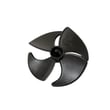
| Air movement in freezer | Warm fridge, noisy or silent fan area | Refrigerator evaporator fan motor 242219206 |
Why it matters
A refrigerator that cannot move air or seal properly runs longer, struggles to hold safe food temperatures, and can build frost that further blocks airflow. Fixing the root cause early prevents repeat warm-ups and reduces strain on the compressor and start components.
Helpful DIY guidance
For model-specific fault patterns and display indicators, use our Frigidaire refrigerator error codes resource alongside the manual.
Last updated: February 2026





