 Owner’s manual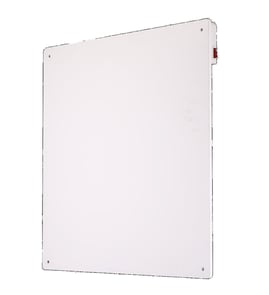

Can you leave a propane wall heater on all night?
No. We do not recommend leaving a propane wall heater running all night while you sleep. Even with safety controls, overnight operation increases risk if venting or combustion air becomes restricted, and it reduces your ability to notice unusual odors, soot, or flame changes. For the Williams 2203622 direct-vent wall furnace, follow the operating and safety instructions in the owner's manual.
A propane wall heater is a fuel-burning appliance; safe operation depends on correct venting, adequate combustion air, and stable burner operation.
Key risks to manage:
- Blocked venting can let harmful gases collect indoors; the manual stresses venting directly outdoors.
- Restricted combustion/ventilation air can cause poor combustion and unsafe operation.
- Pilot or burner problems (pilot not staying lit, burner cycling off) can signal a condition that needs correction.
- Gas leak hazards require immediate action; never test for leaks with an open flame.
- Reduced awareness while sleeping means you may not react quickly to abnormal operation.
If you need heat through the night, use a controlled approach that keeps the furnace operating as designed.
Recommended practices:
- Set a reasonable thermostat temperature instead of running the unit at maximum.
- Keep the vent and air inlet path clear outdoors (no snow, debris, or stored items).
- Make sure access doors are fully closed; the manual notes improper door closure can cause problems.
- Confirm the pilot flame is correct and properly impinges on the thermocouple/generator if your model uses one.
- Install and maintain working carbon monoxide alarms in the home (follow the alarm maker’s placement instructions).
| Situation | What we recommend |
|---|---|
| You are awake and monitoring the heater | Use it normally with proper venting and airflow |
| You are sleeping for the night | Turn it down to a safe thermostat setting or shut it off if you cannot confirm safe operation |
| You notice repeated shutdowns, soot, or unusual flame behavior | Stop using it and have it serviced |
This Williams direct-vent design draws combustion air from outdoors and exhausts outdoors, which is safer than unvented heaters. It still relies on correct installation, unobstructed venting, and proper burner operation to stay safe for long run times.
Last updated: February 2026
Can you put a thermostat on a propane wall heater?
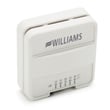
Yes. A propane wall heater can use a wall thermostat when the heater is designed for thermostat control. For the Williams wall furnace model 2203622, the installation instructions cover wall thermostat placement, wiring, and connection at the gas valve; see the 2203622 owner's manual.
This model is set up to work with a wall thermostat (not a line-voltage, 115V thermostat). The thermostat controls the gas valve circuit, so correct wiring and routing are important for safe, steady temperature control.
We follow the same placement rules used in the manual so the thermostat senses average room temperature:
- Mount the thermostat about 5 feet above the floor on an inside wall
- Avoid hot spots (direct sunlight, lamps, TVs, kitchens, fireplaces)
- Avoid cold spots (drafty doors, stairwells, registers, unheated rooms behind the wall)
- Avoid dead spots (behind doors, corners, alcoves)
- Route the thermostat wire to prevent it from being pinched or damaged
A wall furnace thermostat is a low-voltage control connection at the gas valve, not a power feed.
- Do not connect a 115V service line to the gas valve or the wall thermostat
- Leave enough extra thermostat cable at the furnace to make secure connections
- Plug the wall opening with insulation after routing the cable to prevent drafts from affecting readings
- If your furnace has an optional blower, its 115V wiring is separate from the thermostat circuit
Use this table to avoid the most common thermostat mismatch.
| Item to check | What you want for a propane wall furnace | What to avoid |
|---|---|---|
| Thermostat type | Wall thermostat intended for gas heating control | Line-voltage (115V/240V) thermostat |
| Control method | Switches the gas valve control circuit | Sends household power to controls |
| Location | Inside wall, ~5 ft high, away from drafts/heat | Near registers, doors, sun, or corners |
A correctly installed thermostat prevents short cycling, reduces temperature swings, and helps the Williams 2203622 wall furnace heat more evenly. Poor placement or the wrong thermostat type causes nuisance cycling and uncomfortable room temperatures.
Last updated: February 2026
Where is the reset button on a wall heater?
Most Williams wall furnaces, including model 2203622, do not use a single, user-accessible “reset button” like some electric heaters. If your heater stops heating, the first reset-style step is to shut it down, let it cool, then follow the lighting and operating steps in the 2203622 owner's manual.
Before removing panels or touching wiring, we recommend these basic checks:
- Confirm the wall thermostat is calling for heat (set it above room temperature).
- Make sure the gas control knob is in the ON position (not OFF).
- If your unit has an optional blower, confirm power is on and the fan switch is set to High or Low (not Off).
- Let the furnace cool if it overheated; then try normal start-up again.
- Keep the burner and control compartment clean; restricted airflow and dust can cause nuisance shutdowns.
Wall heaters vary a lot; here is where reset devices are commonly found:
| Heater type | What “reset” usually means | Typical location |
|---|---|---|
| Gas wall furnace (like Williams 2203622) | Relighting pilot and restoring normal operation | Control access area and ignition components |
| Electric wall heater | Manual high-limit reset button | Behind front grille or access cover, near the heater assembly |
| Gas furnace with blower accessory | Fan/limit behavior, fan switch settings | Blower compartment and fan switch |
Pressing a random button or bypassing a safety device can create a dangerous condition. On a gas wall furnace, repeated shutdowns usually point to an airflow, venting, pilot/ignition, or control issue that needs correction, not repeated “resetting.”
Stop troubleshooting and contact Sears PartsDirect support or a qualified technician if you notice any of the following:
- The furnace shuts down repeatedly after you restart it
- You smell gas or suspect a gas leak
- The pilot will not stay lit after following the lighting steps
- Wiring looks damaged or overheated
Last updated: February 2026
What to do when a wall heater is not working?
If your Williams wall furnace model 2203622 is not working, start with the basics: confirm the thermostat is calling for heat, the pilot is lit (if equipped), and any manual gas valve is set to ON. Then check power and airflow issues that commonly stop operation.
- If you smell gas: open windows, avoid touching electrical switches, and extinguish open flames.
- If the heater has been under water: do not use it; have a qualified technician inspect it.
- Turn off electrical power before inspecting wiring or internal components.
- Thermostat setting: Set the thermostat higher than room temperature and wait a few minutes.
- Pilot flame: If the pilot is out, relight it using the lighting instructions in the owner's manual.
- Gas valve position: Make sure the gas valve is in the ON position; if it is set anywhere else, the furnace will not operate.
- Access door: Verify the pilot and burner access door is fully closed; an improperly closed door can cause operating problems.
- Airflow restriction: Make sure doors, drapes, or furniture are not blocking the heater louvers.
- Blower models: If your unit has a blower and it does not run, check for a blown fuse and confirm the blower is connected to power.
| Symptom | Most likely cause | What to do |
|---|---|---|
| No heat at all | Thermostat not set, pilot out, gas valve not ON | Set thermostat, relight pilot, set valve to ON |
| Pilot lights but burner will not come on | Pilot safety/thermocouple issue, loose connections | Check pilot flame contact and tighten connections |
| Burner starts then shuts off | Airflow issue, venting issue, door not closed | Clear louvers, check vent outlet, close access door |
| Blower will not run (if equipped) | Fuse blown, no power, fan switch not set | Replace fuse, restore power, set fan switch to ON |
A wall heater that will not run is often being stopped by a safety condition (pilot safety, door position, restricted airflow, or vent blockage). Correcting the root cause restores reliable heat and helps prevent nuisance shutdowns.
Last updated: February 2026