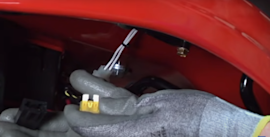
Installation guide
 Owner’s manual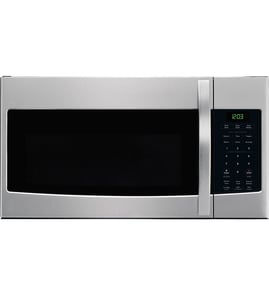



How many cubic feet is a Kenmore Model 66562612200 microwave?
The Kenmore 66562612200 microwave/hood combo is typically a 1.7 cu. ft. over-the-range microwave size. For the exact capacity listed for your unit and its feature set, confirm it in the 66562612200 owner's manual.
How to confirm the capacity on your exact unit
We recommend checking the specification section in the manual, then matching it to the model and serial tag behind the door frame.
- Open the microwave door and locate the model/serial rating plate on the front frame.
- Verify the model number reads 66562612200.
- In the manual, look for “Parts and features” or “Specifications.”
- If your microwave has a cooking rack or turntable differences, match those features to the manual’s diagrams.
- Keep the model and serial numbers handy if you contact service.
Why capacity matters
Capacity (cubic feet) helps you choose the right cookware size, understand usable turntable space, and compare replacement options for an over-the-range installation.
| What you’re comparing | What to use | Why it helps |
|---|---|---|
| Interior capacity | Cubic feet (cu. ft.) | Overall interior volume for dish fit |
| Usable space | Turntable diameter and rack clearance | Real-world fit for plates and bowls |
| Installation fit | Cabinet opening and mounting layout | Ensures the replacement mounts correctly |
Related model notes for 665.62612 series
Your manual covers the 665.62612 model series; the full model 66562612200 is the specific variant. That is why we always recommend confirming the spec line in the 66562612200 owner's manual before ordering accessories like a rack.
Last updated: February 2026
How big is a Kenmore microwave model 66562612200 in inches?
The Kenmore microwave/hood combo model 66562612200 is typically about 29 3/4 inches wide, with overall height and depth varying by installation setup (cabinet clearance, venting direction, and mounting position). For the exact cutout and mounting dimensions, use the 66562612200 installation guide.
Typical overall size you can expect
Most over-the-range microwave/hood combos in this Kenmore size class measure close to the following:
- Width: ~29 3/4 in (fits over a 30-in range)
- Height: commonly ~16 to 17 in
- Depth: commonly ~15 to 17 in (not including handle projection)
- Max range width supported: up to 36 in (per safety guidance)
| Measurement | Typical range (inches) | What can change it |
|---|---|---|
| Width | ~29.75 | Rarely varies on 30-in OTR units |
| Height | ~16 to 17 | Cabinet spacing, mounting position |
| Depth | ~15 to 17 | Door/handle projection, vent grille |
How to confirm the exact dimensions for your kitchen
We recommend verifying dimensions from the installation documentation because it includes the mounting plate layout, required clearances, and venting options.
- Check the overall product dimensions section
- Confirm upper cabinet and wall hole locations
- Verify venting configuration (recirculating vs. outside vent)
- Measure your opening if you are replacing an older unit
- If installing in a wider opening, look for filler panel guidance in the install instructions
Why it matters
Microwave/hood combos are designed to align with standard 30-inch range widths, but the exact height, depth, and required clearances affect whether the door opens freely, the vent lines up, and the mounting plate lands on studs correctly. Using the install dimensions helps prevent rework and cabinet damage.
Last updated: February 2026
What size fuse for Kenmore microwave?
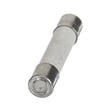
For the Kenmore 66562612200 microwave/hood combo, the electrical supply should be on a 120-volt, 60 Hz, AC-only 15- or 20-amp fused circuit; we recommend using a time-delay fuse or circuit breaker. For the exact internal fuse rating and location, follow the wiring and service information in the 66562612200 owner's manual.
What “15- or 20-amp fused” means
This refers to the home circuit feeding the microwave (the breaker or fuse in your electrical panel), not automatically the small fuse inside the microwave.
- Use a dedicated circuit for the microwave/hood combo when possible
- Use a properly grounded 3-prong outlet in the upper cabinet
- Choose a time-delay fuse/breaker to handle normal startup surges
- If the breaker trips or a fuse blows repeatedly, stop using the unit until it’s diagnosed
Common symptoms of a blown internal microwave fuse
If your Kenmore microwave is completely dead or shuts off during use, an internal fuse or safety device is often involved.
- No display, no interior light, no response to keypad
- Unit starts, then goes dead after a few seconds
- Fan and light work, but cooking stops unexpectedly
- Blows again soon after replacement (often points to a door switch or high-voltage issue)
Parts that commonly cause repeat fuse blowing
If an internal fuse keeps opening, the root cause is usually elsewhere. These model-compatible parts are common suspects:
| Symptom | Likely area to check | Example model-compatible part |
|---|---|---|
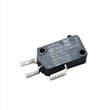
| Blows when door opens/closes | Door interlock circuit | Monitor switch W10269458 |
| Blows when starting a cook cycle | High-voltage circuit | Diode W11256462 |
| Random shutdown/overheat behavior | Overheat protection | Thermal fuse W11707984 |
Why it matters
Using the correct circuit protection (15 or 20 amp, time-delay) helps prevent nuisance trips and protects wiring. Separately, using the correct internal fuse rating helps protect the control board, door switches, and high-voltage components from damage.
Last updated: February 2026
Are Kenmore microwaves good?
Kenmore microwaves are a solid choice for most kitchens because they typically deliver dependable everyday performance and practical features for the price. For Kenmore model 66562612200 (a microwave/hood combo), long-term satisfaction usually comes down to correct installation, good ventilation, and basic care outlined in the 66562612200 owner's manual.
What “good” means for a microwave/hood combo
A microwave/hood combo has two jobs: cooking and venting. When either side is neglected (blocked filters, poor ducting, slamming the door), performance and lifespan drop.
Common strengths we see with Kenmore over-the-range units:
- Good value compared with many premium brands
- Useful built-in features (exhaust fan, cooktop light, child lock, tones)
- Widely available replacement parts for normal wear items
- Straightforward controls for daily cooking tasks
What to watch for (and how to prevent problems)
Most “bad microwave” experiences come from a few repeat issues. These steps help avoid them:
- Keep the vent path clear; clean grease filters regularly and replace charcoal filters on recirculating setups
- Close the door gently; door interlock parts wear faster when the door is slammed
- Use microwave-safe cookware; avoid metal and foil unless the manual specifically allows it
- Keep the cavity clean to prevent arcing and burn marks
- If heating becomes weak or inconsistent, stop using it and troubleshoot before it worsens
Quick symptom-to-likely-area guide
| Symptom | Most likely area to check | Example part for this model |
|---|---|---|
| Runs but does not heat | High-voltage circuit | Diode W11256462 |
| Dead, no display | Fuse/thermal protection | Thermal fuse W11707984 |
| Starts then stops when door moves | Door interlock switches/bracket | Monitor switch W10269458 |
Why it matters
Microwaves rely on door interlocks and high-voltage components to operate safely and heat correctly. Following the operating and care guidance in the manual reduces nuisance failures and helps the unit vent properly over your range.
Last updated: February 2026