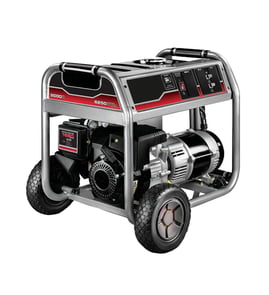

What are the parts of the generator?
A Coleman generator like model PM0495503 is built from a few core systems that work together to make stable electrical power: the engine creates mechanical power, the alternator converts it to electricity, and control and protection parts (like the voltage regulator and breakers) keep output safe for your tools and appliances.
- Engine: burns fuel to spin the generator shaft.
- Fuel system: tank, fuel valve, fuel line, carburetor; delivers the correct fuel mixture.
- Air intake and filtration: air filter and intake path; keeps dirt out of the engine.
- Ignition system: spark plug, ignition coil; lights the fuel mixture.
- Alternator (generator head): rotor and stator; produces AC power.
- Voltage regulation: AVR or capacitor-based regulation; helps keep voltage steady as loads change.
- Protection and outlets: circuit breakers, receptacles, wiring; routes power and trips on overload.
Even without a manual, most generator parts catalogs are organized into sections like these:
| Parts grouping | Examples of parts included | Typical symptom when it fails |
|---|---|---|
| Engine and fuel | carburetor, fuel valve, gaskets | hard starting, surging, fuel leaks |
| Ignition and starting | spark plug, recoil starter, starter switch | no start, weak spark |
| Alternator and regulation | rotor/stator, AVR/capacitor | low or unstable voltage |
| Controls and outlets | breakers, receptacles, wiring | no output at outlets, trips breaker |
Knowing which system is involved helps you troubleshoot faster. For example, “starts but no power” usually points to the alternator, voltage regulation, breaker, or wiring, not the fuel system.
- Turn the generator off and let it cool before inspecting.
- Check the breaker and reset if tripped.
- Unplug all loads; restart and test output again.
- Inspect for loose or damaged wires and burned connectors.
- If you have a meter, verify outlet voltage with a basic AC test.
For step-by-step electrical testing skills that apply to generators, use our guide: how to use a multimeter to test electrical parts video.
Last updated: February 2026
What kind of oil do you put in a Coleman generator?
For the Coleman generator model PM0495503, we use 4-cycle engine oil; SAE 10W-30 is the best all-around choice for most temperatures. In consistently hot weather, SAE 30 is common; in cold starts, 5W-30 can help the engine turn over more easily.
Use this as a practical guide when you do not have the model-specific oil chart:
| Typical outdoor temperature | Common oil choice | Why it helps |
|---|---|---|
| Below 40°F | 5W-30 | Easier starting in cold weather |
| 40°F to 100°F | 10W-30 | Best all-around protection |
| Above 80°F (steady heat) | SAE 30 | Holds viscosity better in heat |
To avoid low-oil shutdowns, hard starting, or engine wear, we follow these basics:
- Confirm the generator is a 4-cycle engine (most Coleman portables are).
- Set the generator on level ground before checking the oil.
- Check oil with the dipstick (do not guess by run time).
- Do not overfill; overfilling can cause smoking and rough running.
- Use a clean funnel and keep dirt out of the crankcase.
- Detergent automotive engine oil is typically fine for small engines when the viscosity is correct.
- Synthetic 5W-30 or 10W-30 works well, especially for wider temperature swings.
- Avoid 2-cycle oil (it is for fuel mix, not crankcase lubrication).
- If the generator has a low-oil sensor, the correct oil level matters as much as the oil weight.
The right viscosity helps the PM0495503 engine lubricate properly at startup and under load. Too-thick oil can make cold starts difficult; too-thin oil in high heat can reduce protection and increase wear.
For help confirming your exact model number before ordering maintenance items, use how to find your appliance model number (and what it means for parts).
Last updated: February 2026
Why does my Coleman generator keep shutting off?
Your Coleman PM0495503 generator usually shuts off because the engine is losing fuel flow, losing spark, overheating, or the low-oil protection is stopping the engine. In most cases, stale fuel, a dirty carburetor, or restricted airflow causes the problem and a basic tune-up fixes it.
- Check oil level first: low oil can trigger an automatic shutdown even if the engine sounds fine.
- Use fresh fuel: drain old gas and refill with fresh gasoline; old fuel can varnish the carburetor.
- Open the fuel valve fully (if equipped) and confirm fuel is actually flowing to the carb.
- Loosen the fuel cap briefly: if it runs longer, the cap vent may be plugged (vacuum lock).
- Inspect the air filter: a clogged filter can make the engine run rich and stall.
- Check the spark plug: fouling or a weak gap can cause random shutdowns, especially under load.
A generator that runs fine with no load but dies under load is usually dealing with overload, a failing engine tune, or a power head issue.
| Symptom | Most likely cause | What to do next |
|---|---|---|
| Dies as load starts | Overload or shorted appliance | Unplug everything; try one known-good load |
| Surges then dies | Dirty carburetor or restricted fuel | Clean carburetor; replace fuel lines if brittle |
| Runs 10 to 30 minutes then quits | Fuel cap venting or overheating | Check cap vent; clean cooling air paths |
- Fuel system: drain bowl (if accessible), clean carburetor jets, and replace any cracked fuel line.
- Ignition: replace the spark plug; if shutdown is heat-related, test for spark right after it dies.
- Cooling and exhaust: remove debris around the engine shroud; check for a blocked muffler/spark arrestor screen.
- Oil shutdown circuit: verify correct oil level and that the unit is on level ground.
Repeated shutdowns can foul the spark plug, overheat the alternator windings, and leave you with unstable voltage that can damage connected equipment. Fixing the root cause also improves starting and fuel economy.
For safe electrical testing steps (like checking for a blown fuse or verifying voltage), use our guides: how to use a multimeter to test electrical parts video and how to tell if a fuse is blown.
Last updated: February 2026
What engine is in a Coleman PM0495503?
Coleman generator model PM0495503 was built with more than one engine option across production runs, so the correct engine is the one identified by the engine model/type/code stamped on your engine. Use that ID to match the right carburetor, air filter, spark plug, and governor parts.
Check the engine itself; the ID is on the engine, not the generator frame.
- Look for an engine brand badge on the recoil starter housing (pull-start cover)
- Find the model/type/code (or similar) stamped into metal or printed on a sticker
- Check near the valve cover, blower housing, or muffler-side shroud
- Write the numbers exactly, including dashes and leading zeros
- Use the engine ID when searching parts by engine, not only by generator model
| Where to look | What you’re looking for | Why it matters |
|---|---|---|
| Recoil starter or blower housing | Brand label and an ID sticker | Fastest way to confirm brand and series |
| Valve cover area | Stamped model/type/code | Usually stays readable longer |
| Muffler-side shroud | Sticker or stamped pad | Often used on older portable engines |
The engine identification determines the correct fuel-system and ignition parts. Two PM0495503 units can use different carburetors, air filters, and spark plugs even when the generator wattage looks the same.
These checks help confirm whether the issue is engine-related or electrical:
- Verify fresh fuel and a clean air filter
- Inspect the spark plug condition and gap
- Check for damaged wiring and loose connections
- Test AC output with a meter before replacing electrical components
For safe testing steps, use how to use a multimeter to test electrical parts video.
Last updated: February 2026