
What's the best power screwdriver?
The best power screwdriver is the one that matches your jobs and hand comfort. For most homeowners, a compact cordless screwdriver with adjustable torque, a 1/4-inch hex bit holder, and easy charging is the best fit; for heavier fastening, step up to a drill/driver.
How to choose the “best” one for your needs
- Light assembly and furniture: 3 to 6 Nm torque range (typical), compact grip, quick bit changes
- Cabinet hardware and outlet covers: clutch with multiple settings to prevent stripped screws
- DIY around the house: 4V to 8V class drivers for convenience; 12V class for more power
- Electronics and precision work: smaller handle, lower torque, finer clutch control
- All-day use: lighter weight, rubber overmold, balanced center of gravity
Features that matter most (and why)
A power screwdriver that fits your work reduces cam-out, stripped heads, and broken bits. These features make the biggest difference:
| Feature | What it does | Why it matters |
|---|---|---|
| Adjustable clutch/torque | Limits twisting force | Protects screws and materials (especially soft wood and plastics) |
| 1/4-inch hex quick-change | Accepts standard bits | Faster bit swaps, better compatibility |
| Two-speed or variable speed | Controls RPM | Helps start screws cleanly and finish without overdriving |
| Inline and pistol grip options | Changes wrist angle | Improves access in tight spaces and comfort |
Quick “best pick” guide by use case
- Best for everyday household tasks: compact cordless screwdriver (4V to 8V)
- Best for frequent DIY and tougher screws: 12V driver (or a small drill/driver)
- Best for tight spaces: slim inline driver or right-angle attachment
Why it matters for Craftsman model 315111410
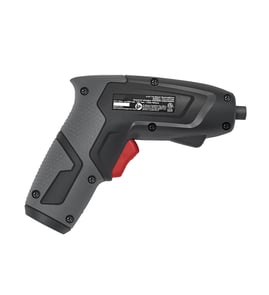
For a Craftsman cordless screwdriver like model 315111410, the “best” choice is the one that delivers controlled torque and comfortable handling for your most common fasteners. If your tool is slipping, stalling, or not holding a charge, the right repair approach starts with confirming the exact model identification and symptoms.
For general guidance on locating and confirming model information before ordering parts, use how to find your appliance model number (and what it means for parts).
Last updated: February 2026
What is a power screw driver called?
A power screwdriver is most commonly called an electric screwdriver or cordless screwdriver. Many people also call it a drill/driver (or drill driver) when the tool is designed to both drive screws and drill small holes, depending on the clutch and speed settings.
Common names you will hear
- Electric screwdriver
- Cordless screwdriver
- Power screwdriver
- Drill/driver (drill driver)
- Screw gun (more common for drywall and high-volume fastening)
Quick comparison: what the names usually mean
| Name people use | Typical purpose | Common features |
|---|---|---|
| Electric/cordless screwdriver | Driving screws with control | Clutch, compact size, lower torque |
| Drill/driver | Drilling and screwdriving | 2-speed gearbox, adjustable clutch, keyless chuck |
| Screw gun | Fast repetitive fastening | High RPM, depth stop (often), less clutch control |
How to tell what your Craftsman 315111410 is
For the Craftsman 315111410 cordless screwdriver, the best way to classify it is by what it has:
- Adjustable clutch (numbered torque settings): points to “cordless screwdriver” or “drill/driver”
- Keyless chuck (accepts drill bits): points to “drill/driver”
- Hex bit holder (quick-change 1/4-inch): points to “cordless screwdriver”
- Two speeds (low/high): points to “drill/driver”
Why it matters
Using the right term helps you match the correct parts and accessories (bits, chucks, switches, batteries, chargers) and also helps you choose the right torque and speed for the material so you do not strip screw heads.
For more help identifying the exact model number format and what it means when ordering parts, use how to find your appliance model number (and what it means for parts).
Last updated: February 2026
What is a good torque for a cordless screwdriver?
A good torque for a cordless screwdriver depends on the job: for light-duty assembly (electronics, cabinet hardware), 3 to 6 N·m is plenty; for general household fastening, 8 to 15 N·m is a solid target. For Craftsman model 315111410, use the lowest torque setting that drives the screw flush without stripping.
Quick torque targets by task
- 1 to 3 N·m: delicate screws (plastic housings, small devices)
- 3 to 6 N·m: light assembly (hinges, drawer slides, outlet covers)
- 8 to 15 N·m: most household fastening (wood screws into studs, furniture frames)
- 15+ N·m: heavier fastening; a drill/driver is usually the better tool
How to choose the right setting (practical method)
- Start at a low clutch number.
- Drive a test screw in scrap material.
- Increase one step at a time until the screw seats fully.
- Stop increasing once it seats consistently (higher torque only raises the risk of stripping).
Torque, voltage, and what you actually feel
| What changes | What it affects | What to do |
|---|---|---|
| Higher torque setting (clutch) | How hard it tries before slipping | Use the lowest setting that finishes the screw |
| Higher voltage / stronger battery | How easily it maintains speed under load | Use a fresh, fully charged battery for tougher screws |
| Bit type and fit | Cam-out and stripped heads | Use the correct size bit and press straight in |
Why it matters
Using the right torque protects screw heads, prevents stripped threads in wood or plastic, and reduces wear on the gearbox and clutch in your cordless screwdriver.
For electrical troubleshooting (switch, battery contacts, wiring), use safe test methods like a multimeter; our guide how to use a multimeter to test electrical parts video walks through the basics.
Last updated: February 2026
Who makes the best electrical screwdrivers?
For electrical work, the “best” screwdrivers are the ones that match the job: insulated (VDE/1000V-rated) drivers for live-circuit safety, and high-quality precision tips for durability and cam-out resistance. For a Craftsman cordless screwdriver like model 315111410, prioritize bit quality, clutch control, and battery condition.
Top brands by use case
- Insulated electrician screwdrivers (VDE/1000V-rated): Wiha, Wera, Klein Tools, Knipex
- General-purpose hand screwdrivers: Klein Tools, Wera, Wiha
- Precision/electronics drivers: Wiha, Wera
- Cordless electric screwdrivers (powered): Craftsman, Bosch, DEWALT (focus on clutch settings and bit system)
What to look for (the features that matter)
- Insulation rating: Look for VDE/1000V marking when working near energized conductors
- Tip fit and hardness: Better tips reduce stripping and rework (especially on Phillips and Torx)
- Handle ergonomics: Larger diameter for torque, slimmer for control
- Shaft style: Slim shafts help in tight panels; longer shafts reach recessed screws
- Bit system (for powered drivers): Common 1/4-inch hex bits make replacements easy
- Clutch settings: More settings helps prevent overdriving and snapped screws
Quick comparison table
| If you need... | Best choice | Why |
|---|---|---|
| Live-work safety | VDE/1000V insulated hand drivers | Reduces shock risk when used correctly |
| Maximum torque by hand | Full-size fixed-blade drivers | Stronger feel and less bit wobble |
| Fast assembly work | Cordless screwdriver (like Craftsman 315111410) | Speed plus clutch control |
| Tight spaces | Slim insulated drivers or stubby drivers | Better access and control |
Why it matters
Using the right screwdriver reduces stripped fasteners, protects terminals and device screws, and improves safety. For powered drivers, the clutch and correct bit type matter as much as the brand.
Safe-use reminders for electrical work
- Verify the circuit is de-energized before touching conductors
- Use insulated tools only when they are clean, dry, and undamaged
- Match the driver tip exactly to the screw head (Phillips, square, Torx)
- For a cordless screwdriver, start with a low clutch setting and increase as needed
For general DIY electrical testing and tool checks, our how to use a multimeter to test electrical parts video is a solid companion.
Last updated: February 2026