
What is a good size log splitter for home use?
A good size log splitter for most home use is typically 20 tons; it splits the majority of firewood rounds (including many hardwoods) without being oversized. For lighter, occasional splitting, 7 to 12 tons often works; 25+ tons is best when you regularly split large, knotty hardwood.
- 7 to 12 tons: small rounds, softer woods, kindling, occasional use
- 15 to 20 tons: most homeowner firewood needs; good all-around choice
- 22 to 28 tons: frequent use, larger diameter rounds, tougher hardwood, more knots
- 30+ tons: very large rounds, stringy or knotty hardwood, high volume
- Wood type: hardwood (oak, hickory, maple) needs more force than softwood (pine, fir)
- Log diameter: bigger rounds usually need more tonnage
- Knots and crotches: these drive tonnage needs up fast
- Cycle time: faster cycle time matters if you split a lot in one session
- Power source: electric is convenient for lighter work; gas is common for higher tonnage and portability
| Your typical workload | Recommended tonnage | Notes |
|---|---|---|
| A few cords per year, mostly straight-grain | 15 to 20 tons | Best balance of power and cost |
| Mixed hardwood, some knots, medium rounds | 20 to 28 tons | Reduces stalls and re-splitting |
| Large, knotty hardwood rounds often | 28+ tons | Built for tougher, repeated splitting |
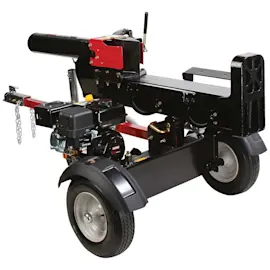
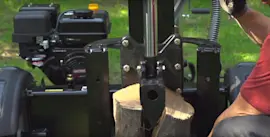
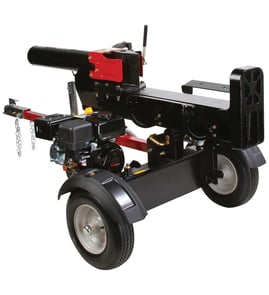
Choosing the right tonnage helps you avoid stalls, overheating, and excessive wear on the hydraulic system (pump, control valve, cylinder, and hoses). For a Craftsman hydraulic log splitter like model 28667, matching splitter force to your wood saves time and reduces strain on key components.
For help confirming your exact model before ordering maintenance items, use how to find your appliance model number (and what it means for parts).
Last updated: February 2026
Should you run a log splitter at full throttle?
Yes. For the Craftsman 28667 hydraulic log splitter, we run the engine at full throttle during splitting so the hydraulic pump reaches its designed flow and pressure; that gives faster cycle times and reduces stalling under load.
- While actively splitting rounds, especially hardwood or large diameter logs
- When the wedge is under load and you need maximum hydraulic force
- After the engine is warmed up and running smoothly
- When you want consistent cycle speed (extend and retract)
Use lower throttle only for brief, low-load situations.
- Starting and warm-up (use choke as needed, then reduce choke as it warms)
- Moving the splitter around the yard (if your unit is towable and you are repositioning it)
- Short idle periods between logs (to reduce noise and fuel use)
| Task | Throttle setting | Why |
|---|---|---|
| Cold start | Low to mid | Easier starting, smoother warm-up |
| Warm-up | Mid | Stabilizes engine before loading |
| Splitting | Full | Maximum pump output and splitting force |
| Waiting between logs | Low to mid | Reduces heat, noise, and fuel use |
A hydraulic log splitter depends on engine RPM to drive the hydraulic pump. Running below full throttle during splitting usually means slower ram movement, more bogging, and extra heat buildup in the hydraulic system.
For safe DIY habits around moving parts and high pressure hydraulics, follow the basics in are diy appliance repairs safe.
Last updated: February 2026
How much does a 28 ton log splitter weigh?
Most 28-ton hydraulic log splitters weigh several hundred pounds; the exact number depends on the engine, beam thickness, hydraulic tank size, and tow kit. For your Craftsman model 28667, the most accurate weight comes from the unit’s data plate or a scale measurement.
Manufacturers may list more than one weight spec. Use the one that matches your situation.
- Assembled (dry) weight: splitter without fuel
- Operating weight: fuel plus hydraulic oil
- Shipping weight: crated or palletized (often higher)
- Tongue weight: downforce at the coupler when towing
| Spec name | Best for | What it includes |
|---|---|---|
| Assembled (dry) weight | Loading, lifting, storage | Splitter only, no fuel |
| Operating weight | Real-world handling | Fuel plus hydraulic oil |
| Shipping weight | Freight and delivery planning | Packaging plus splitter |
| Tongue weight | Hitch setup | Coupler load only |
These methods give you a reliable number without guessing.
- Check the data plate/sticker on the beam, tongue, or near the engine; it often lists weight.
- Weigh the splitter on a public vehicle scale (truck stop, landfill, co-op): weigh tow vehicle alone, then with splitter; subtract.
- If you have a trailer scale, weigh the splitter directly.
- For tongue weight, use a tongue-weight scale or a bathroom-scale lever method.
Knowing the correct weight helps you choose safe ramps and winch capacity, avoid overloading a pickup bed or trailer, and set up the right hitch and coupler height for stable towing.
For help confirming you are matching specs and parts to the correct unit, use how to find your appliance model number (and what it means for parts).
Last updated: February 2026
How big of a log can a 27 ton log splitter handle?
A 27-ton hydraulic log splitter like the Craftsman 28667 is made for large firewood rounds; most 27-ton units split logs up to about 25 inches long, and they handle roughly 24 to 25 inches in diameter when the grain is straight. Knotty hardwood reduces the practical maximum.
Splitting force is only one part of capacity; the log still has to fit and split cleanly.
- Maximum log length is set by the beam/cradle space and how the round sits on the foot plate
- Practical diameter is limited by stability and how well the wedge can start a split
- Wood species matters; oak, hickory, and elm take more force than pine
- Knots and crotches act like “reinforcement” and often require staged splitting
- Condition matters; very green, very dry, or frozen wood changes how the wedge bites
| Wood condition | Typical efficient size | What to do if it struggles |
|---|---|---|
| Straight-grain rounds | Up to about 24 to 25 in. diameter | Split normally, start near center |
| Knotty/twisted grain hardwood | About 18 to 22 in. diameter | Slab from the edge, rotate often |
| Oversized rounds | 25+ in. diameter | “Nibble” slabs off, then re-split |
- Cut rounds to shorter lengths (often 16 to 20 inches) for easier starts
- Start at the outer edge and remove slabs instead of trying to halve the round
- Reposition if the ram slows; stalling repeatedly overheats hydraulic fluid
- Keep the beam and wedge area clear of bark and debris to reduce drag
Staying within practical size limits keeps cycle time faster and reduces wear on the hydraulic pump, control valve, cylinder seals, and engine load.
For ordering the correct replacement parts for your Craftsman 28667, use the data tag model number and follow how to find your appliance model number (and what it means for parts).
Last updated: February 2026