



What is the life expectancy of a GE washing machine?
Most GE washing machines, including the GE GTW720BPN1DG top-load washer, typically last 10 to 14 years with normal household use. Consistent cleaning, correct loading, and fixing small issues early (like draining or filling problems) are the biggest factors in reaching the high end of that range.
Here’s what most often shortens or extends washer life:
- Load size and frequency: fewer oversized loads means less strain on the drive system
- Drain health: slow draining and standing water accelerate wear on seals and bearings
- Water quality: hard water can increase residue and odor buildup
- Leveling and vibration: excessive shaking stresses suspension and tub components
- Fast repairs: replacing a failing part early prevents secondary damage
We recommend these habits for GE top-load washers:
- Run a monthly cleaning cycle (or hot wash) to reduce detergent and soil buildup
- Use the right amount of HE detergent; too much causes residue and odors
- Keep the lid open between loads so the tub can dry
- Check pockets to prevent coins and debris from damaging the drain system
- If you notice slow draining, inspect the hose and pump path early
When these parts fail, the washer may stop mid-cycle, not drain, or not spin correctly:
| Symptom | Common system involved | Example part for GTW720BPN1DG |
|---|---|---|
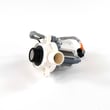
| Won’t drain or leaves water | Drain system | GE washer drain pump assembly WH23X28418 |
| Won’t fill or fills slowly | Water inlet | Washer water inlet valve assembly (model-specific) |
| Lid won’t lock, won’t start/spin | Safety interlock | GE washer lid lock assembly (model-specific) |
A washer that is maintained and repaired promptly usually costs less per year to own, cleans better, and avoids the “cascade failures” that happen when a simple drain or vibration issue is ignored.
For troubleshooting by symptom, we use the same code sets GE publishes for this platform; see GE gtw top load washer error codes.
Last updated: January 2026
What is the most common problem with GE washers?
The most common GE washer problem is a no-spin or weak-spin condition, often caused by a lid lock issue, a draining problem, or a drive system fault. On the GE GTW720BPN1DG, we typically start by checking lid lock operation, then verifying the washer drains fully.
- Make sure the lid closes firmly and the lid lock engages during the cycle.
- Confirm the washer drains completely; standing water usually points to a drain restriction or pump issue.
- Reduce load size and redistribute items; an unbalanced load can stop or limit spin.
- Run a Drain/Spin cycle to see if the symptom is strictly spin-related or also draining.
- Power reset: unplug for 2 minutes, then retry a cycle.
If the washer will not spin, these model-matched parts are common suspects depending on what you observe:
| Symptom you see | Most likely system | Example model-matched part |
|---|---|---|
| Lid won’t lock, cycle won’t advance | Lid lock/safety circuit | GE washer lid lock assembly WH08X37938 |
| Water won’t drain or drains slowly | Drain pump/hose | GE washer drain pump assembly WH23X28418 |
| Fills incorrectly or won’t fill | Water inlet/pressure-related fill issues | Washer water inlet valve assembly WH13X26637 |
GE top-load washers protect the drive system by stopping agitation or spin when the lid is not locked, the tub is not draining, or the load is severely out of balance. Fixing the root cause prevents repeat shutdowns, wet loads, and unnecessary wear on the motor, clutch, and control.
If your GTW720BPN1DG displays an error code, use it to narrow the diagnosis before replacing parts. We recommend checking GE gtw top load washer error codes for code meanings and the most likely fixes.
Last updated: January 2026
Is the GE 4.8 front load washer any good?
The GE GTW720BPN1DG is a top-load washer, so it is not the same machine as a “GE 4.8 front load washer.” If you are shopping for a 4.8 cu. ft. front-load GE washer, most owners value strong cleaning, quiet operation, and large capacity; for GTW720BPN1DG performance issues, we focus on fill, drain, spin, and error-code troubleshooting.
- Look for consistently strong cleaning results on normal and heavy-duty cycles.
- Check for low vibration and quiet spin at high RPM.
- Confirm the door boot and venting features help reduce odor between loads.
- Make sure cycle times and water use match your expectations for an HE washer.
- Verify parts support and service access in your area.
Common “good vs. not good” complaints on top-load units usually come down to a few fixable areas:
- Won’t drain or drains slowly: inspect the drain path; a failing pump is a frequent cause.
- Won’t fill or fills slowly: check inlet screens and household water pressure.
- Won’t spin or stops mid-cycle: lid lock and drive system issues are common.
- Intermittent operation: wiring harness connections and control issues can contribute.
| Symptom | Often involved part | What it affects |
|---|---|---|
| Won’t drain | GE washer drain pump assembly WH23X28418 | Pumps water out during drain/spin |
| Won’t fill | Washer water inlet valve assembly WH13X26637 | Controls hot/cold water entering the tub |
| Won’t spin/locks out | GE washer lid lock assembly WH08X37938 | Confirms lid is locked so the washer can spin |
Front-load and top-load washers behave differently (water levels, cycle logic, and odor control). Matching the advice and parts to the correct design helps you avoid wrong troubleshooting steps and unnecessary part replacements.
For error messages on GE top-load models like GTW720BPN1DG, use our GE gtw top load washer error codes reference to narrow the problem to the right system.
Last updated: January 2026


