Owner’s manual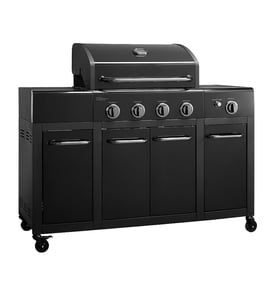



How do I find my Kenmore grill model number?
Your Kenmore gas grill model number for identification is found on the grill’s rating label. On model 14623681310, the manual directs you to look for the rating label on the grill (it also lists the model as 146.23681310); write the model and serial number down before ordering parts.
Where to look on the grill
We typically see the rating label in one of these spots on Kenmore grills:
- Inside the cabinet (on an inner side panel)
- On the back panel of the grill base
- Near the tank area (inside the lower cabinet)
- Under a side shelf or on a frame rail
Use the 14623681310 owner's manual to confirm the exact label location and to match the model and item numbers shown on the label.
What to write down (and why)
Record these exactly as printed so we can match the correct parts diagram and hardware:
- Model number (example format: 146.23681310)
- Serial number (unique to your grill)
- Item number (often shown near the model number)
- Date purchased (helpful for warranty timing and part revisions)
Quick ID checklist
| What you see on the label | What it’s used for | Example you might see |
|---|---|---|
| Model number | Finds the correct parts list and diagrams | 146.23681310 |
| Serial number | Confirms production run and revisions | (varies) |
| Item number | Helps match the exact configuration | (varies) |
Why it matters
Kenmore grills can look similar across multiple model families, but burner systems, manifolds, control panels, and cabinet panels can differ. Using the exact model number prevents ordering a part that does not fit.
Last updated: January 2026
What is the average lifespan of a gas grill?
Most gas grills last 5 to 15 years. A Kenmore gas grill like model 14623681310 typically reaches the higher end of that range when it’s kept clean, stored dry and covered, and key wear items (like burners and ignition parts) are maintained per the 14623681310 owner's manual.
Typical lifespan ranges (what to expect)
- Budget grills: 2 to 5 years
- Mid-range grills: 5 to 10 years
- Heavier-duty grills (often stainless components): 10 to 15 years
- Well-maintained grills with periodic part replacement: up to 20 years
| Grill condition | What you’ll notice | What it usually means |
|---|---|---|
| Well maintained | Even heat, steady flame, easy ignition | Normal wear; long service life |
| Moderate wear | Hot spots, slower preheat | Cleaning and tune-up needed |
| Heavy wear | Rust-through, frequent flare-ups, weak flame | Major parts may need replacement |
What shortens a grill’s life fastest
- Leaving it uncovered in rain or snow (corrosion accelerates)
- Grease buildup in the firebox and on grates (flare-ups and overheating)
- Clogged venturi/burner tubes (hard starts, weak flame)
- Storing with the LP cylinder connected indoors (unsafe storage practices)
- Skipping periodic leak checks and basic cleaning
How to make your Kenmore 14623681310 last longer
The manual calls out storage and burner/venturi cleaning as key maintenance, especially after the grill sits unused.
- Clean cooking grates after use and do a deeper clean periodically
- Keep venturi burner tubes clear to prevent “flashback” conditions
- Store in a dry location; cover the grill when stored outdoors
- If the grill has been idle for an extended period, clean the burner/venturi area before the next cook
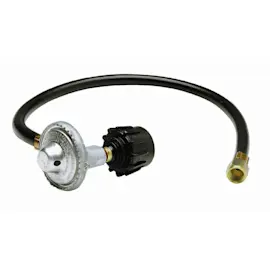
- Replace worn structural hardware as needed (for example, a damaged gas hose 61300030 should be replaced, not patched)
Why it matters
A grill that’s clean and properly stored heats more evenly, lights more reliably, and avoids performance problems tied to restricted gas flow and grease flare-ups. That directly extends the usable life of the burners, manifold area, and firebox.
Last updated: January 2026
Is it worth fixing a gas grill?
Yes, fixing a Kenmore gas grill like model 14623681310 is worth it when the firebox and frame are solid and the problem is limited to serviceable items (hose, regulator, valves, ignition, burners). Replace the grill when structural rust-through, warping, or repeated gas-safety issues make repairs unreliable.
Quick decision checklist
- Fix it if the cabinet and firebox are intact and you can restore safe gas flow and ignition.
- Fix it if the issue is maintenance-related (clogged venturi tubes, grease buildup, spider nests).
- Fix it if the repair is a single, clear failure (damaged hose, sticky valve, worn ignition part).
- Replace it if you see holes in the firebox, severe frame rust, or major heatbox deformation.
- Replace it if you have recurring flare-ups or flashback damage after cleaning and inspection.
What we look at first on model 14623681310
Use the 14623681310 owner's manual to confirm the correct safety checks and maintenance steps.
Safety and condition checks (before spending money)
- Leak test all connections before use; bubbles that grow indicate a leak.
- Inspect the hose for cuts, cracks, or wear before each use.
- Confirm control knobs and valves operate correctly (smooth turning; knobs spring back).
- Check venturi burner tubes for spider nests; blockages can cause flashback behind the control panel.
Typical “fix vs replace” cost logic
| Situation | Usually worth fixing? | Why |
|---|---|---|
| Hose or regulator issue | Yes | Common wear item; restores safe fuel delivery |
| Ignition or burner lighting problems | Yes | Often cleaning or a single-part repair |
| Firebox rusted through | No | Structural failure affects safety and heat control |
| Repeated gas leaks you cannot stop | No | Safety risk; stop using until corrected |
Parts that commonly make a repair practical
If your issue is fuel delivery or control-related, these model-specific parts can be part of a cost-effective repair:
- Gas hose 61300030 (fuel supply line)
- Manifold 61200033 (distributes gas to valves/burners)
Why it matters
A grill can look “worn out” but still be a great candidate for repair. On the other hand, structural rust or unresolved gas leaks turn a simple DIY project into a safety problem, so the right call protects both performance and your outdoor cooking area.
Last updated: January 2026