Installation guide
 Owner’s manual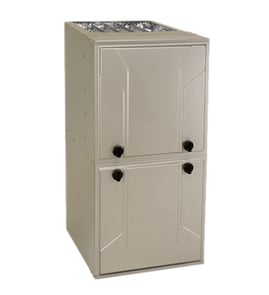




How to read carrier furnace serial numbers?
On Carrier furnaces like model 58MVC080-F-10120, the serial number commonly encodes the manufacturing week and year in the first four digits. A typical example is 1618XXXX, where 16 is the 16th week of the year and 18 is the year 2018. Confirm the exact format for your unit in the owner's manual.
How to decode the first four digits (common Carrier format)
Use the first four digits as WWYY:
- WW = week of manufacture (01 to 52)
- YY = year (last two digits of the year)
- The remaining characters identify the production sequence and other internal details
Example
- Serial: 1618XXXX
- 16 = 16th week
- 18 = 2018
Where to find the serial number on the furnace
Most Carrier gas furnaces place the rating plate (with model and serial) on or near the blower compartment.
- Turn off power to the furnace at the breaker before removing access panels
- Remove the main furnace door
- Look for a data label listing Model and Serial
- Write the numbers down for future parts lookup and service history
Why it matters
Knowing the manufacture date helps us match the correct Carrier furnace parts and revisions for your 58MVC080-F-10120, especially for components like the control board, igniter, and safety switches.
| What you need | Why we ask for it | Where it’s used |
|---|---|---|
| Model number (58MVC080-F-10120) | Identifies the exact furnace series | Parts compatibility |
| Serial number | Helps narrow production run and date | Correct part revisions |
| Install date (if known) | Tracks maintenance intervals | Service planning |
Last updated: February 2026
How do I read my furnace model number?
For your Carrier gas furnace model 58MVC080-F-10120, the model number identifies the product series and key sizing details; the most reliable way to confirm what each character means for your exact unit is to match the model and serial on the rating plate to the owner's manual and the installation data.
Where to find the model and serial number
On Carrier furnaces like the 58MVC series, the model and serial are printed on the unit rating plate (data plate). Use these quick checks:
- Turn off power to the furnace at the breaker before opening panels
- Remove the main furnace door to access the control area
- Look for a label that lists Model and Serial
- Write both down exactly as shown (including dashes)
- Keep the numbers with your home records for parts lookup and service
How to interpret “58MVC080-F-10120”
Carrier model numbers are structured codes. For this model family, you can read it like this:
| Segment | What it typically indicates | What it means for this furnace |
|---|---|---|
| 58MVC | Series/family | 58MVC direct-vent, condensing gas furnace family |
| 080 | Input size code | Commonly corresponds to about 80,000 BTU input class |
| -F- | Design/feature identifier | Identifies a specific configuration within the series |
| 10120 | Build/configuration code | Used to match exact parts and setup details |
Why the serial number matters too
The model number tells you the furnace family and size class; the serial number is what typically ties to manufacturing date and production run. When ordering parts or checking setup details, we use both to avoid mismatches.
Why it matters
Correctly reading the model and serial helps you:
- Order the right replacement parts for 58MVC080-F-10120
- Confirm the correct venting and condensate drain requirements for a condensing furnace
- Verify gas input setup details (orifice/manifold pressure tables are model-family specific)
Last updated: February 2026
Is it hard to get Carrier parts?
For the Carrier 58MVC080-F-10120 gas furnace, getting the right replacement part is usually straightforward when you match the model number and the exact part number; the main challenges are cost and making sure you order the correct OEM component for your specific configuration. Use the owner's manual to confirm the furnace setup and service information before ordering.
What makes Carrier furnace parts feel “hard to get”
- Model and series variations: Small differences in a 58MVC series furnace can change which control, igniter, or motor kit fits.
- Higher-cost assemblies: Major components (like inducer motor kits and control modules) can be expensive compared to universal parts.
- Safety-critical parts: Items tied to ignition, gas, venting, and limits must match exactly.
- Older part supersessions: Some part numbers get replaced by updated numbers; ordering by model helps avoid mismatches.
Parts we commonly see replaced on this model
If your furnace is not heating, short-cycling, or failing to ignite, these are common suspects for the 58MVC080-F-10120:
| Symptom | Common part area | Example part on this model page |
|---|---|---|
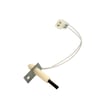
| No ignition or ignition fails | Hot surface igniter | Icp furnace burner igniter LH33ZG001 |
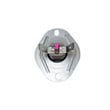
| Burner shuts down for safety | Roll-out/limit safety | Icp furnace burner roll-out limit switch HH18HA452 |
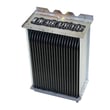
| Draft/venting problems, pressure switch issues | Inducer assembly | Ind Mtr Kt (part number 324906-762) |
| Blower noise or airflow issues | Blower wheel | Icp blower wheel LA22ZA127 |
Why it matters (especially on a condensing gas furnace)
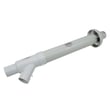
Your furnace is a 90+% AFUE condensing design and can be installed as a 2-pipe direct vent or 1-pipe non-direct vent system. Venting, combustion air, and safety controls all work together; using the correct OEM part helps keep ignition reliable and protects the heat exchanger and vent system.
Best way to make sure you get the right part
- Confirm the full model number: 58MVC080-F-10120
- Compare the old part’s label to the listing (part number and description)
- Use the diagrams and notes in the owner's manual
- Replace only with the exact match for ignition and safety parts (igniter, control, limit switches)
Last updated: February 2026
What is the average lifespan of a carrier furnace?
A Carrier gas furnace typically lasts 20 years. With consistent filter changes, correct venting, and annual maintenance, many units reach 25 years; poor installation, contaminated combustion air, or neglected upkeep can shorten life.
Typical lifespan ranges (what to expect)
- Average: 20 years
- Common range: 15 to 25 years
- With excellent maintenance: up to 30 years
| Condition | Typical outcome | What you can do |
|---|---|---|
| Regular maintenance and clean airflow | Longer service life | Change filters, keep vents clear |
| Improper venting or drainage on condensing furnaces | Early failures | Verify vent and condensate setup |
| Contaminated combustion air (household chemicals) | Corrosion risk | Keep chemicals away from intake area |
What matters most for the 58MVC080-F-10120
Your Carrier 58MVC080-F-10120 is a high-efficiency condensing gas furnace (90+% AFUE class) with a design that relies on proper combustion air and venting. Installation details like vent sizing/materials, unit leveling, and correct combustion-air routing directly affect reliability and component life. Use the installation guide for the approved venting configurations (1-pipe vs 2-pipe) and setup requirements.
Maintenance habits that add years
- Replace or clean the air filter on schedule
- Keep the combustion area clear and unobstructed
- Make sure intake and exhaust pipes stay clear of debris, snow, and nests
- Watch for water around the furnace (condensate drain issues)
- Schedule an annual inspection (burners, igniter, safeties, heat exchanger)
Why it matters
Furnace “lifespan” is usually determined by heat exchanger condition, inducer/blower wear, and how clean and stable combustion stays over time. On condensing furnaces, venting and condensate handling are especially important because small installation or drainage problems can create repeated stress and corrosion.
Last updated: February 2026
How much should a new carrier furnace cost?
A new Carrier gas furnace typically costs about $3,000 to $10,000 installed, depending on efficiency (AFUE), size, and features like variable-speed blowers or modulating heat. Your Carrier 58MVC080-F-10120 is a 90+% AFUE condensing furnace, which usually lands in the higher end of that range. See the owner's manual for model details that affect sizing and installation.
Typical installed price ranges
Installed pricing varies most by efficiency tier and installation complexity.
- Entry-level (80% AFUE): often the lowest installed cost
- Mid-efficiency (90%+ AFUE, single-stage): mid to upper range
- High-efficiency (90%+ AFUE, two-stage/modulating): upper range
- Add-ons (humidifier, thermostat, air cleaner): increases total
- Ductwork or venting changes: can add significant labor and materials
| Furnace type | What you get | Typical installed cost (USD) |
|---|---|---|
| 80% AFUE gas furnace | Basic efficiency, usually metal venting | $3,000 to $6,000 |
| 90%+ AFUE condensing gas furnace | Higher efficiency, PVC venting, condensate drain | $4,500 to $9,000 |
| Premium 90%+ AFUE (two-stage/modulating) | Best comfort control, often variable-speed | $6,000 to $10,000+ |
What drives the price up or down
For the 58MVC080-F-10120, the biggest cost swings usually come from venting, condensate handling, and labor.
- Correct sizing (BTU output and temperature rise) for your home
- Venting configuration: this model can be installed direct vent (2-pipe) or non-direct vent (1-pipe)
- Condensate drain routing (pump needed or not)
- Gas line and electrical updates (if required)
- Permits and code requirements in your area
Why it matters
A higher-efficiency condensing furnace can lower fuel use, but installation quality (vent sizing, leveling, and correct setup) has a major impact on comfort, reliability, and long-term operating cost.
If you are comparing repair vs replace
If you are pricing a major repair, it helps to compare it to the cost of common high-ticket components for this model, such as the control module 58MV660005 or the icp furnace burner igniter LH33ZG001.
Last updated: February 2026