Owner’s manual
 Error Codes

What are common problems with electric cookers?
Common problems with electric cookers (electric ranges) include surface elements not heating, the oven not operating, uneven heating from cookware issues, and small failures like a burned-out oven light. For KitchenAid model KERC506HWH3, our troubleshooting starts with power supply checks and correct control settings in the KERC506HWH3 owner's manual.
Most common electric range problems (and what they usually point to)
- Nothing operates at all: tripped breaker, blown fuse, or range not wired to a live circuit
- Oven will not operate: control not set correctly, delayed start programmed, or power issue
- Surface units will not operate: power issue, control setting issue, or a failed surface element
- Uneven cooking on the cooktop: cookware not flat, wrong pan size, or range not level
- Excessive heat around the pan: pan is too small for the element, exposing hot areas
- Oven light out: burned-out bulb (a common, simple fix)
Quick checks we recommend before replacing parts
- Confirm power: reset the range circuit breaker and check for a blown household fuse.
- Verify settings: make sure the electronic control is set for the function you want (and cancel any delayed start).
- Match pan to element: use a flat-bottom pan that is the same size or slightly larger than the surface unit.
- Check level: if liquids pool to one side, adjust the leveling legs.
- Let the cooktop cool before cleaning: wiping a hot area with a wet cloth can cause steam burns.
When a part is the likely fix
| Symptom | Most likely area | Example part on this model page |
|---|---|---|
| Oven light does not work | Oven light bulb | Oven light bulb 8009 |
| One radiant element will not heat | Surface element | Surface element W10823699 |
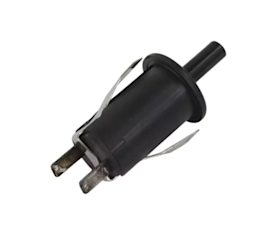
| Burner heat is erratic or won’t regulate | Element control switch | Range surface element control switch WP9755173 |
Why it matters
Catching the root cause early (power, settings, cookware fit, or a failed surface element) prevents repeat failures and helps protect wiring and components under the cooktop. Using the correct pan size also improves efficiency and reduces overheating around cookware.
To order replacement parts for your KitchenAid KERC506HWH3, use the parts list for this model or search by model number on Sears PartsDirect.
Last updated: February 2026
What is the life expectancy of a KitchenAid oven?
A KitchenAid oven typically lasts 10 to 15 years with normal home use and basic maintenance. For your KitchenAid KERC506HWH3 electric range, avoiding harsh cleaning habits and fixing small issues early (like a failed oven light) helps you reach the full expected lifespan; see the KERC506HWH3 owner's manual.
Typical lifespan and what affects it
Most electric ranges fall into a predictable lifespan range, but real-world results depend on heat exposure, cleaning routines, and how often the oven runs at high temperatures.
- Usage frequency: daily baking and long preheats shorten component life
- Self-cleaning cycles: frequent self-cleaning accelerates wear on wiring, controls, and door hardware
- Power quality: repeated breaker trips or loose connections can stress components
- Ventilation and spills: heavy boilovers and blocked vents trap heat around controls
- Small repairs done early: replacing worn parts prevents secondary damage
Maintenance habits that extend life
These steps reduce heat stress and prevent common electric range failures.
- Use self-clean only when needed; wipe spills after the oven cools
- Keep the door seal area clean so heat stays in the cavity
- Avoid slamming the oven door; it protects hinges and glass alignment
- If the oven light fails, replace it promptly using the correct bulb
- Reset tripped breakers only after the range cools and you confirm the cause
Common “wear items” you can replace
| Item | What you notice | Example part for this model |
|---|---|---|
| Oven light bulb | Light does not turn on | Oven light bulb 8009 |
| Surface element | Burner will not heat or heats unevenly | Surface element W10823699 |
| Door hinge | Door drops, won’t close evenly | Range oven door hinge WP9782033 |
Why it matters
Knowing the expected 10 to 15 year lifespan helps you decide whether to repair or replace. If your KERC506HWH3 is within that window, replacing a surface element, switch, or door hinge is often a practical way to restore safe, consistent cooking performance.
For model-specific operating and cleaning guidance (including self-cleaning and basic troubleshooting), use the KERC506HWH3 owner's manual. If you need to purchase replacement parts beyond the list shown for this model, search by model number on Sears PartsDirect.
Last updated: February 2026
What are the electrical requirements for a KitchenAid cooktop?
For the KitchenAid KERC506HWH3 electric range, plan on a dedicated 240-volt, 60 Hz, single-phase supply on its own breaker. Most installations use either a 3-wire or 4-wire connection sized for the range’s nameplate rating; we recommend confirming the exact amperage and wiring method in the KERC506HWH3 owner's manual.
What to verify before you wire it
- Turn off power at the breaker before inspecting any wiring.
- Confirm your home has the correct voltage (typically 240 VAC) at the range junction/cord location.
- Check whether your installation uses a 3-wire or 4-wire connection (neutral and ground requirements vary by setup).
- Verify the breaker size matches the range rating plate (do not upsize a breaker to “solve” nuisance trips).
- Inspect the terminal block area for heat damage or loose connections.
Common electrical specs (what’s typical)
These are the most common requirements for full-size electric ranges like the KERC506HWH3; always match the rating plate and manual.
| Item | Typical requirement | Why it matters |
|---|---|---|
| Supply | 240 V, 60 Hz, single-phase | Correct heating performance and control operation |
| Circuit | Dedicated branch circuit | Prevents overloads and nuisance trips |
| Connection | 3-wire or 4-wire | Ensures correct neutral/grounding method |
| Protection | Breaker/fuses sized to nameplate | Protects wiring and components |
If you’re troubleshooting power problems
If the oven is dead, trips the breaker, or heats inconsistently, these checks usually find the cause:
- Reset the breaker fully (OFF then ON).
- Look for a loose cord connection at the terminal block.
- Check for burned wiring at the terminal block; replace damaged components.
- If a surface burner will not heat, the issue is often the element or switch; a common replacement is the surface element W10823699.
Why it matters
Correct voltage, breaker sizing, and proper 3-wire or 4-wire connections protect the control board, heating elements, and house wiring. A miswired or underpowered circuit can cause weak heating, error codes, or repeated breaker trips.
If you need replacement parts for your KERC506HWH3, order from the parts list for this model or search by model number on Sears PartsDirect.
Last updated: February 2026
What is the F3 error on a KitchenAid oven?
On a KitchenAid electric range like model KERC506HWH3, an F3 error points to a problem in the oven temperature sensing circuit (most commonly the oven temperature sensor/RTD reading as open or out of range). Clearing the code may be temporary; the fix is usually checking the sensor and its wiring, then replacing the failed component.
What to do first (safe, quick checks)
- Press OFF/CANCEL to clear the code; if it returns, continue troubleshooting.
- Turn power off at the breaker for 1 minute, then restore power and retest.
- If the oven recently overheated or was in self-clean, let it cool completely and retry.
- If the display shows “F-” followed by a number, the manual directs clearing it with OFF; if it comes back, service is needed (we treat F3 the same way). See the KERC506HWH3 owner's manual.
Likely causes of an F3 code
In most KitchenAid ranges, F3 is tied to the oven temperature sensor (RTD) circuit.
- Loose or corroded connector at the sensor or control
- Damaged sensor harness (pinched, burned, or broken wire)
- Failed oven temperature sensor (RTD)
- Electronic oven control (clock/control board) input failure (less common)
How we narrow it down (basic diagnostic path)
| Check | What you are looking for | Typical next step |
|---|---|---|
| Power reset | Code clears and stays gone | Monitor operation |
| Visual wiring check | Melted insulation, loose plug | Repair/secure wiring |
| Sensor circuit check | Open circuit or unstable reading | Replace sensor |
| Control check | Sensor tests good but code persists | Replace control (as needed) |
Why it matters
The oven control relies on the RTD sensor signal to regulate bake and broil temperatures. When the control cannot “see” a valid temperature signal, it may stop heating or heat unpredictably, which affects cooking results and safety.
Parts and resources
- Use the troubleshooting and control reset guidance in the KERC506HWH3 owner's manual.
- If you are ordering parts for this KitchenAid range, start with the parts list for model KERC506HWH3 on this page; you can also search by model number on Sears PartsDirect.
- For code lookups and what they mean on this style of range, use KitchenAid slide-in electric range error codes.
Last updated: February 2026
How do I find the model of my KitchenAid oven?
For your KitchenAid KERC506HWH3 electric range, the model number and serial number are printed on the model and serial number plate on the appliance. We use that exact model number to match the correct parts list, wiring, and troubleshooting information for your range.
Where to look on the range
Check these common locations used on KitchenAid electric ranges like model KERC506HWH3:
- Around the oven door frame (open the oven door and look along the frame)
- On the front frame behind the storage drawer or lower panel area
- Along the side trim near the door opening
- On a plate or label that lists both model and serial numbers
For the exact plate location diagram for this model family, use the KERC506HWH3 owner's manual.
What to write down (and why)
Record the information exactly as shown on the plate:
- Complete model number (example: KERC506HWH3)
- Serial number
- Purchase date (helpful for service history and warranty paperwork)
Why it matters
The complete model number is what ensures you get the right KitchenAid range parts and instructions. Even small model number differences can change the correct surface element, control switch, or oven door hinge.
Quick parts matching examples for this model
Once you confirm the model number is KERC506HWH3, you can match common replacements such as:
| What you are replacing | Example part on this model page | What it affects |
|---|---|---|
| Cooktop heating element | Surface element W10823699 | Burner heat output and cycling |
| Oven door support | Range oven door hinge WP9782033 | Door alignment and closing |
| Oven light | Oven light bulb 8009 | Interior oven visibility |
If the label is hard to read
Try these steps to make the plate readable:
- Wipe grease and dust off gently with a damp cloth, then dry
- Use a flashlight at an angle to reduce glare
- Take a close-up photo and zoom in
- Copy the model number exactly, including all letters and numbers
If you need to order parts beyond the items listed above, we recommend searching by the complete model number on Sears PartsDirect.
Last updated: February 2026