Installation guide
 Owner’s manual

How much does it cost to replace a 60,000 BTU furnace?
Replacing a 60,000 BTU furnace typically costs about $4,000 to $9,000 installed (equipment plus labor). Your final price depends most on whether it is gas or electric, efficiency level, venting changes, and any ductwork or electrical upgrades needed.
- Fuel type: gas furnaces often add venting and gas-line considerations; electric furnaces can require heavier electrical work
- Efficiency and features: higher AFUE, variable-speed blower, and better controls cost more
- Venting and condensate: switching to high-efficiency can require new PVC venting and a drain
- Labor and access: attic, crawlspace, or tight closets increase labor time
- Ductwork and airflow fixes: undersized returns, leaky ducts, or static pressure issues add cost
- Electrical upgrades: new breakers, wire sizing, disconnects, or service changes can add significant cost
The Coleman Evcon EB15B is an electric furnace; the installation guide lists an output capacity around 51,000 BTU for EB15B (so a “60,000 BTU” replacement is a nearby size class, but not identical). Use the wiring and electrical tables in the installation guide to understand circuit requirements before planning a replacement.
| Furnace size class | Typical use case | Cost impact |
|---|---|---|
| 45,000 to 55,000 BTU | smaller homes, mild climates | often lower equipment cost |
| Around 60,000 BTU | common mid-size replacement | baseline pricing |
| 70,000 to 80,000 BTU | larger homes, colder climates | may increase equipment and duct needs |
- Existing fuel type (electric vs gas) and available utilities
- Cabinet size and duct connections (supply and return)
- Electrical service capacity (breaker size, wire gauge, number of circuits)
- Whether you are adding or keeping A/C or a heat pump (airflow requirements matter)
- Any comfort goals (noise reduction, better filtration, staged heat)
A furnace replacement price swings widely when the job includes code-required electrical work, venting changes, or duct corrections. Getting the size and airflow right prevents nuisance trips, poor comfort, and high operating cost.
Last updated: February 2026
Is it worth fixing a 20 year old furnace?
For a 20-year-old Coleman Evcon furnace like model EB15B, it’s usually worth fixing only for small, low-cost problems; for major failures or repeated breakdowns, replacement is the better long-term value because older furnaces are near the end of their typical 15 to 30 year lifespan.
Use these practical checkpoints to make a clear call:
- Repair cost vs. replacement cost: if a single repair is expensive, replacement wins.
- Frequency of breakdowns: multiple service calls in one season points to replacement.
- Comfort issues: uneven heat, long run times, or frequent cycling can signal bigger wear.
- Electrical trips: if breakers trip again after a reset, the manual indicates a problem inside the furnace that needs service.
- Efficiency and operating cost: older systems typically cost more to run for the same heat output.
Even on an older EB-series electric furnace, basic upkeep can prevent nuisance shutdowns and improve airflow.
- Turn power OFF at the household service box and at the furnace before any service.
- Keep return air grilles unobstructed; blocked return air can cause heating elements to cycle off and on.
- Change or clean the air filter frequently; clean filters improve comfort and efficiency.
- Plan for regular checks when you’re away; the manual notes it’s not practical to assume unattended operation for long periods.
For model-specific cautions and procedures, follow the EB15B owner’s manual.
| Situation | Usually worth repairing? | Why |
|---|---|---|
| Dirty filter, airflow restriction | Yes | Low cost; improves performance quickly |
| One-time electrical nuisance (then stable) | Yes | Often a contained fix |
| Breakers trip repeatedly | No (until professionally diagnosed) | Indicates an internal fault that can escalate |
| Multiple failures in a season | No | Repair costs stack up fast |
With an older furnace, the risk is not just the current repair; it’s the likelihood of additional parts failing soon. Spending strategically (filters, airflow, one-time minor fixes) helps, but repeated electrical issues or big-ticket repairs usually make replacement the smarter investment.
Last updated: February 2026
Why is my furnace turning on but not heating?
If your Coleman Evcon furnace model EB15B turns on (you hear the blower) but you get little or no heat, the most common causes are a thermostat or system switch setting issue, a power interruption to the heating circuits, or restricted return airflow causing the heating elements to cycle off. Confirm the operating steps in the owner's manual.
- Set the thermostat System switch to HEAT (especially if you have an A/C interlock setup).
- Raise the thermostat setting several degrees above room temperature.
- Check the household service box and any furnace disconnect for a tripped breaker or blown fuse, then reset/replace as needed.
- Make sure return air grilles are not blocked by furniture, rugs, or closed doors.
- Replace or clean the air filter (a dirty filter can cause overheating and heat cycling).
- If the furnace stops again after resetting power, shut it off and schedule service.
Your EB15B needs steady return airflow back to the circulating blower. When return air is obstructed, the furnace can overheat and the heating elements can cycle off and on repeatedly. That often feels like the furnace is “running” but not actually heating the home.
- Verify every return grille is open and unobstructed
- Confirm the filter is installed correctly and not collapsed
- Check for crushed or disconnected return ducting (if accessible)
The EB15B is an electric furnace that stages heat in steps. When the thermostat calls for heat, 24-volt power energizes the heating element switches; once the first switch closes, the blower starts and the first heating element turns on, then additional elements stage on at intervals.
| What you observe | What it usually means | What to do |
|---|---|---|
| Blower runs, air is cool | Heat not being energized or is cycling off | Check thermostat HEAT setting, breakers/fuses, filter, return air |
| Heat starts then stops quickly | Overheat condition from low airflow | Replace filter, clear returns, check blower compartment for lint |
| Nothing changes after resets | Electrical/control issue | Shut down and have it serviced |
Running the blower with heat cycling off wastes energy and can lead to repeated shutdowns. Restoring proper thermostat settings, power supply, and return airflow usually brings heat back quickly and helps the furnace run efficiently.
Last updated: February 2026
What is the most expensive part to fix on a furnace?
The most expensive furnace repair is typically a major core component replacement, most often the heat exchanger (on gas furnaces) or a main blower motor or control board. On a Coleman Evcon furnace like model EB15B, the highest costs usually come from parts plus labor time and electrical troubleshooting; see the EB15B owner's manual for service and safety guidance.
These repairs cost the most because they involve high-value components, longer diagnostic time, and more disassembly.
- Heat exchanger replacement (common cost leader on gas furnaces)
- Blower motor or blower assembly work (airflow and heating performance depend on it)
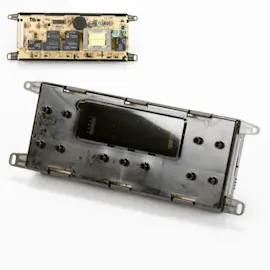
- Control board or major electrical control replacement
- Draft inducer motor (gas furnaces)
- Gas valve (gas furnaces)
The EB15B is an electric furnace, so the costliest jobs are usually electrical and airflow related.
| Repair area | Why it gets expensive | Common symptom pattern |
|---|---|---|
| Blower motor/air movement system | Labor to access, verify voltage, and confirm motor failure | Weak/no airflow, overheating trips, frequent cycling |
| Electrical controls/wiring diagnosis | Time-consuming testing and tracing | Breakers trip, intermittent operation, no heat with power present |
| Power supply and breaker issues | Requires correct wire sizing and safe isolation | Furnace breaker trips, unit dead, burning smell |
We see these steps reduce repeat failures and nuisance trips.
- Replace or clean the air filter regularly to keep airflow strong.
- Keep return air grilles open; blocked return air can cause repeated cycling.
- If breakers trip, de-energize power at the home panel first, then reset the furnace breaker only after inspecting for obvious issues.
- Use correct wire and breaker sizing for the installation; undersized wiring can create overheating and nuisance trips.
- When diagnosing electrical problems, test safely with proper tools and methods; use how to use a multimeter to test electrical parts video for the basics.
The “most expensive part” is often expensive because the underlying issue is system-wide (airflow restriction, wiring problems, or repeated breaker trips). Fixing the root cause helps protect high-cost components like the blower system and electrical controls.
Last updated: February 2026
How to tell if blower motor is bad in furnace?
If your Coleman Evcon furnace model EB15B has little to no airflow, makes grinding or squealing noises, or the blower will not run when the thermostat calls for heat, the blower motor (or its capacitor, wiring, or controls) is failing. Start with power, filter, and basic electrical checks before condemning the motor.
- Blower does not start, but you hear the furnace energize
- Weak airflow from supply vents even with heat on
- Loud noises: grinding, squealing, rattling, or scraping
- Burning smell or repeated shutdowns from overheating
- Blower starts slowly, runs intermittently, or stops on its own
- Breakers trip repeatedly when the blower tries to run
Follow the shutdown and power steps in the owner's manual. Then:
- Confirm the thermostat is set to HEAT and calling for heat
- Verify power is on at the household service box; reset tripped breakers once
- Inspect and replace a dirty air filter; restricted airflow can overheat the blower compartment
- Look for dust and lint buildup around the blower area (season-start cleaning is recommended)
- If breakers trip again after a reset, stop and have the furnace serviced (that indicates an internal problem)
A weak or failed capacitor can mimic a bad motor (humming, slow start, no start). Your EB15B parts list includes a motor run capacitor.
| What you notice | More likely cause | What to do next |
|---|---|---|
| Hums but won’t spin up | Run capacitor or motor | Test capacitor; inspect motor for binding |
| Spins but airflow is weak | Dirty filter, blower wheel issue, duct restriction | Replace filter; inspect blower wheel and ducts |
| Loud grinding/squeal | Motor bearings or blower wheel damage | Stop using; schedule repair |
| Trips breaker on start | Shorted motor, wiring issue, control issue | Stop using; electrical diagnosis |
- Cap run 12907 (motor run capacitor; part number 024-20045-000)
A failing blower motor can cause overheating, nuisance shutdowns, and poor heat distribution. On an electric furnace like the EB15B, airflow problems can also trigger limit controls and reduce comfort while increasing operating stress.
Last updated: February 2026