




How are the valves adjusted on a KOHLER CV490-27508?
On the Kohler CV490-27508 engine, we adjust the valves by setting valve lash (clearance) at the rocker arm with a feeler gauge while the piston is at top dead center (TDC) on the compression stroke. Correct lash improves starting, idle quality, and compression.
Before you start
- Disconnect the spark plug wire so the engine cannot start.
- Let the engine cool fully; set lash on a cold engine.
- Remove the valve cover to access the rocker arms.
- Clean the area around the head so debris does not fall inside.
Valve adjustment steps (typical Kohler OHV single-cylinder)
- Rotate the crankshaft by hand to TDC on the compression stroke (both valves closed).
- Verify compression stroke by feeling air push out of the spark plug hole as you approach TDC.
- Slide a feeler gauge between the rocker arm and valve stem tip.
- Turn the adjuster/rocker nut until the gauge has a light, even drag.
- Tighten the lock/fastener (if equipped) and recheck the clearance.
- Reinstall the valve cover and test run.
Typical cold lash ranges (use as a starting point)
Exact specs vary by Kohler spec number; these ranges are common for many small 4-stroke OHV engines.
| Valve | Typical cold lash range | Common symptom if too tight |
|---|---|---|
| Intake | 0.004 to 0.006 in | Hard starting, low compression |
| Exhaust | 0.006 to 0.008 in | Power loss, hot misfire |
If it still has low compression after adjustment
- Check for carbon holding a valve slightly open.
- Inspect for a leaking head gasket.
- Look for valve seat/valve face wear.
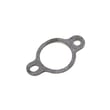
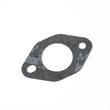
If you find a head gasket leak during inspection, use the model-matched Kohler lawn & garden engine cylinder head gasket 12-041-10-S.
Why it matters
Valve lash controls how fully the valves close. When clearance is off, the engine can lose compression, backfire, run rough, or become difficult to start even with good fuel and spark.
Last updated: February 2026
Can I use 10W30 in my KOHLER engine?
Yes. For the Kohler CV490-27508 lawn and garden engine, 10W-30 is a solid all-purpose oil for many mowing conditions because it flows well for starting and still protects at operating temperature. In consistently high heat, straight SAE 30 is often the better pick.
Recommended oil choice by temperature
Match viscosity to the outdoor temperatures you actually run in:
- 10W-30: best single choice for mixed spring and fall conditions
- SAE 30: best for consistently hot weather and heavy mowing loads
- 5W-30: best for colder starts (early season, late season)
- Use the same viscosity when topping off; do not blend different grades in the crankcase
| Typical conditions | Good choice | Why it works |
|---|---|---|
| Cool mornings, warming afternoons | 10W-30 | Balanced cold flow and hot protection |
| Hot summer mowing | SAE 30 | Holds viscosity better at high temperature |
| Cold starts near or below freezing | 5W-30 | Faster lubrication at startup |
Oil-change tips that prevent engine wear
Oil condition matters as much as viscosity. We recommend:
- Check the oil level before each use; low oil can quickly damage internal parts
- Change oil on schedule and anytime it smells like fuel or looks excessively dirty
- If your CV490-27508 uses an oil filter, replace it at oil changes with the correct part for your engine
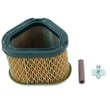
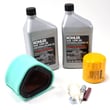
- Keep the intake clean; replace the Kohler lawn & garden equipment engine air filter 12-083-10-S as needed to reduce dirt ingestion
Why it matters
Correct viscosity helps the CV490-27508 lubricate quickly at startup and maintain a protective oil film under load. That reduces wear, improves starting, and helps control operating temperature during long mowing sessions.
Last updated: February 2026
How many horsepower is a 429cc engine?
A 429cc small gasoline engine is typically rated at 14 to 16 HP at governed speed (often 3,600 RPM) in lawn and garden equipment. For your Kohler CV490-27508, the displacement is different (490cc), so its published horsepower rating is not the same as a 429cc engine.
Typical 429cc horsepower range
Horsepower is not a direct cc conversion; it depends on engine design, governor setting, and how the manufacturer rates power.
- Most 429cc single-cylinder OHV engines land in the 14 to 16 HP range
- Governed speed is commonly 3,600 RPM for mower applications
- Higher altitude and high heat reduce power output
- Restricted air or fuel flow makes an engine feel underpowered even when compression is good
| Engine size | Typical HP range | Common governed RPM |
|---|---|---|
| 429cc | 14 to 16 HP | 3,600 |
| 490cc (CV490 family) | Higher than 429cc in many setups | 3,600 |
Why CV490-27508 can be rated differently than a 429cc engine
Even within the same brand, two engines that look similar can have different advertised horsepower.
- Different displacement (490cc vs. 429cc)
- Carburetor calibration and emissions configuration
- Intake and muffler restrictions
- Governor setting and rated test conditions
- Application load (mower deck, chipper, pressure washer, etc.)
If your engine feels low on power
Before chasing horsepower numbers, we recommend checking the common restriction points.
- Replace the air filter: Kohler lawn & garden equipment engine air filter 12-083-10-S
- Replace the fuel filter: fuel filter 25-050-03-S
- Verify fresh fuel and a clear fuel line to the carburetor
- Inspect and clean cooling fins and blower housing for overheating issues
Why it matters
Using the correct HP range helps you match an engine to the right equipment load and diagnose “low power” complaints that are actually caused by maintenance issues such as restricted airflow or fuel delivery.
Last updated: February 2026