Error Codes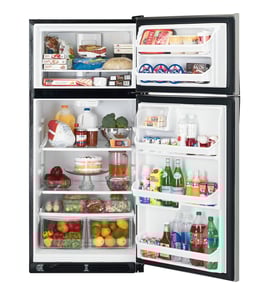
What are the disadvantages of a top mount fridge?
A top-mount refrigerator like Amana model ART308FFDW10 puts the freezer on top and the fresh-food section below; the main disadvantages are more bending to reach everyday items, fewer convenience features, and less flexible storage compared with many bottom-freezer designs.
Common drawbacks you may notice
- Less convenient fresh-food access: you typically bend more to reach produce drawers and lower shelves.
- Fewer organization upgrades: many top-mounts have simpler bins, fewer adjustable zones, and less door storage flexibility.
- Limited dispenser options: top-mount models often do not include an in-door water or ice dispenser.
- Smaller freezer usability: the freezer can feel tighter to organize, especially for bulky items.
- More temperature swings with frequent freezer use: opening the top freezer often can affect overall airflow.
Top-mount vs. bottom-freezer: quick comparison
| Feature | Top-mount refrigerator | Bottom-freezer refrigerator |
|---|---|---|
| Everyday fresh-food access | Lower (more bending) | Higher (less bending) |
| Storage/organization features | Often simpler | Often more flexible |
| Ice/water dispenser availability | Less common | More common |
| Typical purchase cost | Often lower | Often higher |
Why it matters
If you open the refrigerator section far more than the freezer (most households do), a top-mount layout can feel less ergonomic over time. It can also make it harder to keep foods visible and organized, which affects food freshness and waste.
Tips to reduce the downsides
- Keep everyday items on the middle shelves to reduce bending.
- Use clear bins to group snacks, deli items, and breakfast foods.
- Avoid overpacking the freezer so air can circulate.
- If the doors do not seal tightly, fix that early to prevent temperature issues; see how to fix a fridge door seal.
- If you suspect weak airflow (warm fridge, noisy fan, frost buildup), check the evaporator fan system; how to fix your evaporator cooling fan can help, and the model ART308FFDW10 uses parts like the refrigerator evaporator fan motor WP2315539.
Last updated: January 2026
Are top mount or bottom mount fridges better?
Top-mount and bottom-mount refrigerators can both be “better”; it depends on how you use your kitchen. For an Amana ART308FFDW10 top-mount refrigerator, the top-mount style typically wins on value and efficiency, while bottom-mount usually wins on everyday fresh-food access.
Quick comparison (what most homeowners notice)
| Feature | Top-mount (freezer on top) | Bottom-mount (freezer on bottom) |
|---|---|---|
| Fresh-food access | You bend more | More eye-level access |
| Freezer access | Easier to reach | More bending for freezer |
| Energy use (typical) | Often lower | Often slightly higher |
| Price (typical) | Often lower | Often higher |
| Repairs (common) | Similar overall | Similar overall |
Choose a top-mount if you want
- Better budget-friendly options for a reliable refrigerator
- Often lower energy use in many designs
- A simpler layout with fewer drawers and mechanisms
- Easier access to frozen foods at chest height
- A good fit for smaller kitchens and tighter clearances
Choose a bottom-mount if you want
- Fresh foods (milk, produce, leftovers) closer to eye level
- Less bending for the items you use most often
- More freezer organization (baskets/drawers are common)
- A layout that feels more “pantry-like” for the refrigerator section
Why it matters
“Better” comes down to comfort and habits. If you open the refrigerator section far more than the freezer, a bottom-mount can reduce daily bending. If you want strong value and straightforward performance, a top-mount like the ART308FFDW10 is usually the practical pick.
Tips to get the best performance from either style
- Keep the door seals clean and closing tightly; air leaks waste energy and cause temperature swings (see how to fix a fridge door seal).
- Avoid overpacking; blocked vents reduce airflow and cooling consistency.
- Set temperatures to typical targets: 37°F to 40°F for fresh food, 0°F for freezer.
- If cooling seems uneven, check the evaporator fan area; airflow problems are common (see how to fix your evaporator cooling fan).
Last updated: January 2026
How to remove drip pan from Amana refrigerator?
On the Amana ART308FFDW10 top-mount refrigerator, the drip pan (drain pan) is typically accessed from the lower rear of the cabinet near the compressor area. We remove it by unplugging the refrigerator, pulling it away from the wall, then sliding the pan out of its rails or clips so it can be cleaned and reinstalled.
Before you start (safety and prep)
- Unplug the refrigerator to avoid electrical shock.
- Protect the floor with a towel or cardboard; the pan can spill.
- Have warm soapy water and a sponge ready.
- If the unit is on rollers, roll it straight out to avoid damaging flooring.
Steps to remove the drip pan
- Unplug the refrigerator.
- Move the ART308FFDW10 away from the wall so you can reach the lower back area.
- Look underneath the rear of the cabinet for a shallow plastic pan sitting on a bracket.
- If there is a rear lower access cover, remove the screws and set the cover aside.
- Slide the drip pan straight out. If it feels stuck, lift the front edge slightly to clear retaining tabs, then pull.
- Empty the pan, wash with warm soapy water, rinse, and dry.
- Slide the pan fully back into place so it sits level, then reinstall any cover and plug the refrigerator back in.
If the pan will not slide out
Common causes and what we do:
- Pan is warped or cracked: Replace the pan (check the parts list for ART308FFDW10).
- Pan is blocked by dust buildup: Vacuum the area around the compressor and pan rails, then retry.
- Drain tube is positioned into the pan: Keep the tube aimed into the pan when reinstalling.
- Access is limited: Remove the rear lower cover (if equipped) for better clearance.
Quick troubleshooting table
| What you notice | Likely cause | What to do |
|---|---|---|
| Bad odor near the back | Stagnant water in pan | Clean and dry the pan; check drain tube position |
| Water on floor | Pan overflow or misaligned pan | Reseat pan level; clear drain path |
| Pan won’t come out | Tabs/cover interference | Remove rear cover; lift slightly then slide out |
Why it matters
A clean, properly seated drip pan helps prevent odors, reduces the chance of water leaks, and supports efficient operation by keeping the compressor area cleaner.
For odor cleanup tips, we also use the steps in how to get rid of refrigerator smells.
Last updated: January 2026
What is the upper part of a fridge called?
On the Amana ART308FFDW10 top-mount refrigerator, the upper section is typically called the freezer compartment; it’s the area designed to keep foods frozen and to support ice-making (with an ice tray or an optional ice maker).
What you’ll find in the upper (freezer) compartment
- Freezer shelves or an ice bin shelf (storage and organization)
- An evaporator area that creates cold air for both sections
- Airflow paths that move cold air down into the fresh food compartment
- A door gasket that seals the freezer door to prevent warm air leaks
Common names people use (and what they mean)
| What people call it | What it usually refers to | Where it is |
|---|---|---|
| Freezer | Freezer compartment | Top (on a top-mount) |
| Upper compartment | Freezer compartment | Top |
| Freezer section | Same as freezer compartment | Top |
| Ice maker area | Ice maker and ice bin space | Inside freezer |
Why it matters
Knowing the correct name helps you match the right parts and troubleshooting steps. For example, cooling problems in the upper section often involve freezer airflow components like the evaporator fan.
Parts that commonly relate to the upper section on this model
If the freezer is warm, noisy, or not circulating air well, these model-matched parts are often involved:
- Refrigerator evaporator fan motor WP2315539 (moves cold air through the freezer and into the refrigerator)
- Refrigerator evaporator fan blade WP2163777 (attaches to the fan motor to push air)
- Whirlpool refrigerator ice maker kit W11729596 (optional ice maker kit used in the freezer)
Last updated: January 2026