Owner’s manual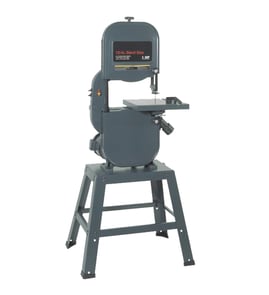

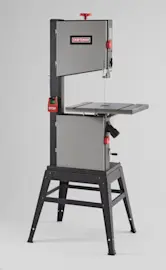
What are the specs of the Craftsman 12 inch bandsaw 1243299?
The Craftsman band saw model 1243299 is a 9-inch band saw, not a 12-inch model. For the most accurate specs (cutting capacity, blade size range, motor details, and adjustments), we use the model’s documentation in the 1243299 owner's manual and match those specs to your exact setup.
If you are expecting a 12-inch band saw, the most common mismatch is the model number or a look-alike Craftsman saw.
| Item to verify | What to look for | What it tells you |
|---|---|---|
| Model tag | “1243299” on the data plate | Confirms you have the 9-inch saw |
| Wheel size | Smaller wheels typical of 9-inch class | Helps confirm saw class |
| Throat capacity | 9-inch class is smaller than 12-inch | Impacts max width of cut |
| Frame and stand | Benchtop style is common in 9-inch class | Affects footprint and stability |
The manual content for Craftsman 1243299 identifies it as a “9-inch Band Saw 124.3299” and shows key assemblies and serviceable components such as:
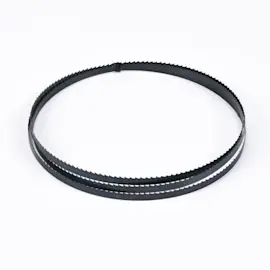
- Saw blade
- Upper wheel and lower wheel
- Tire (wheel tire)
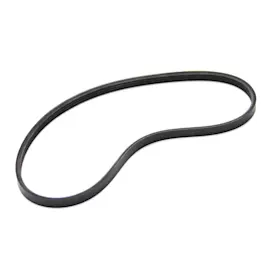
- Drive belt
- Blade tension knob and blade tensioner
- Dust port (2-1/2 inch)
These components matter because they tie directly to performance specs like blade tracking, cut quality, and feed rate.
Use these steps to pull the right numbers for your saw and your blade setup:
- Check the model plate to confirm 1243299
- In the 1243299 owner's manual, look for sections covering blade selection, blade tension, and adjustments
- Match your blade type (width and tooth count) to the material you cut most (wood, plastics, soft metals)
- Verify the drive system condition (belt and tires) before judging cutting performance
A 9-inch and a 12-inch band saw use different blade lengths, tension ranges, and cutting capacities. Using 12-inch assumptions on a 9-inch saw often leads to poor tracking, slow cutting, and crooked cuts.
- If your saw feels underpowered or feeds slowly, use band saw cutting slowly
- If your cuts wander, use band saw not cutting straight
For Craftsman 1243299 replacement parts, start with the model parts list for your saw; you can also search by model number on Sears PartsDirect.
Last updated: February 2026
What is the 3-tooth rule for bandsaws?
The 3-tooth rule means you choose a band saw blade (TPI) so at least three teeth are in the workpiece at all times during the cut. On a Craftsman 1243299 band saw, this prevents tooth snagging and stripping, improves chip clearance, and helps the blade track straighter.
- Measure the material thickness (the direction the blade teeth pass through).
- Multiply thickness by blade TPI to estimate how many teeth are engaged.
- Adjust TPI so the result stays 3 or more.
- If fewer than 3 teeth are engaged, the blade grabs and teeth can break.
- If too many teeth are engaged, gullets pack with dust or chips and the cut slows.
- For mixed thicknesses, choose TPI based on the thinnest section.
- Keep feed pressure moderate; forcing the cut makes any blade perform worse.
| Material thickness | Good starting TPI range | What happens if you go wrong |
|---|---|---|
| 1/8 in (0.125) | 18 to 24 TPI | Too coarse: tooth snagging, rough edge |
| 1/4 in (0.25) | 10 to 14 TPI | Too fine: slow cutting, packed gullets |
| 1/2 in (0.50) | 6 to 10 TPI | Too fine: heat, wandering cuts |
| 1 in (1.00) | 3 to 6 TPI | Too coarse: aggressive cut, tear-out |
Even with the right TPI, setup matters. Use these checks before blaming the blade:
- Confirm blade teeth point downward when installed.
- Set blade tension correctly and verify tracking on the wheels.
- Square the table to the back (non-tooth) side of the blade for straight cuts.
- Adjust blade guides so the blade is supported without binding.
- Clean sawdust buildup inside the cabinet and motor vents.
For the model-specific adjustment and blade-change steps, follow the 1243299 owner's manual.
The 3-tooth rule is a simple way to match blade tooth size to stock thickness. That match reduces vibration, improves accuracy (including bevel cuts), and extends blade life by keeping cutting forces and chip load in a stable range.
If you need to look up diagrams or order replacement items by model number, start with the parts list for Craftsman 1243299 or search by model on Sears PartsDirect.
Last updated: February 2026
What size blade does a 12 inch Craftsman band saw take?
For a Craftsman band saw, the blade size depends on the exact model, not just the wheel diameter. For Craftsman model 1243299 (a 9-inch band saw), the parts list in the 1243299 owner's manual identifies the saw blade as a specific replacement part; match blade length, width, and tooth count to your exact model before buying.
We recommend confirming these blade specs for your specific Craftsman band saw model:
- Blade length (most important; must match the saw’s wheel spacing)
- Blade width (common ranges are about 1/8 in. to 1/2 in., depending on the saw)
- Tooth count (TPI) for the material you cut most often
- Blade type (wood-cutting, metal-cutting, skip tooth, hook tooth)
- Minimum wheel diameter rating (helps prevent premature blade fatigue)
If your saw is truly a 12-inch Craftsman band saw (not model 1243299), use the model number on the nameplate and look up the blade spec in that model’s manual or parts list.
| What you’re doing | Typical blade width | Typical TPI |
|---|---|---|
| Tight curves | 1/8 in. to 1/4 in. | 6 to 10 |
| General cutting | 1/4 in. to 3/8 in. | 4 to 8 |
| Straighter resaw-style cuts | 3/8 in. to 1/2 in. | 3 to 6 |
Using the wrong blade length can prevent proper tensioning and tracking, which leads to blade drift, slow cutting, ragged cuts, and the blade slipping off the wheels. Correct blade width and TPI also reduce burning, wandering, and rough edges.
- For blade replacement steps, use how to replace a band saw blade.
- If the saw cuts slowly after installing a new blade, see band saw cutting slowly.
For model-based parts lookup and ordering, start with your model number and search on Sears PartsDirect.
Last updated: February 2026
Where can I buy Craftsman replacement parts?
You can buy replacement parts for your Craftsman band saw model 1243299 by using the model-based parts lookup and diagrams on Sears PartsDirect. For model-specific part identification (including diagrams and part lists), we recommend checking the owner's manual first so you match the correct component.
Using the model number is the fastest way to avoid ordering the wrong item, especially for wear items like the band saw blade.
- Confirm the model number on the saw’s ID label: 1243299
- Use the parts diagrams to identify the exact component name and location
- Match fasteners and hardware by size and type (for example, M6 vs. M8 bolts)
- For cutting performance issues, start with blade condition, tension, and tracking
- Keep your purchase date handy if you are checking warranty coverage
Most band saw repairs and tune-ups involve common wear or adjustment-related items.
| Part or area | What it affects | Common sign you need it |
|---|---|---|
| Band saw blade | Cut speed and cut quality | Slow cutting, ragged cuts, drift |
| Tires/wheels tracking | Blade tracking and stability | Blade slips off wheel |
| Drive belt (if equipped) | Blade speed under load | Motor runs but blade slows |
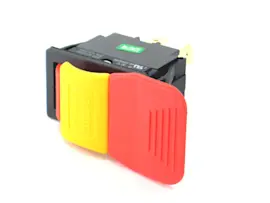
| Switch/power circuit | Starting and stopping | Band saw won’t start |
If you are troubleshooting first, these guides walk through the most common causes and fixes.
- Band saw won't start
- Band saw cutting slowly
- Band saw not cutting straight
- Band saw blade slips off the wheel
Craftsman band saw parts can look similar across models, but small differences in blade length, wheel/tire fit, and hardware sizing can cause poor tracking, inaccurate cuts, or premature wear. Using the model 1243299 documentation and diagrams keeps the repair straightforward.
Last updated: February 2026