
Are radial arm saws worth anything?
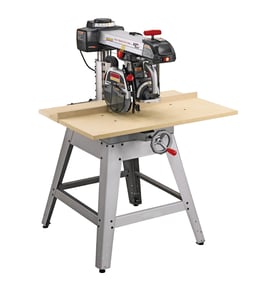
Yes. A Craftsman radial arm saw like model 11329401 can be “worth something” in two ways: resale value and shop value. Most used radial arm saws sell for modest prices, but a well-tuned saw with a solid arm, tight bearings, and complete guards can be very useful for accurate crosscuts, dados, and repeatable stop-block work.
What affects the value most
- Condition and completeness: guard, table/fence parts, yoke and carriage hardware, and the original motor all matter.
- Accuracy potential: the arm locks firmly at 90 degrees, the carriage rolls smoothly, and there is minimal play in the column and bearings.
- Safety features: intact blade guard, anti-kickback pawls (if equipped), and a working switch.
- Local demand: these are heavy tools, so value is often limited by pickup-only sales.
- Intended use: radial arm saws are most valuable to owners who primarily crosscut and dado, not as an all-purpose ripping saw.
Typical price ranges (used market)
These are common ranges we see for 10-inch radial arm saws in average condition.
| Condition | What it usually includes | Typical range |
|---|---|---|
| As-is / needs work | missing table parts, rough bearings, unknown motor | $0 to $75 |
| Working, average | runs, basic alignment possible, some wear | $50 to $150 |
| Clean, tuned, complete | smooth travel, tight locks, complete guard, good table | $150 to $300+ |
Quick checks before you buy or sell one
- Unplug it; spin the blade by hand to feel for rough bearings.
- Slide the carriage through its full travel; it should feel smooth, not gritty or loose.
- Lock the arm at 90 degrees; it should lock firmly without drifting.
- Check the cord, switch, and strain relief for cracking or repairs.
- Inspect the table and fence; a damaged table is fixable, but it lowers resale value.
Why it matters
Radial arm saws can be excellent specialty saws, but their value depends on whether they can be set up to cut square and stay locked in position. A saw that will not hold alignment is frustrating and can be unsafe, so condition and adjustability drive value more than brand name alone.
For general DIY safety and repair readiness, we recommend reviewing are diy appliance repairs safe.
Last updated: February 2026
What are the common problems with radial arm saws?
Common problems on the Craftsman 11329401 10-inch accra-arm radial saw include poor or drifting cuts, excessive vibration, the blade “climbing” or self-feeding toward you, weak starting or power loss, and electrical issues such as intermittent operation. Most problems trace back to alignment, blade condition, worn bearings, or damaged wiring.
Most common symptoms and likely causes
- Cut is not square or wanders: arm/yoke not aligned, fence not straight, table not flat, blade dull or warped
- Vibration or loud rumble: worn motor bearings, bent blade, loose arbor hardware, saw not bolted down
- Blade tries to pull forward (self-feeding): incorrect blade type for radial arm use, negative hook angle not used, feed technique too aggressive
- Motor struggles, overheats, or trips power: dull blade, binding stock, failing switch, worn brushes (if equipped), undersized extension cord
- Intermittent power or no start: damaged cord, loose connections, bad switch, blown fuse in the plug/circuit
Quick checks we recommend (before replacing anything)
- Unplug the saw and wait for the blade to fully stop before touching the blade area.
- Confirm the blade is sharp, clean, and correct for a radial arm saw (typically a negative hook angle helps reduce climbing).
- Check for play in the arbor by gently rocking the blade (movement often points to bearing wear or loose hardware).
- Verify the saw is securely mounted and the table/fence are tight.
- Inspect the power cord and strain relief for cuts, crushed spots, or exposed conductors.
Basic troubleshooting guide
| Symptom | What to check first | What usually fixes it |
|---|---|---|
| Rough cut, burn marks | Blade sharpness, pitch buildup | Clean/replace blade; reduce feed rate |
| Vibration | Blade condition, mounting, arbor play | Replace blade; tighten hardware; address bearings |
| Pulls toward operator | Blade hook angle, technique | Use proper blade; controlled feed; correct setup |
| Won’t start | Outlet, cord, switch | Repair wiring; replace switch if faulty |
Why it matters
Radial arm saw issues are not just “quality” problems. Misalignment, the wrong blade geometry, or worn bearings can increase kickback and self-feeding risk, and electrical faults can create intermittent starts or overheating.
Helpful DIY reference
For safe electrical diagnosis steps, use our guide: how to use a multimeter to test electrical parts video.
Last updated: February 2026
What is the best brand of radial arm saw?
There is no single “best” radial arm saw brand for everyone; the best choice depends on whether you want a new production-grade saw or a vintage heavy-duty saw, plus your budget and the type of work you do. For a Craftsman 11329401 10-inch accra-arm radial saw, the “best” brand is the one that delivers solid alignment, safe guarding, and parts support for your use.
How we compare radial arm saw brands
When we evaluate brands (including Craftsman, DeWalt, Delta/Rockwell, and industrial makers), we focus on practical factors that affect cut accuracy and long-term ownership:
- Arm and carriage rigidity: less flex equals straighter crosscuts and better repeatability
- Fence and table system: easy to square, easy to replace sacrificial surfaces
- Motor and switch reliability: consistent startup, no intermittent power
- Alignment adjustability: clear, stable adjustments for arm, yoke, and bevel
- Parts availability: ability to keep the saw running over time
Common “best brand” picks (by use case)
Different brands tend to shine in different situations. This is a practical way to think about it:
| Use case | What typically matters most | Brand types that often fit |
|---|---|---|
| Hobbyist and home shop | Value, availability, basic accuracy | Vintage Craftsman, older DeWalt/Delta |
| Furniture and fine woodworking | Repeatable alignment, rigidity | Heavier vintage cast-iron designs |
| Production and industrial | Duty cycle, serviceability, precision | New production-grade and industrial makers |
What matters most for your Craftsman 11329401
With a classic Craftsman radial arm saw like model 11329401, results usually come down to setup and condition more than the badge on the arm.
Quick checks that improve performance
- Verify the blade is sharp and correct for crosscutting
- Square the fence to the blade path and replace worn table surfaces
- Confirm the carriage rolls smoothly with no side play
- Check the arm lock and bevel locks hold firmly
- Inspect the power cord, switch, and wiring for damage
Why it matters
Radial arm saws can do accurate crosscuts, dados, and repetitive length cuts, but only when the saw stays aligned and the controls lock securely. Choosing a brand with a rigid design and keeping your saw tuned reduces binding, burning, and kickback risk.
For electrical troubleshooting and safe testing practices, use our guide: how to use a multimeter to test electrical parts video.
Last updated: February 2026
When did Craftsman stop making radial arm saws?
Craftsman radial arm saw production largely ended in the mid-1990s; most commonly, you will see 1995 cited as the point when Craftsman stopped selling new radial arm saws in volume. For your Craftsman model 11329401 10-inch Accra-Arm radial saw, parts support typically continues long after production ends.
What you can use this date for (and what you should not)
Knowing the approximate end of production helps you set expectations for parts availability and compatibility, but it does not identify your exact saw’s build date.
- Use it to estimate the era of your saw (older, legacy design)
- Use it to plan maintenance (bearings, switch, cord, arbor hardware)
- Do not use it to confirm exact manufacturing year
- Do not assume parts from other Craftsman radial arm saw models will fit
How to identify your exact version of 11329401
Craftsman often had multiple revisions within a model family. The most reliable way to match parts is by the complete model number and the specific diagram callouts.
| What to check | Where it helps | Example outcome |
|---|---|---|
| Model number on the ID plate | Confirms you are shopping the right parts list | Confirms 11329401 |
| Motor tag details (HP/amps) | Helps match electrical parts | Narrows switch/capacitor style |
| Arm and carriage style | Helps match mechanical parts | Narrows yoke, bearings, rollers |
| Wiring condition and routing | Helps plan safe repair | Confirms cord/strain relief needs |
For help confirming you are reading the ID plate correctly, use how to find your appliance model number (and what it means for parts).
Why it matters for repairs and safety
Radial arm saws rely on accurate alignment, solid carriage travel, and safe wiring. On older saws, the most common repair drivers are worn bearings, damaged power cords, and failing switches.
- Unplug the saw before any inspection
- If the cord jacket is cracked or stiff, replace it before further use
- If the switch feels intermittent, test it before replacing other components
- If you suspect wiring damage, follow a proven repair method
For electrical troubleshooting basics, we recommend how to use a multimeter to test electrical parts video and how to repair broken or damaged wires video.
Last updated: February 2026