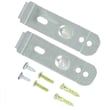
Installation guide
 Owner’s manual
 Error Codes


What is the most common problem with a Samsung dishwasher?
Drain and water-related faults are the most common issues we see on Samsung dishwashers like model DW80R5061US: not draining, leaking, or not filling. These problems often trace back to a clogged filter or drain path, a kinked drain hose, or a leak detected in the base.
Most common symptoms and what they usually mean
- Won’t drain or stops mid-cycle: drain hose restriction, sump blockage, or a weak drain pump
- Leak detected or shuts off: water in the base pan, loose water supply connection, or a leak detector trip
- Not filling: closed water supply valve, clogged inlet screen/line, or frozen supply line
- Poor cleaning: spray arm blockage, overloaded racks, or low water flow
- Won’t start: door not latching, door switch issue, or control not accepting input
Check the information code first (fastest way to narrow it down)
Your DW80R5061US control panel can display information codes that point to the system at fault. Use the code list in the DW80R5061US user manual and start with these common ones:
| Code | What it points to | First checks to make |
|---|---|---|
| 5C | Drain check | Drain hose clogged or folded; drain opening in sump clogged |
| LC | Leakage check | Close water supply valve; check for supply connection leaks |
| 4C | Water supply check | Water valve open; inlet line/valve not clogged or frozen |
| OC | Over-level water check | Close water supply valve; shut off breaker |
Parts that commonly relate to these problems
If troubleshooting confirms a failed component, these model-compatible parts are common fixes:
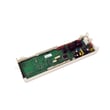
- Dishwasher leak detector sensor DD94-01062A for leak-detected shutdowns
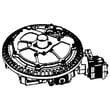
- Samsung dishwasher drain pump DD81-01527A for persistent drain failures
- Samsung dishwasher sump and motor assembly DD82-01353A when circulation, draining, or internal sump issues are confirmed
Why it matters
Drain, leak, and fill problems can stop a cycle to protect your kitchen from water damage and to prevent the pump from running under unsafe conditions. Catching a clogged hose or a small leak early often prevents bigger repairs later.
Last updated: February 2026
What is the average lifespan of a Samsung dishwasher?
A Samsung dishwasher typically lasts 8 to 12 years with normal household use. For your Samsung DW80R5061US, consistent cleaning, correct loading, and fixing small leaks or drain issues early are the biggest factors that help it reach the longer end of that range; see the DW80R5061US user manual for routine care guidance.
Typical lifespan and what changes it
Most dishwashers wear out from heat, moisture, and pump or seal wear. These factors move lifespan up or down:
- Hard water (scale buildup reduces wash performance and stresses pumps)
- Heavy daily use (more cycles equals more wear on the circulation and drain systems)
- Poor cleaning habits (filters and spray paths clog, causing strain)
- Small leaks left unresolved (water can trigger safety shutoffs and damage components)
- Overloading racks (blocks spray arms and reduces cleaning, leading to repeat cycles)
Quick maintenance checklist (best payoff)
Use this simple routine to extend life and improve cleaning:
- Rinse off large food scraps before loading
- Keep the filter area clean and free of debris
- Make sure spray arms spin freely and holes are not clogged
- Run a dishwasher cleaner periodically to reduce grease and mineral buildup
- Check under the unit and at connections for moisture or drips
Common wear items vs. what they affect
| Symptom | Often involved system | What to check first |
|---|---|---|
| Not draining | Drain path and drain pump | Kinked hose, clogged filter/sump area |
| Poor cleaning | Wash circulation and spray | Loading, spray arm blockage |
| Water in base, shuts off | Leak detection | Look for leaks, then test sensor |
| Won’t start | Door latch/switch, controls | Door fully closed, switch operation |
If you’re chasing a leak-related shutdown, the dishwasher leak detector sensor DD94-01062A is a common component in the safety circuit on this model family.
Why it matters
A dishwasher near the end of its lifespan often shows up as longer cycles, weaker cleaning, intermittent draining, or leak detection trips. Staying ahead of clogs and leaks reduces stress on the sump, motor, and drain pump, which are among the most expensive repairs.
Last updated: February 2026
Does a Samsung dishwasher have a filter to clean?
Yes. The Samsung DW80R5061US dishwasher uses a filter combination at the bottom of the tub that traps food soil; cleaning it regularly helps prevent odors, poor cleaning, and drain issues. The filter typically includes a cylindrical filter insert and a flat fine filter.
Where the filter is and what it does
You’ll find the filter assembly in the bottom of the dishwasher tub, under the lower spray area.
- Catches food particles so they do not recirculate onto dishes
- Helps protect the circulation pump and drain pump
- Reduces odor caused by trapped debris
- Helps keep wash performance consistent
How to clean the filter (basic steps)
Follow the steps in the DW80R5061US user manual for your exact filter style. In most Samsung designs, the process looks like this:
- Turn the dishwasher off
- Pull out the lower rack
- Rotate the filter insert counterclockwise to unlock it
- Lift out the filter insert, then remove the flat fine filter
- Rinse under running water; use a soft brush for stuck-on debris
- Reinstall the filters and rotate the insert clockwise until fully locked
Quick check after reassembly
If the filter insert is not fully closed, cleaning performance drops and you can get extra noise or debris left in the tub.
Cleaning frequency we recommend
Most households do best with a monthly cleaning. Increase frequency if you:
- Run heavy soil loads (pots, casseroles)
- Use the dishwasher daily
- Notice odor, grit, or standing water
| Usage pattern | Filter cleaning interval |
|---|---|
| Light use (few loads/week) | Every 1 to 2 months |
| Typical family use | About monthly |
| Heavy soil or daily use | Every 1 to 2 weeks |
Why it matters
A clean filter helps the wash system move water efficiently and keeps food debris from redepositing on dishes. It also reduces the chance of slow draining that can stress components like the drain pump.
Last updated: February 2026
Is the DW80R5061US a good dishwasher?
Yes. The Samsung DW80R5061US is a solid built-in dishwasher for most homes when it’s installed correctly and used with the right cycle and loading habits. It supports high-temperature sanitizing on the Normal cycle with the Sanitize option; details are in the DW80R5061US user manual.
What “good” means for this model
For DW80R5061US, “good” usually comes down to consistent cleaning, safe sanitizing performance, and dependable day-to-day operation.
Key capabilities called out in the documentation include:
- Built-in residential dishwasher design
- 120 V, 60 Hz electrical supply on a 15 A circuit
- 20 to 120 psi water pressure requirement
- Sanitize option that raises the final rinse temperature up to 163°F (73°C) on supported cycles
- Normal cycle plus Sanitize is the combination designed to meet NSF/ANSI 184 sanitization performance
Quick checklist: is it a good fit for your kitchen?
- You have a standard built-in dishwasher opening and proper hookups
- Your hot water supply and pressure are within the required range
- You run Normal plus Sanitize when you want higher-temperature final rinse performance
- You load dishes so spray arms can rotate freely and water can reach all surfaces
- You keep the filter area and spray paths clean for steady wash results
Cycle time and water use expectations
Modern dishwashers often run longer cycles to improve soil removal while using less water. The manual shows these typical ranges:
| Cycle | Typical time range | Typical water use |
|---|---|---|
| Auto | 128 to 144 min | 4.5 to 6.5 gal |
| Normal | 100 to 167 min | 2.3 to 6.6 gal |
| Heavy | About 163 min | About 7.7 gal |
Why it matters
Even a “good” dishwasher can seem disappointing if it is not level, the water supply is restricted, or loading blocks spray. Following the leveling, anchoring, and drain routing steps in the DW80R5061US installation guide helps prevent performance problems.
Last updated: February 2026