Owner’s manual
 Error Codes




What is the problem with the LG bottom freezer refrigerator?
On the LG LRDCS2603D bottom-mount refrigerator, the most common “problem” customers notice is a cooling imbalance: the fresh food section gets too warm while the freezer stays very cold. We start by checking airflow, temperature settings, and the fan and sensor components described in the LRDCS2603D owner’s manual.
Most common causes (and what to check first)
- Airflow blocked: packages pushed against vents, overpacked shelves, or frost restricting air movement.
- Dirty condenser area: reduced heat removal can cause longer run times and uneven temps.
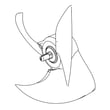
- Evaporator fan not moving air: the freezer may stay cold while the refrigerator warms.
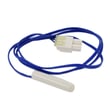
- Temperature sensing issue: a bad sensor can misread temps and drive incorrect cooling.
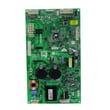
- Control issue: the control board may not respond correctly to sensor input.
Quick checks you can do in 10 minutes
- Confirm the control panel is not in store display mode and that cooling is actually enabled.
- Set temperatures to typical targets (about 37°F refrigerator and 0°F freezer) and wait 24 hours.
- Make sure vents inside the refrigerator section are not blocked by food containers.
- Listen for the evaporator fan when the doors are closed (you may hear airflow).
- Check door closing and sealing; warm air leaks can mimic a cooling failure.
Parts that commonly relate to uneven cooling on this model
If basic airflow and settings look good, these model-compatible parts are often involved:
| Symptom | Likely area | Example part for LG LRDCS2603D |
|---|---|---|
| Freezer cold, fridge warm | Air circulation | Refrigerator evaporator fan motor EAU63923603 |
| Temps swing or read wrong | Temperature sensing | Refrigerator temperature sensor 6500JB2002E |
| Random cooling behavior | Electronic control | LG refrigerator electronic control board EBR81182789 |
Why it matters
When the refrigerator section warms up, food safety and freshness are affected quickly, even if the freezer still seems “fine.” Fixing airflow or a failing fan/sensor early can prevent bigger cooling problems.
Last updated: January 2026
What is the warranty on LRDCS2603D?
For the LG LRDCS2603D refrigerator, the exact limited-warranty terms (what’s covered, for how long, and whether labor is included) must be confirmed in the warranty section for this model. We recommend checking the LRDCS2603D owner’s manual for the model-specific coverage details.
How to confirm the warranty for your exact unit
The LRDCS2603D model family can have version-specific warranty language, so we use the warranty section to verify the exact terms.
- Find the “Limited warranty” section in the manual
- Match your model and serial information to your paperwork
- Note which items are parts-only vs. parts plus labor
- Check whether sealed system components are listed separately
- Review exclusions such as installation issues, misuse, or non-household use
Warranty details to look for (quick checklist)
Use this checklist while reading the warranty section:
- Coverage length for the compressor and sealed system
- Coverage length for parts such as fans, sensors, or control boards
- Whether labor is covered and for how long
- Proof-of-purchase requirements
- Service requirements (authorized service, in-home vs. carry-in)
Common warranty categories (what you’ll typically see)
| Warranty category | What it usually includes | Why it matters |
|---|---|---|
| Full/limited basic warranty | General parts and sometimes labor | Often the broadest coverage window |
| Sealed system | Compressor, condenser, evaporator, tubing | Cooling failures may fall here |
| Parts-only extended coverage | Specific components covered without labor | Helps estimate out-of-pocket repair cost |
Why it matters
Warranty coverage can change what you do next. For example, a cooling issue might involve the compressor, an electronic control board, or a fan motor, and coverage can differ by component.
Last updated: January 2026
What's better, top mount or bottom mount fridge?
For the LG LRDCS2603D, a bottom-mount design is usually “better” if you want everyday fresh-food items at eye level and less bending; a top-mount is often “better” if you want a simpler layout and typically lower upfront cost. Your best choice depends on how you use the refrigerator day to day; see the LRDCS2603D manual for layout and feature details.
Quick comparison (top mount vs bottom mount)
| Feature | Top mount (freezer on top) | Bottom mount (freezer on bottom, like LRDCS2603D) |
|---|---|---|
| Most-used section height | Freezer is easiest to reach | Refrigerator is easiest to reach |
| Ergonomics | More bending for fresh food | Less bending for fresh food |
| Freezer access | Easier for frequent freezer use | More bending for freezer use |
| Organization | Often simpler, fewer drawers | Often more drawers/baskets for sorting |
When a bottom-mount is the better fit
We typically recommend a bottom-mount refrigerator like the LG LRDCS2603D when:
- You use the fresh-food compartment more than the freezer
- You want shelves and crispers at a comfortable height
- You prefer freezer drawers/bins that separate frozen foods
- You want a layout that makes it easier to see what is in the refrigerator
When a top-mount is the better fit
A top-mount refrigerator can be the better choice when:
- You use the freezer more often than the refrigerator
- You want a straightforward design with fewer moving drawer parts
- You are trying to maximize value and keep the purchase price down
- You do not mind bending for fresh-food items
Why it matters
Mount style affects comfort, organization, and how often doors stay open while you search for items. That can influence temperature stability, food freshness, and energy use over time.
Last updated: January 2026