
What is the full meaning of UH-1150?
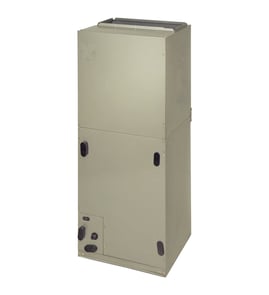
For the Empire UH-1150 air handler, UH-1150 is the model number, not an abbreviation with a single universal “full meaning.” In HVAC equipment, letters typically identify a product series and the numbers usually indicate a size or capacity class used by the manufacturer.
What “UH-1150” usually tells you
Model numbers like UH-1150 are mainly used to match the correct parts and specifications for your exact unit.
- UH: commonly a series or product-family identifier used by the brand
- 1150: commonly a size, configuration, or capacity grouping (manufacturer-defined)
- The full model number helps ensure correct matches for blower components, controls, and electrical parts
How to use the model number for parts and service
When you’re troubleshooting or ordering parts for an Empire air handler, using the complete model number prevents mismatches.
- Copy the model number exactly as shown on the unit data plate: UH-1150
- Use the model number when searching diagrams and parts lists
- If your unit has a revision or suffix on the data plate, include it as well
- For electrical troubleshooting, confirm the unit’s voltage and wiring before replacing parts
Quick reference: model number vs. “meaning”
| Item | What it is | Why it matters |
|---|---|---|
| UH-1150 | Manufacturer model number | Identifies the exact Empire air handler for parts matching |
| “UH” letters | Series identifier (typical) | Groups similar designs and component families |
| “1150” digits | Size/capacity class (typical) | Helps distinguish configurations within the series |
Why it matters
Air handlers often look similar across series, but internal differences (motor type, control layout, wiring, mounting) can change which replacement parts fit. Using UH-1150 consistently is the fastest way to stay on the right track.
For help confirming where to find the data plate and what each section means, use how to find your appliance model number (and what it means for parts).
Last updated: February 2026
Does a gas furnace need an air handler?
A typical gas furnace does not need a separate air handler because the furnace cabinet already contains the blower that moves heated air through your ductwork. You usually only need an air handler when you are pairing a blower cabinet with equipment like an air conditioner or heat pump, or when the blower is located separately from the heat source.
Quick rule of thumb
- Gas furnace with ducts: the furnace’s built-in blower usually handles airflow.
- Heat pump system: commonly uses an air handler (indoor blower + coil) instead of a furnace.
- AC add-on to a furnace: the furnace blower often serves as the “air handler,” with an evaporator coil added above or near the furnace.
- Hydronic/boiler heat with central air: often uses an air handler with a hot-water coil.
When you actually need an air handler
You typically need an air handler (or a dedicated blower cabinet) when one of these is true:
- The indoor blower is separate from the gas heat section.
- You need space for an evaporator coil and the system is designed around an air handler cabinet.
- Your setup is a fan coil style system (blower + coil) rather than a furnace.
- You are replacing a failed blower assembly that is housed in a separate air handler.
Furnace vs. air handler: what’s the difference?
| Component | Main job | Usually contains | Common pairing |
|---|---|---|---|
| Gas furnace | Makes heat and moves air | Burner, heat exchanger, blower | Central AC (coil added) |
| Air handler | Moves air and supports a coil | Blower, controls, evaporator coil (often) | Heat pump or AC |
Why it matters
If you buy or install the wrong indoor unit, you can end up with poor airflow, coil fit issues, incorrect controls/voltage, and comfort problems (hot/cold spots). Matching the indoor blower setup to your heating and cooling equipment is what keeps the system efficient and reliable.
Helpful DIY reference
If you are tracing wiring or verifying blower power and control signals, use a meter and follow safe electrical practices; our guide how to use a multimeter to test electrical parts video walks through the basics.
Last updated: February 2026
Is an air handler the same as an evaporator?
No. In an Empire UH-1150 air handler, the air handler is the indoor unit that moves and conditions air (blower, controls, and sometimes electric heat), while the evaporator is the refrigerant coil that absorbs heat for air conditioning. They often sit in the same cabinet, but they are different components.
Quick definitions (what each part does)
- Air handler: Circulates air through your ductwork using a blower motor and fan; may include an electric heat kit, relays, and a control board.
- Evaporator coil: The A-coil or slab coil connected to the outdoor condenser; it cools and dehumidifies air when refrigerant flows through it.
- Filter and return air path: Protects the blower and coil from dust buildup.
- Drain pan and condensate line: Carries away water that forms on the evaporator during cooling.
How to tell what you have in your system
Most homes with central AC have an evaporator coil installed with or above the air handler (or above a furnace). Check these common clues:
| What you see | Usually means |
|---|---|
| Copper refrigerant lines entering the cabinet | An evaporator coil is present (AC or heat pump) |
| A condensate drain line coming off a pan | Cooling coil is installed and producing condensation |
| Only electrical wiring and duct connections, no refrigerant lines | Air handler only (often heat-only or ventilation) |
| “A-coil” label or coil access panel | Evaporator coil section |
Why it matters
Knowing the difference helps you troubleshoot correctly. For example, weak airflow points to the blower, filter, or duct issues, while poor cooling or icing points to the evaporator coil, refrigerant flow, or airflow across the coil.
Common symptoms and what they usually point to
- Weak airflow at vents: Dirty filter, blower wheel buildup, failing blower motor, or duct restriction.
- Coil icing or frost: Low airflow (filter/blower) or refrigerant issue; shut the system off to thaw and prevent damage.
- Water around the unit: Clogged condensate drain, cracked drain pan, or coil freezing then melting.
- No cooling but blower runs: Thermostat call issue, outdoor unit problem, or coil/refrigerant problem.
For safe DIY electrical checks (like verifying power to the blower or checking a fuse), use our how to use a multimeter to test electrical parts video.
Last updated: February 2026
Is the air handler separate from the furnace?
No. The Empire UH-1150 is a self-contained unit heater; the blower and the heat-producing components are in the same cabinet. It is not a typical central HVAC air handler that pairs with a separate furnace.
What “separate” means for UH-1150
On this Empire heater, the “air-moving” and “heating” sections are built together, so you troubleshoot and replace parts as one appliance.
- The blower/fan is inside the unit heater cabinet
- The heat source (burners and gas controls) is also inside the same cabinet
- There is no separate furnace cabinet serving as the heat source
- It is designed to heat the space directly (often garages, shops, or utility areas)
Quick identification checklist
Use these visual cues to confirm you are looking at the UH-1150 unit heater:
- One metal cabinet mounted in the space being heated
- A fan outlet that blows warm air directly into the room
- A gas supply line entering the same cabinet
- No large return-air filter rack like a ducted air handler
Common comparisons
| Equipment type | Heat source location | Blower location | Typical use |
|---|---|---|---|
| Unit heater (Empire UH-1150) | Inside the same cabinet | Inside the same cabinet | Direct space heating |
| Central furnace + air handler | Furnace cabinet | Air handler or furnace cabinet | Whole-home ducted heating/cooling |
Why it matters
When the blower and burners are integrated, symptoms like “fan runs but no heat” or “heat but weak airflow” point to different internal sections of the same unit. Correct identification helps you choose the right repair path and parts.
Safe first checks before troubleshooting
- Shut off electrical power to the unit at the breaker
- Shut off the gas supply valve before inspecting gas components
- Inspect wiring for loose or heat-darkened connections
- If you test electrical circuits, use proper meter technique
For safe electrical testing basics, use how to use a multimeter to test electrical parts video.
Last updated: February 2026
How much is an air handler for an AC unit?
An air handler for an AC unit typically runs $800 to $3,500 for the equipment and $2,000 to $7,500 installed. Your Empire UH-1150 is a gas unit heater, not a central AC air handler; replacement cost is priced more like a commercial-style heater.
Typical cost ranges (AC air handler vs. Empire UH-1150)
| Item | Typical equipment cost | Typical installed cost | Notes |
|---|---|---|---|
| Central AC air handler (blower + coil cabinet) | $800 to $3,500 | $2,000 to $7,500 | Cost varies by size (tons/CFM) and blower type (PSC vs ECM) |
| Gas unit heater like Empire UH-1150 | $900 to $3,000 | $1,800 to $6,000 | Cost varies by BTU output, venting, gas piping, and mounting height/access |
What drives the price the most
- Capacity and airflow: Higher BTU and higher CFM units cost more.
- Venting requirements: New flue/vent routing or upgrades add labor and materials.
- Gas piping changes: New shutoff, sediment trap, or pipe sizing changes add cost.
- Electrical and controls: Fan motor, transformer, and thermostat wiring condition matter.
- Access and mounting: Suspended ceiling installs and lift time increase labor.
Quick checks before you price a replacement
- Confirm the rating plate shows UH-1150 and the correct fuel type (natural gas or LP).
- Note your vent type and vent size so the replacement matches.
- Verify gas supply location and pipe size.
- If the heater is not heating, price common repairs first (pilot/ignition parts, gas valve, limit switch, fan motor).
Why it matters
Air handlers and gas unit heaters solve different problems. Pricing the correct equipment type prevents buying the wrong assembly and helps you decide whether a repair (controls, wiring, or safety switches) is the better value.
For safe electrical troubleshooting on the fan and controls, use how to use a multimeter to test electrical parts video.
Last updated: February 2026