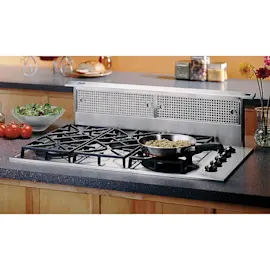
Installation guide
 Owner’s manual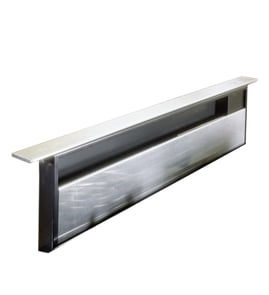

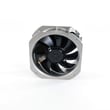
How does a downdraft ventilation system work?
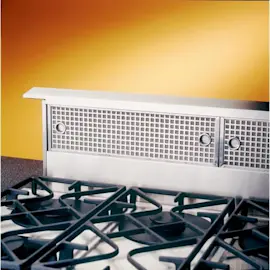
A downdraft ventilation system pulls cooking smoke, steam, and odors away from the cooktop and into ductwork, using a fan to move the air to an outside vent (preferred) or through filtration if configured for recirculation. For the Dacor IVS2, proper ducting and clearances are key to performance.
What’s happening when the fan is on
When you turn on the fan, the system creates negative pressure at the intake so airborne grease and heat are captured and directed into the exhaust path.
- Air is drawn from the cooking area into the ventilation intake
- Grease-laden air passes through filter(s) that need regular cleaning
- The blower pushes air into an 8-inch round duct connection
- A back-draft damper helps prevent outside air from flowing back in
- Air is exhausted outdoors through the duct run (best practice)
IVS2 ducting basics (from installation requirements)
The IVS2 is designed to connect to 8-inch round ductwork. You can increase duct size over the run if desired, but you should not reduce it.
| Item | What to plan for | Why it matters |
|---|---|---|
| Duct size at hood exhaust | 8-inch round | Maintains airflow and reduces noise |
| Back-draft control | Built-in damper in the collar | Helps prevent back-drafts |
| Venting location | Duct to the outside | Reduces moisture, odors, and grease indoors |
Installation and use tips that protect performance
These habits keep airflow strong and reduce fire risk during everyday cooking.
- Run the fan whenever the cooktop is operating
- Clean the filter(s) and grease-laden surfaces often
- Keep filters from becoming blocked or clogged
- Avoid letting foreign objects get pulled into the intake
- Use only cleaners specified in the installation guide
Why it matters
Downdraft systems rely on steady airflow. If filters clog, duct size is reduced, or the duct run leaks, the fan can move less air, which leaves more smoke and grease in the kitchen and can increase noise.
Last updated: February 2026
Do downdraft vents need to be vented outside?
Yes. For the Dacor IVS2 downdraft ventilation system, the installation instructions specify that ducted fans must be vented to the outdoors; exhausting into walls, ceilings, attics, crawl spaces, or garages is not acceptable. Follow the ducting requirements in the IVS2 installation guide for safe, effective ventilation.
What “vented outside” means for IVS2
A ducted IVS2 setup routes air from the downdraft intake through ductwork and discharges it outdoors.
- Terminate the duct at an exterior wall or roof cap (outside the building envelope).
- Do not dump exhaust air into enclosed building cavities (walls, ceilings) or unconditioned spaces (attic, crawl space, garage).
- Keep duct joints sealed to reduce leaks and improve capture.
- Plan duct runs to minimize resistance (fewer sharp turns, fewer elbows).
Ducting tips that improve performance
The IVS2 duct planning guidance favors smoother airflow.
- Use 45° turns instead of a single 90° turn when possible.
- Keep bends spaced apart; aim for at least 24 inches of straight duct between elbows.
- Avoid “S” turns or back-to-back elbows.
- Round duct typically performs better than rectangular when elbows are required.
Ducted vs. ductless (recirculating) at a glance
Some downdraft systems can be configured to recirculate with a kit, but IVS2 documentation emphasizes ducting outdoors for ducted fan installations.
| Setup | Where air goes | Typical result |
|---|---|---|
| Ducted (recommended) | Outdoors | Best smoke, grease, and odor removal |
| Ductless (recirculating) | Back into kitchen through filters | More odor reduction than smoke capture; filters require frequent maintenance |
Why it matters
Venting outdoors reduces grease buildup and lingering odors, and it helps prevent unsafe exhaust routing that can affect indoor air quality. Proper ducting also helps the damper flaps open freely and keeps airflow strong.
Last updated: February 2026
What is the difference between a downdraft and a hood vent?
A hood vent captures smoke and heat as they naturally rise, while a downdraft system pulls cooking fumes sideways and down into ductwork. For the Dacor IVS2 integrated ventilation system, that means performance depends heavily on correct canopy clearances and a short, smooth duct run. See the IVS2 installation guide for the required clearances and ducting rules.
How they move air (and why it feels different)
A hood vent works with natural convection; a downdraft works against it. That difference affects how quickly each system captures steam, grease, and smoke.
- Hood vent: pulls rising air up into the hood, then filters and exhausts it.
- Downdraft: pulls air across the cooktop and down, then exhausts it through ductwork.
- Capture area: hoods typically have a larger capture zone above the cooking surface.
- Cross drafts: downdrafts are more sensitive to open windows, HVAC supply vents, and fans.
- Duct design impact: downdrafts are more affected by long runs, tight elbows, and transitions.
IVS2-SPECIFIC installation details that affect performance
The IVS2 is designed to be installed inside a custom hood canopy, and the installation guide calls out minimum clearances and ducting requirements that directly impact how well it vents.
| Topic | What matters most | Typical result if ignored |
|---|---|---|
| Canopy clearance | Meet minimum clearances above the cooking surface | Poor capture, higher heat and smoke in the kitchen |
| Ducting | Short, straight duct run with smooth turns | Reduced airflow and noisier operation |
| Exhausting | Vent to the outside (not into attics, crawl spaces, or walls) | Odors, moisture, and grease buildup |
| Electrical | Hard-wired to a dedicated 120V, 60 Hz, 15A circuit | Nuisance trips, unsafe wiring conditions |
Ductwork tips we recommend for downdraft-style venting
These align with common best practices and the IVS duct-planning guidance.
- Use the shortest, most direct route to the outside.
- Use round duct where possible, especially when elbows are required.
- Minimize transitions and sharp turns; two 45° turns beat one 90°.
- Keep bends farther from the exhaust outlet and spaced apart with straight duct.
- Tape duct joints securely to prevent leaks and improve efficiency.
Why it matters
Downdraft ventilation can work very well, but it relies on airflow engineering more than a typical hood. With the IVS2, correct clearances, outside venting, and careful duct layout are what make the difference between “it helps” and “it actually clears smoke.”
Last updated: February 2026