Owner’s manual
 View engine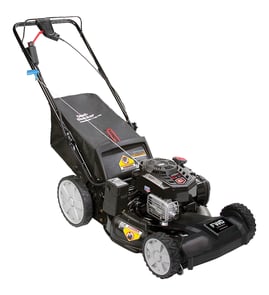




What year is Craftsman Model 917377791?
Craftsman model 917377791 is identified in the documentation as a Craftsman rotary lawn mower (5.5 HP, 21-inch multi-cut), but the year of manufacture is not encoded in the model number itself. To determine the year, we use the serial number from the mower’s rear housing decal and match it to the date format shown in the owner's manual.
How to find the build year on model 917377791
Look for the model and serial number decal on the rear of the lawn mower housing. Once you have the serial number, use these steps:
- Write down the full serial number exactly as shown
- Record the purchase date (if known) for reference
- Use the serial number date code format (varies by production run)
- If the decal is worn, clean it gently and use a flashlight to read it
- Keep the serial number with your maintenance records for parts matching
What the manual confirms (and what it does not)
The manual confirms where to locate the identification decal and that the mower is model 917.377791 (same model family as 917377791). It does not list a single fixed “manufacture year” because that depends on the serial number.
| Item | Where to find it | What it tells you |
|---|---|---|
| Model number (917377791) | Rear housing decal | Which parts diagrams and specs apply |
| Serial number | Rear housing decal | The production code used to determine year |
| Date of purchase | Your records | Helpful for estimating age and maintenance intervals |
Why it matters
The build year affects parts compatibility and small design changes (drive system hardware, handle components, fasteners). Using the serial number helps us match the correct diagrams and replacement parts for your exact production run.
Last updated: February 2026
Should I use 87 or 91 gas for lawn mower?
For the Craftsman 917377791 gas walk-behind lawn mower, we recommend using fresh regular unleaded gasoline (87 octane) for normal operation; higher octane (such as 91) does not add power or improve reliability in typical mower engines.
What to use (and what to avoid)
- Use fresh 87 octane unleaded gas.
- Avoid using old or stale fuel; it is a common cause of no-start and rough running.
- Do not store gasoline from one season to the next.
- Keep fuel clean; dirt or rust from a bad gas can can create fuel system problems.
- If you store fuel, use a fuel stabilizer and follow the storage steps in the owner's manual.
Quick fuel freshness checklist
If the mower is hard to start, surges, or loses power, fuel quality is one of the first things we check:
- Gas smells sour or looks darker than normal
- Fuel is older than about 30 days (especially without stabilizer)
- Water contamination (phase separation) is visible
- The gas can is rusty or dirty
87 vs 91: what changes and what does not
| Fuel choice | What you gain | What you risk | Best use case |
|---|---|---|---|
| 87 octane (regular) | Correct fuel for most mower engines | Minimal when fuel is fresh | Everyday mowing |
| 91 octane (premium) | No meaningful performance benefit in most mowers | Wasted cost; still goes stale | Only if it is the freshest fuel you have |
Why it matters
Most “fuel problems” on walk-behind mowers come from stale gas, water in fuel, or contamination, not from octane rating. The manual also calls out stale fuel and water in fuel as common no-start causes, and it warns against storing gasoline from one season to another.
Last updated: February 2026
What model number is the Craftsman 917377791?
The model number is 917.377791; it’s printed on the ID decal on the rear of the mower housing for your Craftsman gas walk-behind lawn mower. You can also confirm it on the cover page of the owner's manual.
Where to find the model number on the mower
Look for the model and serial decal in these common spots:
- Rear of the lawn mower housing (most common for model 917.377791)
- Near the deck, behind the engine area
- On the handle bracket area (less common)
- In the documentation packet that came with the mower
How to confirm you have the right model before ordering parts
We recommend matching both the model number and the mower’s configuration (drive system, deck size) before you buy parts like a blade, pulley, or handle hardware.
- Write down the model number exactly as shown: 917.377791
- Record the serial number from the same decal
- Compare the illustrated parts breakdown in the manual to what you see on the mower
- If you are replacing drive components, verify whether your mower is power-propelled
Quick check table
| What to check | What you should see for this mower | Why it helps |
|---|---|---|
| Model number format | 917.377791 | Prevents ordering parts for a similar Craftsman mower |
| Location of decal | Rear of mower housing | Fastest way to confirm in the yard or garage |
| Deck size reference | 21-inch class mower | Helps match blades and deck-related parts |
Why it matters
Craftsman model numbers can look similar, but small differences change the correct blade, drive belt, idler pulley, and handle parts. Confirming 917.377791 first helps ensure the parts diagram and part IDs match your exact mower.
Last updated: February 2026
How much does it cost to repair a hydrostatic transmission on a lawn mower?
On a Craftsman 917377791 gas walk-behind mower, hydrostatic transmission repair is typically not a common, cost-effective service because most walk-behind mowers use a belt-and-pulley drive system. When a mower has a true hydrostatic transmission (more common on riding mowers), repairs often run from a few hundred dollars for minor service up to about $2,500 for a full replacement installed.
What you likely have on model 917377791
This Craftsman walk-behind mower is generally serviced as a motion-drive system (drive belt, pulleys, wheels) rather than a hydrostatic transmission. The 917377791 owner's manual covers routine maintenance and drive-related checks that often solve “won’t move” complaints.
Common “transmission” symptoms on a walk-behind mower are usually caused by:
- Worn or stretched drive belt
- Damaged or seized idler pulley
- Worn drive wheel components
- Loose fasteners or linkage out of adjustment
- Grass buildup under the drive cover
Typical cost ranges (what most customers see)
Costs vary by labor rates and whether you replace parts or the entire drive unit.
| Repair scenario | Typical parts cost | Typical total with labor |
|---|---|---|
| Cable/adjustment, cleaning, minor hardware | $0 to $50 | $75 to $200 |
| Drive belt and/or pulley service | $25 to $150 | $150 to $400 |
| Drive unit or “transmission” assembly replacement (walk-behind) | $150 to $400+ | $300 to $700+ |
| Hydrostatic transmission replacement (riding mower) | $800 to $1,300+ | $1,500 to $2,500 |
Parts on this model that can affect self-propelled drive
If your mower is self-propelled and it slips, squeals, or will not pull, these model-listed parts are commonly involved in drive repairs:
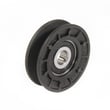
- Lawn mower idler pulley 532166042 (belt tension and engagement)
- Lawn mower idler pulley 532166043 (belt routing and tension)
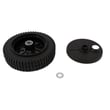
- Lawn mower drive wheel 532193139 (traction and drive engagement)
Why it matters
Misdiagnosing a belt-and-pulley drive problem as a “hydrostatic transmission” issue can lead to unnecessary expense. A quick inspection of the drive belt, pulleys, and wheels often restores normal self-propelled operation at a much lower cost.
Last updated: February 2026