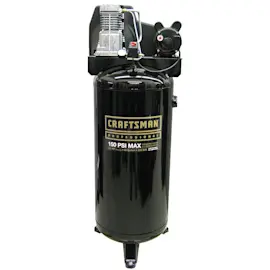
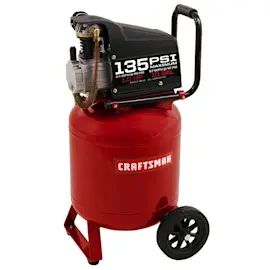
Owner’s manual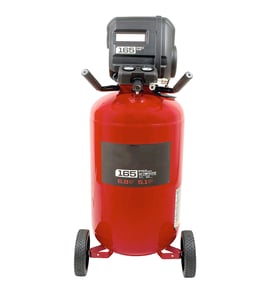


Do Craftsman air compressors have a lifetime warranty?
No. For the Craftsman air compressor model 919165500, the manual specifies a full one-year warranty for defects in materials or workmanship (90 days if used commercially or as a rental). See the warranty section in the owner's manual.
What the warranty covers for model 919165500
The warranty described in the manual is tied to defects in material or workmanship during the warranty period.
- Coverage period for typical homeowner use: 1 year from date of purchase
- Coverage period for commercial or rental use: 90 days from date of purchase
- Applies to defects (not normal wear, misuse, or lack of maintenance)
- Your proof of purchase date determines the start of coverage
Quick warranty comparison
| Use type | Warranty length | What to keep handy |
|---|---|---|
| Homeowner / personal use | 1 year | Receipt, model number 919165500 |
| Commercial / rental use | 90 days | Receipt, model number 919165500 |
Why it matters
Knowing the warranty length helps you decide whether to troubleshoot a symptom (like a pressure issue or a no-start condition) or focus on documenting the problem and purchase date first. It also helps when you are identifying the exact model and describing the failed component.
Helpful next steps if you are troubleshooting
If you are diagnosing a problem while you check your warranty paperwork, these guides can help narrow down the cause:
Last updated: February 2026
Is a 150 PSI air compressor good for car tires?
Yes. A 150 PSI air compressor is a good choice for car tires because most passenger tires are typically inflated to roughly 30 to 40 PSI, and the extra capacity gives you faster fill and a safety margin. Your Craftsman 919165500 can also be used for inflating tires when you set the regulator correctly (see the owner's manual).
What matters most for tires (PSI vs. airflow)
For tire inflation, maximum PSI is usually not the limiting factor; control and convenience are.
- Regulated outlet pressure is what you set for the tire, not the tank’s maximum pressure.
- A higher tank PSI can help the compressor recover faster between fills.
- For tires, you do not need high CFM like you would for many air tools.
- Use a tire air chuck and a reliable gauge for accuracy.
- Never exceed the tire pressure listed on the vehicle door jamb placard.
How to set up your Craftsman 919165500 for tire inflation
The manual emphasizes using the regulator and checking accessory pressure ratings.
- Set the OFF/AUTO lever to OFF.
- Attach the hose and tire inflator accessory.
- Turn the lever to AUTO and let tank pressure build.
- Open the regulator and adjust to your target PSI.
- Inflate in short bursts and re-check pressure.
Quick guide: typical PSI needs vs. compressor rating
| Item | Typical inflation PSI | Is 150 PSI enough? |
|---|---|---|
| Passenger car tires | 30 to 40 | Yes |
| Many SUV and light truck tires | 35 to 50 | Yes |
| Bike tires (varies by type) | 40 to 120 | Yes |
| Sports balls and inflatables | 2 to 15 | Yes (use low-pressure control) |
Why it matters
Too much air pressure creates a bursting risk. Using the regulator correctly helps you inflate tires accurately while keeping the hose, chuck, and tire within their rated pressure limits.
Last updated: February 2026
What does 4.0 scfm at 90 PSI mean?
On a Craftsman 919165500 air compressor, 4.0 SCFM at 90 PSI means the compressor can deliver about 4 standard cubic feet of air per minute while maintaining 90 PSI at the outlet. This rating helps you match the compressor’s airflow to your air tool’s requirements.
What SCFM and PSI tell you
- SCFM (standard cubic feet per minute) is a standardized airflow measurement, so you can compare compressors more fairly.
- 90 PSI is a common working pressure for many pneumatic tools.
- A tool that needs more than 4.0 SCFM at 90 PSI will run weakly, cycle the compressor constantly, or not work correctly.
- A tool that needs less than 4.0 SCFM at 90 PSI should run normally (assuming no leaks and the regulator is set correctly).
How to use this number to size tools
Check your tool label or manual for an airflow spec such as “SCFM @ 90 PSI” (or “CFM @ 90 PSI”). Then compare it to your compressor rating.
| Tool requirement (at 90 PSI) | What to expect with 4.0 SCFM @ 90 PSI |
|---|---|
| 0 to 3 SCFM | Typically runs well |
| 3 to 4 SCFM | Usually OK; may cycle often under continuous use |
| Over 4 SCFM | Not enough airflow; performance drops |
Why it matters (real-world performance)
Air tools consume air continuously, but your tank is only stored air. If the tool demand exceeds the compressor’s SCFM at the pressure you’re using, tank pressure drops until the pressure switch reaches cut-in and the motor restarts. That is why SCFM at a specific PSI is the most useful “can it keep up?” number.
Quick checks if a tool feels underpowered
- Set the regulator so outlet pressure does not exceed the tool’s max rating.
- Listen for air leaks at fittings, hose, quick-connects, and the tank drain.
- Make sure the intake filter is clean (restricted intake reduces output).
- Use a properly sized hose and couplers (small fittings can choke airflow).
- If the tool’s SCFM requirement is higher than the compressor rating, use a lower-demand tool or a larger-capacity compressor.
For the glossary definitions of SCFM and PSIG and other operating terms, use the owner's manual.
Last updated: February 2026
What is the most common cause of air compressor failure?
The most common cause of air compressor failure is poor maintenance that leads to overheating and accelerated wear. On the Craftsman 919165500, restricted ventilation openings and a dirty or restricted air intake filter are common triggers; both can cause serious overheating and performance problems (no-start, low pressure, or repeated shutdowns).
What fails first when maintenance is skipped
These issues show up often because they stress the motor, pump, and pressure-control parts:
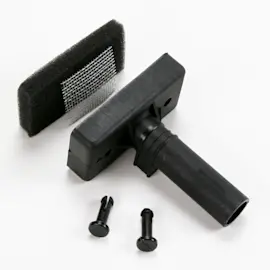
- Restricted air intake filter (reduced airflow, higher heat)
- Blocked ventilation openings (overheating risk)
- Loose fittings or hose leaks (long run times, excess cycling)
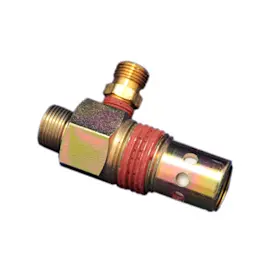
- Check valve problems (hard starting, air bleeding back)
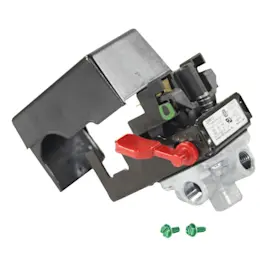
- Pressure switch problems (won’t shut off at cut-out, won’t restart at cut-in)
- Water left in the tank (internal rust and tank weakening)
For model-specific safety and maintenance steps, follow the owner's manual.
Quick checks that prevent most breakdowns
Before troubleshooting deeper, we recommend these basics:
- Unplug the compressor and bleed off tank air pressure before any inspection.
- Confirm ventilation openings are clear and the unit has good airflow.
- Inspect and clean or replace the air intake filter if it is dirty or restricted.
- Listen for constant hissing; tighten fittings and check the hose for damage.
- If the safety valve pops or leaks, test it by pulling the ring; replace if it still leaks.
- Drain condensed water from the tank after use and before storage.
Symptoms and the most likely cause
| What you notice | Most likely cause | What to do first |
|---|---|---|
| Motor won’t run or restart | Tank pressure above cut-in, check valve stuck open, overload tripped, wiring/cord issue | Bleed tank pressure; check valve and power supply |
| Safety valve pops off | Pressure switch not shutting off at cut-out | Switch OFF immediately; inspect/replace pressure switch |
| Won’t build tank pressure | Air leak, restricted intake filter, check valve issue | Check for leaks; clean/replace filter |
| Low air to tools | Restricted intake filter, compressor undersized for demand | Clean/replace filter; reduce air demand |
If your main symptom is a no-start condition, use our step-by-step guide: air compressor won't start.
Why it matters
Overheating and long run times do more than reduce performance; they shorten motor life, damage valves, and can create unsafe operating conditions. Simple habits like keeping airflow clear, fixing leaks, and draining the tank prevent the most common failures.
Last updated: February 2026