Owner’s manual
 Error Codes



What are the dimensions of the Samsung RF28JBEDBSR?
For the Samsung RF28JBEDBSR bottom-mount refrigerator, the cabinet is 35 6/8 in. wide and 70 in. tall overall; depth varies by configuration, including 36 1/2 in. at the deepest listed measurement. For the exact configuration you need, confirm the chart in the RF28JBEDBSR owner's manual.
Dimension chart (common configurations)
Use these measurements when planning door clearance, delivery paths, and countertop fit.
| Measurement type | Width | Height | Depth |
|---|---|---|---|
| Overall (tallest listed) | 35 6/8 in. | 70 in. | 36 1/2 in. |
| Cabinet height (without overall top height) | 35 6/8 in. | 68 7/8 in. | 34 in. |
| Depth without hinges and door (spec reference) | 35 3/4 in. | 68 7/8 in. | 29 3/8 in. |
How we recommend measuring at home
Even with published specs, real-world fit depends on flooring, trim, and how you measure.
- Measure the opening width at the front and back (walls are often not perfectly square).
- Measure height to the lowest obstruction (cabinet lip, soffit, light fixture).
- Measure depth to the front edge of counters, then decide how much door and handle projection is acceptable.
- Plan for door swing clearance; installations next to a fixed wall typically need 3 3/4 in. clearance for the door to open.
- Measure the delivery path (doorways, turns, stairwells) before scheduling delivery.
Why it matters
Correct dimensions prevent common installation problems such as doors that cannot swing fully, a refrigerator that sticks out too far past counters, or a unit that cannot be moved through doorways without removing doors.
Last updated: February 2026
Is RF28JBEDBSR a side by side refrigerator?
No. Samsung model RF28JBEDBSR is a French door, bottom-mount refrigerator (refrigerator doors on top with a freezer drawer on the bottom), not a side-by-side. For the exact configuration and installation clearances for the RF28JB series, use the RF28JBEDBSR owner's manual.
How to tell French door vs side-by-side
A quick visual check usually confirms the style:
- French door (RF28JBEDBSR): two tall fresh-food doors on top, freezer drawer on bottom
- Side-by-side: one full-height refrigerator door on the left and one full-height freezer door on the right
- Bottom-mount: freezer is below the fresh-food section (often a pull-out drawer)
- Why it matters: parts like door hinges, drawer slide rails, and ice maker components differ by design
Model-specific size and clearance notes (RF28JB series)
The manual for the RF28JB** series lists these design dimensions (measurement method can vary):
| Spec (RF28JB** series) | Listed dimension |
|---|---|
| Cabinet depth | 34 in (864 mm) |
| Width | 35 6/8 in (908 mm) |
| Case height | 68 7/8 in (1749 mm) |
| Overall height | 70 in (1777 mm) |
| Depth (overall) | 36 1/2 in (926 mm) |
Also plan for installation clearance, including extra space behind the refrigerator if you have an ice maker water line connection. Details are in the RF28JBEDBSR owner's manual.
Why it matters for parts and troubleshooting
Correctly identifying the refrigerator style helps you choose the right repair path and parts:
- Ice and dispenser issues often involve the ice container or auger system
- Cooling complaints can relate to sensors, evaporator components, or airflow
- Door swing and sealing problems depend on hinge and alignment design
If you are diagnosing ice production problems on Samsung French door models, we recommend why your Samsung fridge stopped making ice and how to fix it.
Last updated: February 2026
How to defrost Samsung RF28JBEDBSR?
The Samsung RF28JBEDBSR is a frost-free refrigerator, so it defrosts automatically during normal operation. If you need to clear heavy frost or troubleshoot cooling issues, use the defrost guidance and safety steps in the RF28JBEDBSR owner's manual and avoid using heat tools or sharp objects.
What “defrost” means on this model
Samsung designed the RF28JBEDBSR to run automatic defrost cycles, so you typically do not manually defrost it.
Common situations where customers say “defrost”:
- Ice buildup on the evaporator cover or back wall
- Freezer drawer hard to open due to frost
- Warm refrigerator section caused by restricted airflow
- Water/ice under crisper drawers from a drain issue
Safe ways to speed up ice removal
We recommend these steps because the manual warns against using mechanical devices or other methods to accelerate defrosting beyond what the manufacturer recommends.
- Move food to a cooler; keep freezer items wrapped to limit temperature rise
- Turn the ice maker off (if needed) and empty the ice bin
- Unplug the refrigerator for about 10 minutes, then plug it back in (a basic reset that can also clear some abnormal conditions)
- Leave doors open for short periods to let frost soften naturally
- Use towels to catch meltwater and keep air vents clear
What not to do (prevents damage)
Avoid methods that can puncture the sealed system or damage liners and wiring:
- Do not chip ice with knives, screwdrivers, or scrapers
- Do not use a hair dryer, heat gun, or space heater inside the cabinet
- Do not use chemical de-icers or sprays
- Do not pry on the evaporator cover or fan shroud
Quick troubleshooting guide
Use this table to decide what to check next.
| Symptom | Most likely cause | What we do next |
|---|---|---|
| Frost only in one area | Door not sealing, frequent door openings | Check gasket contact and door alignment |
| Fridge warm, freezer OK | Airflow restriction, damper issue | Clear vents; inspect for ice blocking airflow |
| Water pooling under drawers | Defrost drain issue | Clear drain path; check for recurring freeze-ups |
| Ice maker stopped after frost event | Ice path blocked or ice maker issue | Follow why your Samsung fridge stopped making ice and how to fix it |
Why it matters
Excess frost blocks airflow across the evaporator, which makes the compressor and fans run longer, warms food compartments, and can lead to leaks when ice melts.
Last updated: February 2026
What's the average lifespan of a Samsung fridge?
Most Samsung refrigerators average 10 to 15 years of service life with normal household use and basic maintenance. For your Samsung RF28JBEDBSR bottom-mount refrigerator, keeping airflow clear, cleaning regularly, and maintaining the water system helps you get the most years out of the compressor and cooling system (see the RF28JBEDBSR user manual).
Typical lifespan ranges (what to expect)
Refrigerator lifespan depends most on compressor run time, ventilation, and how well doors seal.
- Average expected life: 10 to 15 years
- Heavy use or poor ventilation: closer to 8 to 12 years
- Well maintained, stable temperatures: often reaches the upper end of the range
Quick comparison table
| What affects lifespan most | What you can do | What it prevents |
|---|---|---|
| Heat buildup under/behind the fridge | Keep clearances and don’t block vents | Compressor overwork, warm temps |
| Dirty interior and spills | Clean with mild detergent and dry | Odors, bacteria, corrosion |
| Water system stress (ice/water) | Use correct water pressure and shut off on long trips | Leaks, ice maker issues |
| Wear on sealed system | Keep temps steady, avoid frequent door holding-open | Excess run time |
Maintenance that adds years (high impact)
These steps match common failure points we see on French door and bottom-mount refrigerators.
- Do not block interior air vents; blocked vents can cause overcooling and performance problems.
- Clean the interior and exterior correctly using mild detergent and a soft cloth.
- Confirm proper water pressure for the ice maker and dispenser (typical requirement is 20 to 125 psi).
- Replace the water filter on schedule to keep flow strong and reduce strain on the dispenser system.
- Leave doors open during long storage (3 weeks or more) after unplugging and shutting off water to reduce odors and moisture issues.
Why it matters
A refrigerator that runs hotter, runs longer, or leaks water usually wears out key components sooner. Simple habits like keeping vents clear and maintaining the water filter reduce compressor workload and help your Samsung RF28JBEDBSR stay reliable longer.
Parts that commonly relate to “end of life” symptoms
If you’re troubleshooting poor cooling, loud operation, or weak dispensing, these are common related components for this model:
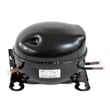
- Samsung refrigerator compressor NC1MV90ALPASH (sealed system drive component)
- Refrigerator condenser coil and fan motor assembly DA97-15978B (removes heat from the system)
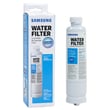
- Refrigerator water filter DA29-00020B (improves water flow and filtration)
Last updated: February 2026
How much does a Samsung RF28JBEDBSR weight?
The Samsung RF28JBEDBSR refrigerator weighs about 390.2 lb (net weight); the shipping (packed) weight is about 416.7 lb. Use the RF28JBEDBSR owner's manual to confirm handling clearances and door-swing space before moving it into place.
Net weight vs. shipping weight
Net weight is the refrigerator only; shipping weight includes packaging and shipping materials.
| Weight type | What it includes | Typical use |
|---|---|---|
| Net weight | Refrigerator only | Floor loading, moving plan |
| Shipping weight | Unit plus packaging | Freight, delivery planning |
Safe moving and installation tips
Plan the move like a heavy appliance job; this protects the compressor, doors, and flooring.
- Use an appliance dolly and at least 2 adults (more for stairs).
- Remove food, shelves, bins, and the ice container to prevent damage.
- Keep the refrigerator as upright as possible during transport.
- Measure doorways, turns, and ceiling height before you start.
- Protect floors with a hardboard path; avoid dragging the unit.
- Leave the recommended clearance so doors can swing fully and airflow is not restricted.
Model dimensions that help you plan the path
The manual’s design dimensions for the RF28JB** platform (which includes RF28JBEDBSR) are useful for doorway and clearance checks.
| Measurement | Spec (design dimension) |
|---|---|
| Cabinet depth (A) | 34 in |
| Width (B) | 35 6/8 in |
| Case height (C) | 68 7/8 in |
| Overall height (D) | 70 in |
| Depth (E) | 36 1/2 in |
Why it matters
Using the correct weight prevents injuries, protects flooring, and helps you choose the right dolly, straps, and manpower. It also reduces the chance of door misalignment or cooling problems after the refrigerator is set in place.
Last updated: February 2026
What is the most common problem with Samsung refrigerators?
The most common problem we see on Samsung refrigerators, including model RF28JBEDBSR, is a cooling complaint caused by airflow restriction or frost buildup that leaves the fresh food section warm while the freezer still seems to work. Ice maker and water flow issues are also frequent.
Most common symptoms
- Refrigerator section warms up but freezer still freezes
- Frost or ice buildup near vents or behind interior panels
- Temperature swings (food freezing in the fridge or soft ice cream in the freezer)
- Ice maker stops producing ice or makes small, hollow cubes
- Water dispenser flow slows down
Quick checks that solve many cooling complaints
- Keep food packages from blocking interior air vents (blocked vents can cause poor circulation).
- Make sure the refrigerator is not in Cooling Off (Shop) mode; many Samsung units toggle it by holding Freezer + Fridge + Alarm for 5 seconds until “OFF” appears or disappears.
- If the unit was unplugged, wait at least 5 minutes before plugging it back in.
- For ice maker performance, use a potable water supply and maintain 20 to 125 psi water pressure.
- Follow the filter change and reset steps in the RF28JBEDBSR manual when the filter light turns on.
Common causes and what to check first
| Area | What it can cause | First check |
|---|---|---|
| Airflow restriction or frost | Warm fridge, uneven temps | Clear vents; look for heavy frost |
| Defrost system issue | Frost buildup, warming | Inspect for ice behind panels |
| Water supply or filter | Slow water, ice issues | Confirm pressure; replace filter |
Parts that are often involved (when symptoms match)
- Slow water flow or filter light on: refrigerator water filter DA29-00020B
- Ice not dispensing or clumping in the bucket: refrigerator auger motor assembly DA97-12540G
Why it matters
Cooling problems can lead to food spoilage and extra compressor run time; water and ice issues often trace back to pressure, filtration, or ice path restrictions.
Last updated: February 2026