Owner’s manual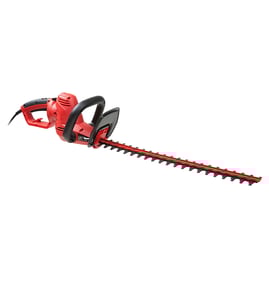

Can you spray WD-40 on hedge trimmer blades?
Yes. For a Craftsman 15174935 cordless hedge trimmer, spraying a light coat of WD-40 on the blades after cleaning is a practical way to lubricate, help prevent rust, and reduce sap buildup; wipe off the excess so it does not attract debris.
- Turn the trimmer off and remove the battery pack before touching the blades.
- Brush off clippings, then wipe the blade teeth with a rag.
- Spray a light, even coat along both sides of the blade.
- Run the trimmer briefly (away from you) to spread the lubricant.
- Wipe off excess oil, especially near the guard and handle area.
- Store the tool dry; avoid leaving wet grass or sap on the blade.
| Option | What it’s good for | When to use it |
|---|---|---|
| WD-40 | Light lubrication, moisture displacement, rust prevention | After each trimming session or before storage |
| Silicone spray | Less sticky film, helps reduce sap sticking | If your blades collect a lot of sap |
| Light machine oil | Longer-lasting lubrication | If you want a heavier oil film (wipe excess) |
- Do not spray lubricant onto the motor housing, battery contacts, or switches.
- Do not use thick grease on the blade teeth; it traps dirt and can slow cutting.
- Do not lubricate a blade that is packed with sap and debris; clean first.
A clean, lightly lubricated blade cuts faster, runs cooler, and is less likely to rust in storage. That helps protect the cutting edges and reduces strain on the drive system.
For model-specific safety notes and maintenance intervals, follow the owner's manual.
Last updated: February 2026
Is it worth repairing a hedge trimmer?
Yes, repairing a Craftsman cordless hedge trimmer model 15174935 is usually worth it when the tool is otherwise in good shape and the issue is limited to maintenance items (blade condition, fasteners, wiring, or switches). If the motor or gearbox is failing and multiple major parts are needed, replacement is typically the better value.
Use this checklist before you spend time or money:
- Blades are dull or gummed up: repair is worth it; cleaning and sharpening restores cutting performance.
- Unit runs but cuts poorly: usually blade sharpness, blade alignment, or debris in the cutter bar.
- Unit will not start: often a battery/charger issue, safety switch, trigger switch, or wiring.
- Visible damage (cracked housing, bent cutter bar): repair is worth it only if the damage is limited and the trimmer still aligns and runs smoothly.
- Burning smell, heavy sparking, or grinding noise: replacement is typically the better choice.
Most hedge trimmer fixes are maintenance-level and improve both safety and cut quality.
- Clean sap and debris from the cutter bar after use
- Lightly lubricate the blades (use a light machine oil)
- Tighten loose screws and blade hardware
- Sharpen blades when cutting becomes ragged or slow
- Replace damaged or excessively worn blades (many owners have this done professionally)
| Situation | Typical outcome | Best choice |
|---|---|---|
| Dull blades, sticky sap, light rust | Cuts improve quickly after service | Repair/maintain |
| Loose hardware, minor wiring issue | Simple fix with basic tools | Repair |
| Bent blades, repeated jamming | Performance and safety suffer | Repair only if parts/labor are low |
| Motor/gearbox noise, overheating | Major internal wear | Replace |
Using a hedge trimmer with blunt or damaged blades makes the tool work harder, can leave torn plant cuts, and increases the chance of binding or kickback. Keeping the cutter bar clean, sharp, and lubricated is the fastest way to extend the life of your Craftsman 15174935.
For model-specific safety steps, lubrication points, and maintenance intervals, follow the 15174935 owner's manual.
Last updated: February 2026
What is the difference between a hedge trimmer and a hedge cutter?
A hedge trimmer and a hedge cutter are usually the same type of tool; “hedge trimmer” is the more common name, while “hedge cutter” often implies heavier-duty cutting. For your Craftsman 15174935 cordless hedge trimmer, expect it to be best for routine shaping and trimming, not thick-branch removal.
| Term you’ll hear | What it typically means | Best for | Typical cut capacity |
|---|---|---|---|
| Hedge trimmer | Lighter, more control and precision | Shaping, maintenance trimming | Small twigs and new growth |
| Hedge cutter | Often used to describe a more powerful trimmer | Overgrown hedges, tougher stems | Larger stems (still not “branches”) |
- Use a hedge trimmer for clean lines, light pruning, and frequent touch-ups.
- Use loppers or a pruning saw for thick, woody branches (don’t force a trimmer through them).
- Match blade length to the hedge size; longer blades cover more area but feel less nimble.
- Watch the “tooth gap” and rated cut capacity; that tells you what stem thickness the tool is designed to handle.
- For cordless models, battery voltage and amp-hour rating affect runtime and how well the tool holds speed under load.
If you shop or troubleshoot using the wrong term, you can end up expecting a hedge trimmer to do branch-cutting work. That leads to stalled blades, rough cuts, and faster wear on the blade set, gearbox, or motor.
- Trim when growth is dry; wet, stringy growth can bind the blades.
- Let the blade do the work; don’t twist the tool to “chew” through stems.
- Keep the blade clean and lightly lubricated to reduce friction.
- If performance drops, check for debris in the blade teeth and confirm the battery is fully charged.
For model-specific operating limits and safe-use guidance, follow the 15174935 owner's manual.
Last updated: February 2026
Which is better, a 20V or 40V hedge trimmer?
A 20V hedge trimmer is usually the better pick for lighter, routine trimming because it’s lighter, easier to control, and typically costs less. A 40V hedge trimmer is better for thicker growth and longer sessions because it delivers more cutting power and longer runtime; check your owner's manual for the voltage and battery system your Craftsman 15174935 is designed to use.
| Feature | 20V cordless hedge trimmer | 40V cordless hedge trimmer |
|---|---|---|
| Best for | Small to medium hedges, touch-ups | Larger hedges, heavier growth |
| Weight and handling | Lighter, less fatigue | Heavier, more fatigue over time |
| Cutting capability | Best on small stems | Better on thicker stems |
| Runtime | Shorter per battery | Longer per battery |
| Cost | Lower tool and battery cost | Higher tool and battery cost |
- Match the tool voltage to the size of your yard and how often you trim.
- Choose 20V if you prioritize lighter weight, overhead reach, and quick cleanups.
- Choose 40V if you regularly cut dense hedges or need longer runtime per charge.
- Consider battery compatibility; staying in one battery platform usually saves money.
- Use the correct cutting technique; forcing the blades through thick branches overheats the motor on any voltage.
Voltage is a practical shortcut for power and runtime expectations. For most homeowners, a lighter 20V trimmer improves control and reduces fatigue, while a 40V trimmer makes sense when you need sustained cutting power for tougher, longer jobs.
- Let the blades do the work; don’t twist or pry to “snap” branches.
- Trim in passes (top, then sides) to reduce binding.
- Keep blades clean and lightly lubricated to reduce drag.
- Charge and store batteries at room temperature for more consistent runtime.
Last updated: February 2026