Owner’s manual
 Error Codes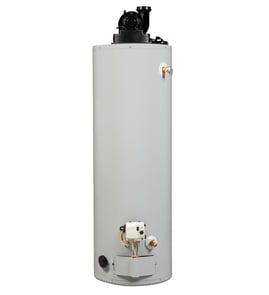




Is it cheaper to repair or replace a water heater?
For an American FG1F4040S3PV gas water heater, repairing is cheaper when the problem is a serviceable part (pilot/igniter, drain valve, T&P valve, gasket). Replacing the whole heater makes more sense when the tank is leaking or the unit has been submerged in water.
Quick decision guide (repair vs. replace)
We use these rules of thumb for most gas water heaters:
- Repair when the tank is sound and the issue is ignition, a valve, or a seal.
- Replace when the tank leaks, the heater is very old, or the heater has had flood/submersion exposure.
- Replace when repeated breakdowns are stacking up and you are replacing multiple major components.
Common repairable items for this model
If your FG1F4040S3PV is not heating reliably, these parts are commonly involved:
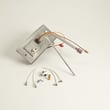
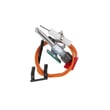
- Water heater pilot and igniter assembly 100093809 (ignition and pilot flame issues)
- Drain valve 100109106 (leaks at the drain outlet, hard-to-drain tank)
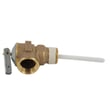
- T&p valve 100108279 (relief valve dripping or not operating correctly)
- Water heater manifold door gasket 100112699 (air leaks around the burner/manifold door)
Cost and outcome comparison
Typical outcomes look like this:
| Situation | Usually cheaper choice | Why |
|---|---|---|
| Pilot will not stay lit, weak ignition | Repair | Targeted part replacement restores safe ignition without replacing the tank |
| Drain valve seeping or won’t close | Repair | Simple valve replacement stops the leak at the outlet |
| T&P valve leaking or won’t reseat | Repair | Replacing the relief valve is far less than a full heater swap |
| Tank is leaking from the body of the heater | Replace | Tank failure is not a practical repair |
| Heater has been under water (flooding) | Replace | Gas controls and burner components require full replacement of the water heater |
Why it matters
A water heater is a pressurized, fuel-burning appliance. Choosing repair when the tank is compromised can lead to ongoing leaks and unsafe operation; choosing replacement when only a small part failed can waste money. Use the safety and service guidance in the owner's manual to match the symptom to the right fix.
Practical next steps
- Confirm the source of the problem: tank leak vs. fitting/valve leak vs. ignition failure.
- If the heater was submerged, replace the unit (do not attempt to restart it).
- If the tank is sound, start with the most likely service parts listed above.
- If you are ordering parts, use the parts list for FG1F4040S3PV or search by model at Sears PartsDirect.
Last updated: February 2026
What is the average cost to install a 40 gallon gas water heater?
Installing a 40-gallon gas water heater like the American FG1F4040S3PV typically runs about $900 to $3,000+ total (heater, labor, and common materials). The biggest cost swings come from venting changes, gas line work, permits, and any code-required safety upgrades; check the FG1F4040S3PV owner's manual for installation requirements that can affect labor.
What drives the price up or down
These items most often change the final installed price:
- Venting and combustion air work (rerouting the vent, adding elbows, correcting draft)
- Gas supply piping changes (pipe sizing, shutoff valve placement, sediment trap)
- Water piping changes (new shutoff, dielectric fittings, flex connectors)
- Permit and inspection fees (varies by city and state)
- Location and access (tight closet, attic, crawlspace, stairs)
- Add-ons that prevent damage or nuisance discharge (drain pan, expansion tank)
Typical cost ranges (what you’re paying for)
| Cost component | Typical range | Notes |
|---|---|---|
| 40-gallon gas tank heater | $400 to $1,000 | Brand, efficiency, warranty tier |
| Labor (swap-out) | $500 to $2,000+ | Higher if venting or gas piping must be modified |
| Permit/inspection | $50 to $500+ | Local requirements vary |
| Common materials | $100 to $400+ | Vent parts, valves, connectors, pipe/fittings |
Why gas installs often cost more than electric
Gas water heaters require safe combustion air and venting, plus correctly sized gas supply piping. Your FG1F4040S3PV is a Category I, non-direct vent model, so the vent run and air supply details matter and can add time and materials.
Code-related items that can add cost (and prevent problems)
Some upgrades are commonly required during replacement:
- Thermal expansion control in closed plumbing systems (often an expansion tank)
- A properly piped temperature and pressure relief valve discharge line
- A drain pan when leakage could damage surrounding areas
- Updated gas shutoff and sediment trap configuration
If you’re also replacing safety parts during the install, common items include the t&p valve 100108279 and the drain valve 100109106.
Why it matters
A low bid can turn expensive if venting, combustion air, or gas piping is not set up correctly. Paying for a compliant installation helps prevent nuisance shutdowns, poor draft, and premature component wear.
Last updated: February 2026
What is the average lifespan of a gas hot water heater?
Most tank-style gas water heaters last 8 to 12 years. With consistent maintenance, many reach 12 to 15 years. For your American FG1F4040S3PV, water quality and anode-rod condition are two of the biggest factors that determine whether the tank makes it to the high end of that range.
Typical lifespan and what affects it
A gas water heater’s tank life is mainly limited by internal corrosion and sediment buildup.
- Water quality: hard water and aggressive (corrosive) water shorten tank life
- Water softeners: softened water can be more corrosive to the tank over time
- Maintenance: periodic flushing and anode-rod inspection slow corrosion
- Temperature setting: higher temps increase stress and scale formation
- Installation and venting: poor combustion air or venting can cause performance issues
Maintenance that extends tank life (FG1F4040S3PV)
Your FG1F4040S3PV owner’s manual calls out anode-rod inspection as a key maintenance item. A practical schedule:
- Inspect the anode rod every 3 years
- Replace the anode rod if it is more than 50% depleted
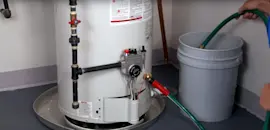
- Drain a few gallons before anode service to reduce mess and pressure
- Keep the burner area clean and ensure proper combustion air
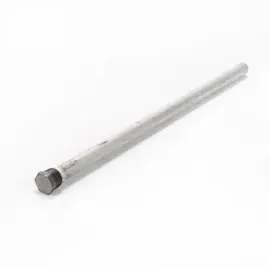
If you need the correct replacement, match by model and use the exact part listing, such as the water heater anode rod 100109594.
Signs a gas water heater is near end of life
Some symptoms point to normal wear; others point to a tank that is close to failing.
| Symptom | What it usually means | What to do next |
|---|---|---|
| Rusty or discolored hot water | Tank corrosion or anode depleted | Inspect/replace anode; evaluate tank condition |
| Rumbling or popping | Sediment buildup | Flush tank; check drain valve operation |
| Water around base of heater | Possible tank leak | Plan replacement; stop using if leaking worsens |
| Inconsistent hot water | Burner/controls or sediment | Check pilot/ignition and maintenance items |
Why it matters
Once a tank starts leaking, it typically progresses quickly. Staying ahead of corrosion (especially with anode-rod checks) helps you avoid sudden water damage and unplanned replacement.
For parts and diagrams specific to FG1F4040S3PV, order from the parts list for this model or search by model on Sears PartsDirect.
Last updated: February 2026
What is the most common problem with gas water heaters?
The most common gas water heater problem is ignition failure, meaning the pilot will not light or will not stay lit. On American model FG1F4040S3PV, this often points to the pilot/igniter components, gas control settings, or airflow and safety shutdown conditions described in the owner's manual.
What you will usually notice
- No hot water and the burner never lights
- Pilot flame will not light, or lights but goes out
- Repeated clicking from the igniter with no ignition
- Sooty burner area or unusual combustion odors
- Hot water temperature swings after short, frequent draws (stacking)
Quick checks we recommend (gas safety first)
- If you smell gas: do not try to light the pilot; ventilate the area and follow the safety instructions in the owner's manual.
- If the heater has been under water or flooded, the manual calls for replacement of the entire water heater.
- For LP (propane) setups, smell near the floor before lighting because LP gas can settle low.
- Confirm the temperature dial is not set to the lowest setting if you are troubleshooting “no hot water.”
- If overheating occurs or gas will not shut off, turn off the manual gas control valve and use a qualified technician.
Parts that commonly solve ignition problems on this model
If your symptoms match “pilot will not light” or “pilot will not stay lit,” these are the most relevant parts listed for FG1F4040S3PV:
| Symptom | Most likely area | Example part on this model |
|---|---|---|
| Pilot will not light | Pilot/ignition | Water heater pilot and igniter assembly 100093809 |
| Pilot lights but will not stay lit | Pilot/thermocouple circuit (often part of assembly) | Water heater pilot igniter 100110936 |
| No response when clicking igniter | Igniter mechanism/mounting | Water heater piezo igniter bracket 100093718 |
Why it matters
Ignition issues stop hot water completely, and repeated relighting attempts can create unsafe conditions if there is a gas leak or poor combustion airflow. Following the lighting and shutdown steps in the manual protects your home and helps you pinpoint whether you need a pilot/igniter part or a deeper gas control issue.
To order replacement parts for FG1F4040S3PV, use the parts list for this model or search by model number on Sears PartsDirect.
Last updated: February 2026