 Error Codes



Are bottom mount fridges better?
Yes for most households. A bottom-mount refrigerator like the Winia WRFS26ABTD usually feels “better” because the fresh-food section sits at eye level, so you reach for everyday items more easily while the freezer stays below for less frequent access.
- You use the refrigerator compartment more than the freezer
- You want less bending to grab milk, produce, and leftovers
- You like wider refrigerator shelves for platters and meal prep containers
- You prefer freezer drawers that help organize frozen foods by layer
- You want a layout that supports efficient daily cooking routines
Bottom-mount designs are not automatically best for every kitchen. Here are common tradeoffs to consider:
- Freezer access requires bending or kneeling more often
- Freezer drawers can feel heavier when fully loaded
- Some layouts make it easier for small items to “stack and hide” in the freezer
| Feature | Bottom-mount refrigerator | Top-freezer refrigerator |
|---|---|---|
| Fresh-food access | Easier (eye level) | Lower (more bending) |
| Freezer access | Lower drawer | Upper door |
| Organization style | Drawer bins and layers | Shelves and door bins |
| Best for | Frequent fresh-food use | Frequent freezer use |
Most people open the refrigerator section far more often than the freezer. Putting fresh food higher reduces daily strain and helps you see what you have, which can cut down on forgotten leftovers and food waste. For efficiency tips that fit this style of refrigerator, use our guide: how to use your refrigerator efficiently.
Last updated: February 2026
What are the most commonly replaced parts in a refrigerator?
In a Winia WRFS26ABTD bottom-mount refrigerator, the most commonly replaced parts are the ones that control cooling and airflow, manage defrost, and deliver water to the ice maker or dispenser. These parts fail more often because they run frequently, handle moisture, or cycle on and off all day.
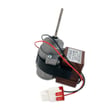
- Evaporator fan motor: circulates cold air through the fresh food and freezer sections
- Condenser fan motor: cools the condenser coil and compressor area
- Thermistor (temperature sensor): reports temperature to the control board so cooling can be regulated
- Defrost heater and defrost thermostat: melt frost off the evaporator coil to keep airflow open
- Water inlet valve: controls water flow to the ice maker and water dispenser (if equipped)
- Door gasket (door seal): prevents warm air leaks that cause sweating, frost, and poor cooling
| Symptom you notice | Common part involved | What typically happens |
|---|---|---|
| Warm fridge, freezer still cold | Evaporator fan motor | Cold air is not moving into the refrigerator section |
| Noisy humming or rattling from back | Condenser fan motor | Fan blade or motor wears and gets loud |
| Frost buildup, weak airflow | Defrost heater/thermostat | Coil ices over and blocks airflow |
| Temps swing up and down | Thermistor | Control board gets bad temperature feedback |
| No ice or no water | Water inlet valve | Valve sticks closed or clogs with sediment |
These components directly affect temperature stability, airflow, and moisture control. When one fails, the WRFS26ABTD can still run but cool poorly, build frost, leak water, or make unusual noise, which often leads to food spoilage or ice maker issues.
- Confirm the symptom pattern (constant vs. intermittent, fridge vs. freezer)
- Listen for fan operation (evaporator fan usually runs with the compressor)
- Check for frost on the back freezer panel (points to a defrost problem)
- Inspect door gasket contact all the way around (paper-strip test)
- If you have water/ice features, verify house water supply is on and line is not kinked
For step-by-step troubleshooting that matches these common failures, use refrigerator common questions.
Last updated: February 2026
What brand of refrigerator has the least problems?
No single refrigerator brand has the least problems in every home; reliability depends most on the specific model, how complex the features are (ice maker, water dispenser), and how well the unit is installed and maintained. For a Winia WRFS26ABTD bottom-mount refrigerator, keeping airflow clear, doors sealing tightly, and the cooling system clean does the most to prevent common failures.
Across mainstream refrigerators, brands that often perform well over time are usually the ones with simpler designs and widely available service parts. In general, these patterns hold true:
- Simpler top-freezer and basic bottom-mount models tend to need fewer repairs than feature-heavy units
- External ice and water dispensers add more valves, tubing, and switches that can fail
- French-door designs are convenient but typically have more door seals and alignment points to maintain
- Reliability varies by model series, not just the logo on the door
- Proper leveling and door alignment reduce gasket wear and moisture problems
Use this checklist to compare brands and models in a practical way:
- Choose the fewest features you will actually use (especially dispenser features)
- Look for easy-to-clean condenser access and good ventilation clearance
- Confirm the door seal design feels solid and closes consistently
- Prefer standard-size water filters and common fittings if you need filtration
- Plan for routine maintenance (cleaning, leveling, temperature checks)
| Factor | Simpler models | Feature-heavy models |
|---|---|---|
| Typical repair frequency | Lower | Higher |
| Common trouble spots | Fans, defrost, door seals | Dispenser system, ice maker, electronics |
| Maintenance sensitivity | Moderate | High |
| Best for | Lowest hassle | Convenience features |
Most “reliability” complaints come from a handful of systems: airflow (evaporator fan), defrost performance, door sealing, and water/ice components. If you reduce complexity and keep those systems healthy, you reduce the odds of warm temps, leaks, frost buildup, and noisy operation.
- Use can i fix my own fridge to decide which repairs are safe to DIY versus technician-level.
- If cooling is weak or noisy, follow how to fix your evaporator cooling fan.
- If you have water or ice issues, start with how to diagnose a faulty refrigerator water inlet valve.
Last updated: February 2026





