


What kind of gas should I put in my leaf blower?
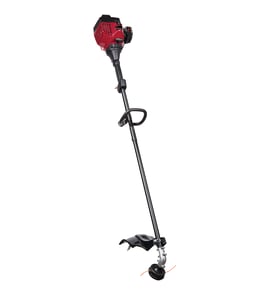
For a Craftsman 358797130-TRIMMER gas line trimmer (and most 2-cycle handheld outdoor power equipment like leaf blowers), we recommend fresh, regular unleaded gasoline (87 octane) with no more than 10% ethanol (E10). Mix it with the correct 2-cycle oil ratio for your engine; using E15 or higher can cause hard starting and fuel system damage.
- Use 87-octane unleaded (regular pump gas).
- Choose fuel with 10% ethanol or less (E10 max).
- Avoid E15, E20, E85, or any fuel labeled “flex fuel.”
- Use fresh fuel; don’t run old gas that has been sitting for months.
- Mix with 2-cycle oil at the correct ratio for your engine.
Higher-ethanol fuels can attract moisture and can degrade rubber and plastic fuel components over time. If your trimmer or blower starts running lean, surging, or won’t idle, fuel quality and ethanol content are common causes.
Start with these common, model-relevant maintenance items:
- Replace a dirty or oil-soaked air filter 530027530.
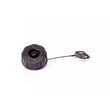
- Check for fuel cap venting issues; a plugged vent can starve the carburetor (replace the fuel cap 530014347 if it won’t vent).
- If the primer bulb or fuel lines were disturbed, inspect for cracks and leaks.
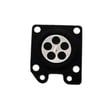
- If the carburetor was removed, replace the carburetor gasket 530019156 to prevent air leaks.
| Fuel choice | OK to use? | What typically happens |
|---|---|---|
| 87 octane, E0 to E10 | Yes | Best starting and stable running |
| 89 to 93 octane, E0 to E10 | Yes | Usually no benefit, but acceptable |
| Any octane with E15+ | No | Hard starting, lean running, fuel system wear |
Correct fuel and ethanol level protect the carburetor and fuel system, reduce varnish buildup, and help your Craftsman 358797130-TRIMMER start easier and run consistently.
Last updated: February 2026
Is the .095 trimmer line good?
Yes. For a Craftsman gas line trimmer like model 358797130-TRIMMER, .095-inch trimmer line is a strong, durable choice for heavier weeds and edging; it typically lasts longer and breaks less than thinner line, but it can reduce runtime and may be too heavy for light trimming.
- You cut thick grass, weeds, or occasional woody stems
- You do a lot of edging along sidewalks and curbs
- Your line keeps snapping when you use .065 or .080 line
- You want fewer line breaks and less frequent re-spooling
- You mostly trim light grass around landscaping
- You want maximum RPM and fuel efficiency
- Your trimmer head feeds poorly with thicker line
- You notice the engine bogging down under load
| Line diameter | Best for | Tradeoffs |
|---|---|---|
| .065 in | Light grass, small yards | Wears faster, breaks easier |
| .080 in | General trimming | Balanced durability and performance |
| .095 in | Heavy trimming, edging | More drag; can reduce RPM/runtime |
Even when .095 line performs well, the trimmer head and engine need to be in good shape to feed and spin it consistently.
- Replace a dirty or damaged air filter (a restricted filter makes bogging worse): air filter 530027530
- If the engine runs lean or surges, inspect fuel delivery and tank venting: fuel cap 530014347
- If the engine starts but runs poorly after carb service, check sealing surfaces: carburetor gasket 530019156
- If the engine won’t start after a sudden stop or impact, inspect ignition timing components: flywheel key 530015126
Line diameter changes the load on the engine and the cutting head. Matching the line to your trimming conditions helps your Craftsman trimmer cut cleanly without bogging, improves feed reliability, and reduces wear on fuel and air systems.
Last updated: February 2026
What size fuel line for Craftsman leaf blower?
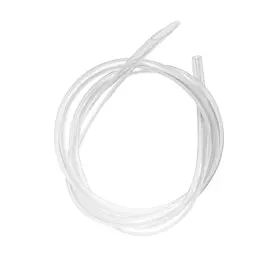
For Craftsman model 358797130-TRIMMER (gas line trimmer), fuel line size is selected by matching the original hose and the fuel tank opening so it seals tightly and feeds the carburetor correctly. Use the old line as your template, then replace any hardened or cracked line at the same time.
Use simple measurements so the new line fits the tank grommet and the carburetor/primer fittings.
- Measure the outside diameter (OD) of the old line; OD controls the seal where the line passes through the tank.
- Measure the inside diameter (ID); ID controls fuel flow and how the line fits on barbed fittings.
- If the old line is missing, measure the tank pass-through hole/grommet and choose a line with an OD that presses in snugly.
- Cut the end at a slight angle to help feed it through the tank opening.
- Replace the line if it is stiff, swollen, or cracked; those conditions cause air leaks and hard starting.
These ranges help you shop, but the correct choice is the one that matches your original routing and fittings.
| Fuel line location | Common OD range | Common ID range | What a wrong size causes |
|---|---|---|---|
| Tank pickup/supply line | 1/8 to 3/16 in | 3/32 to 1/8 in | Air leaks, fuel starvation |
| Primer/return line (if equipped) | 3/16 to 1/4 in | 1/8 to 3/16 in | Primer will not purge or refill |
These checks confirm you have a good seal and correct routing.
- Primer bulb fills with fuel and returns fuel to the tank (if equipped)
- No wet spots around the tank opening or fittings
- Engine accelerates without surging at full throttle
A fuel line that is even slightly loose at the tank or carburetor pulls air instead of fuel. That leads to hard starting, stalling, and lean running that can damage a 2-cycle engine.
If you are already servicing the fuel system, these related items often solve the same symptoms:
- Fuel cap 530014347 (a plugged vent can mimic fuel starvation)
- Air filter 530027530 (restricted airflow can cause poor running)
- Fuel tank assembly 530095646 (useful if fittings or the tank pass-through are damaged)
Last updated: February 2026
What is the gas oil mixture for a Craftsman leaf blower?
For most Craftsman 2-cycle handheld engines, the fuel mix is either 40:1 or 50:1, depending on the exact engine and year. For your Craftsman 358797130-TRIMMER gas line trimmer, use the ratio specified for that engine; if you do not have it, start with 40:1 using air-cooled 2-cycle oil.
- 40:1 is common on many older Craftsman trimmers and blowers
- 50:1 is common on many newer 2-cycle handheld tools
- Always use air-cooled 2-cycle oil (not outboard TC-W3)
- Mix in an approved fuel can, not in the trimmer tank
| Mix ratio | Oil per 1 gallon gas | Oil per 1/2 gallon gas |
|---|---|---|
| 40:1 | 3.2 oz | 1.6 oz |
| 50:1 | 2.6 oz | 1.3 oz |
- Pour in about half the gasoline first.
- Add the measured 2-cycle oil.
- Cap and shake to blend.
- Add the remaining gasoline; cap and shake again.
- Use fresh fuel; do not store mixed fuel for long periods.
An incorrect mix can cause hard starting, smoking, plug fouling, surging, or stalling. If the mix is correct and it still runs rough, these parts commonly affect fuel and airflow on the 358797130-TRIMMER:
- Air filter 530027530 (dirty filter makes it run rich and lose power)
- Fuel cap 530014347 (a blocked vent can restrict fuel flow)
- Carburetor gasket 530019156 (air leaks can cause a lean condition)
A 2-cycle engine is lubricated by the oil in the fuel. Too little oil accelerates wear; too much oil increases smoke and carbon buildup and can foul the spark plug.
Last updated: February 2026