Owner’s manual
 Error Codes




What's the lifespan of a bottom freezer fridge?
A bottom-freezer refrigerator like the Samsung RF27T5201SR typically lasts 13 years with normal household use. Good airflow, correct temperatures, clean condenser areas, and timely maintenance (like water filter changes) help you reach or exceed that lifespan.
Typical lifespan range (what to expect)
Most bottom-freezer and bottom-mount refrigerators fall into a predictable service-life window.
- Typical lifespan: 13 years
- Common real-world range: 10 to 15 years
- Often replaced sooner when: cooling performance drops, sealed-system repairs are needed, or door sealing issues drive up run time
| Refrigerator style | Typical lifespan | Notes |
|---|---|---|
| Bottom freezer / bottom-mount (like RF27T5201SR) | 13 years | Efficient layout; longevity depends heavily on ventilation and door sealing |
| Top freezer | 14 years | Usually simpler design and fewer features |
| Side-by-side | 12 years | More door openings and airflow complexity can increase wear |
What shortens the life of a bottom-mount refrigerator
These are the most common factors we see that reduce compressor and cooling-system life:
- Dirty condenser area (restricted heat release)
- Poor cabinet clearance (blocked ventilation)
- Doors not sealing tightly (warm air infiltration, frost, longer run times)
- Overloading shelves so vents get blocked
- Frequent power interruptions or unstable power
Maintenance habits that help RF27T5201SR last longer
Use the care and maintenance guidance in the RF27T5201SR user manual to keep performance steady.
- Keep freezer at 0°F and fridge at 37°F (recommended operating targets)
- Leave proper clearance around the cabinet for airflow
- Vacuum dust from the rear area periodically
- Keep door gaskets clean so doors close fully
- Replace the water filter on schedule if your model uses one
Why it matters
A refrigerator that runs longer than it should (because of airflow restrictions, warm air leaks, or clogged filters) puts extra strain on the compressor and sealed system. Reducing run time is one of the best ways to extend the usable life of a bottom freezer fridge.
Last updated: January 2026
Why is the bottom freezer refrigerator not popular?
Bottom-freezer refrigerators, including the Samsung RF27T5201SR, can feel less popular for some households because the freezer is lower and often uses deep baskets, which can make frequent frozen-food access and organization less convenient than shelf-style freezers. Preferences vary by how you shop and cook.
What typically turns shoppers away
These are common, practical reasons some people choose a different layout:
- The freezer is at floor level, so you may bend more to reach items
- Deep drawers can hide smaller packages, so you may have to “dig” to find food
- Large or heavy frozen items can be awkward to lift up and out of a drawer
- Side-by-side layouts can feel faster for frozen-food visibility because items sit on shelves
- Some kitchens prefer the look and door swing of other styles
How this applies to Samsung RF27T5201SR
The RF27T5201SR is a bottom-mount design with the fresh-food compartment on top and a freezer drawer below. For model-specific compartment names and where features are located (such as the water filter and ice bucket on applicable versions), use the RF27T5201SR user manual.
Quick comparison: freezer access by layout
| Layout | Freezer access style | Best for |
|---|---|---|
| Top-freezer | Upper shelves | Frequent freezer use, simple visibility |
| Bottom-freezer | Lower drawer/baskets | Frequent fresh-food use, fridge items at eye level |
| Side-by-side | Vertical shelves | Balanced use, easy frozen-food scanning |
Why it matters
Refrigerator layout affects daily comfort and how long doors stay open while you search for items. If you use fresh foods most, bottom-freezer models often feel more convenient; if you use frozen foods daily, shelf-style freezer layouts can feel quicker.
Last updated: January 2026
What is the most common problem with Samsung refrigerators?
Across Samsung refrigerators, the most common problems are cooling complaints (warm temps, frost blocking vents), ice maker issues, and weak water dispensing. On Samsung RF27T5201SR, many of these symptoms come down to airflow restrictions, door sealing, or water supply pressure and filtration.
Most common symptoms we see
- Fridge or freezer temperature is warm or inconsistent
- Frost or ice buildup around vents that reduces airflow
- Ice maker not making ice, slow ice production, or ice not dispensing
- Water dispenser flow is weak or stops
- Clicking, buzzing, or cracking sounds during cooling or defrost (often normal)
For model-specific operating checks and troubleshooting tables, use the RF27T5201SR user manual.
Quick checks that solve many “common problems”
Start with these on RF27T5201SR before replacing parts:
- Confirm temperature settings; we recommend 37°F for the fridge and 0°F for the freezer
- Make sure food packages are not blocking interior air vents
- Check doors close fully; clean the door gaskets so they seal
- If the unit was just installed or moved, allow time to stabilize and cool
- For weak water flow or ice issues, verify water supply pressure is 30 to 120 psi and the shutoff valve is fully open
- If pressure is in range but flow is still weak, replace the water filter and reset the filter indicator
Ice and water issues: what to verify first
Many “Samsung refrigerator problems” are actually water supply or filter related.
| Symptom | Most likely cause | What to do first |
|---|---|---|
| Ice maker buzzing | Ice maker is on but water isn’t connected/on | Turn on water supply; confirm line connection |
| Ice maker not making ice | Freezer temp too warm or ice maker off | Set freezer to 0°F or colder; turn ice maker on |
| Water dispenser weak | Water pressure below 30 psi or clogged filter | Confirm 30 to 120 psi; then replace filter |
For step-by-step filter help, see how to change the water filter in a Samsung refrigerator.
When a part may be involved
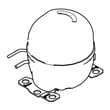
If settings, airflow, and water pressure are correct but the refrigerator still won’t cool, the sealed system and compressor circuit may need professional diagnosis. A compatible compressor listing for this model is cmp, comp, refrigerator, r-600a NF54M5151ARASH.
Why it matters
Cooling and ice maker problems can lead to food spoilage, leaks, and longer run times. Checking airflow, door sealing, and confirming the required 30 to 120 psi water pressure often prevents unnecessary part replacement.
Last updated: January 2026