 Owner’s manual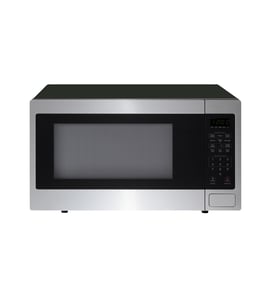



Do countertop microwaves need venting?
Countertop microwaves like Kenmore model 72163359300 do not need external duct venting, but they do need open air clearance so the built-in intake and exhaust vents can move heat and steam out safely. For this model, we recommend at least 4 inches of space on the left, right, top, and rear. See the 72163359300 owner's manual.
A countertop microwave is designed to vent internally through its own openings; your job is to keep those openings clear.
- No duct kit or wall vent connection is required
- Do not cover or block any openings
- Avoid tight cabinets or cubbies unless they provide the required clearance
- Keep the rear and side vents away from walls, backsplashes, and clutter
- Steam from cooking can exit the exhaust vent; that is normal
Use this checklist when setting up a Kenmore 72163359300 on a counter or shelf:
- Place it on a level, stable surface
- Leave 4 inches of clearance on the left, right, top, and rear
- Keep paper goods, towels, and plastic items away from vent areas
- Do not run the microwave empty
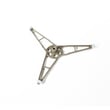
- Keep the glass tray and roller rest installed during cooking
| Location around microwave | Minimum clearance for 72163359300 | Why it matters |
|---|---|---|
| Left side | 4 in. | Air intake and cooling airflow |
| Right side | 4 in. | Air intake and cooling airflow |
| Top | 4 in. | Heat dissipation |
| Rear | 4 in. | Exhaust airflow and cooling |
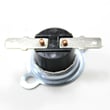
Blocked airflow can cause overheating, nuisance shutoffs, and premature failure of components such as a thermostat or internal fuse. If your microwave is repeatedly going dead or losing power, checking ventilation clearance is one of the first and fastest fixes.
Last updated: January 2026
Who makes the Kenmore microwave?
Kenmore is a brand name; different manufacturers have built Kenmore microwaves over the years. For the Kenmore countertop microwave model 72163359300, the design and manufacturing are commonly associated with LG (LG Electronics) for this model series, even though the unit is branded Kenmore.
We recommend checking the product identification label and the documentation for model 72163359300.
- Look for the data plate (often on the door frame area or back of the cabinet).
- Check for an FCC ID or manufacturer code on the label.
- Match the label details to the parts list and diagrams in the 72163359300 owner's manual.
- If you are ordering parts, always match by model number and the part ID.
Knowing who built the microwave helps when you are troubleshooting issues like no heat, door switch problems, or a dead display, because internal designs and test procedures vary by manufacturer.
Common manufacturer-linked repair areas on this model include:
- Line fuse and power input protection
- Door interlock switch circuit
- Turntable drive system
- Control panel and keypad response
If your microwave is dead, blows the breaker, or only runs with the door held a certain way, these parts are frequently involved:
- Us pressed steel microwave fuse 3B74133Q
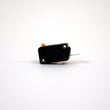
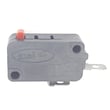
- Microwave door interlock switch 6600W1K001R
- Microwave door latch lever 4510W3L003A
| Symptom | Common area to check | Example part for this model |
|---|---|---|
| No power, completely dead | Line fuse | Us Pressed Steel Microwave Fuse 3B74133Q |
| Runs only when door is pressed | Door interlock system | Microwave Door Interlock Switch 6600W1K001R |
| Turntable not rotating | Turntable drive | Microwave Turntable Motor 6549W1S011B |
For heating problems that are not caused by a door switch or fuse, use why is my microwave not heating to narrow down likely causes.
Last updated: January 2026
Can you put stuff on top of a countertop microwave?
Yes, you can set light items on top of a Kenmore 72163359300 countertop microwave as long as you do not cover or block any openings and you keep the required ventilation space around the unit. Follow the placement and safety rules in the 72163359300 owner's manual.
Use the top as a temporary spot, not storage.
- Keep items light and stable (nothing that can slide into vents).
- Avoid anything that traps heat (thick towels, cardboard, baskets).
- Avoid heavy items that can dent the cabinet or fall (small appliances, stacked dishes).
- Never place anything that can melt or drip (plastic bags, wax paper, wet containers).
- Keep the surface clean and dry so spills do not run toward electrical areas.
This model requires open space on the left, right, top, and rear for proper ventilation. The exact clearance is listed in the installation section of the manual; keep at least that much space open at all times.
| Area to keep clear | What to do | What can go wrong if blocked |
|---|---|---|
| Top and sides | Do not cover vents or openings | Overheating, shutdowns |
| Rear | Keep the back spaced off the wall per the manual | Poor airflow, heat buildup |
| Front | Keep the door area unobstructed | Door damage, poor access |
- Confirm no vents or openings are covered.
- Keep items from overhanging the sides or back.
- Do not route the power cord under stored items.
- If the cabinet feels unusually hot, remove items and restore airflow.
Countertop microwaves rely on airflow to cool internal components such as the magnetron and thermostat. Blocking openings or reducing ventilation space causes heat buildup that can lead to nuisance shutdowns or blown fuses.
Last updated: January 2026
How much clearance for a countertop microwave?
For the Kenmore 72163359300 countertop microwave, we recommend at least 4 inches of open space on the left, right, top, and rear for proper ventilation. This spacing is specified in the installation section of the 72163359300 use and care guide and helps prevent overheating.
Place the microwave on a stable, level countertop or shelf and keep all vent openings clear.
- Left side: 4 inches minimum
- Right side: 4 inches minimum
- Top: 4 inches minimum
- Rear: 4 inches minimum
- Keep inlet and outlet openings unobstructed (no contact with walls, backsplash, or items stored beside it)
- Avoid placing the unit in a tight, enclosed cabinet unless the manual specifically allows it
| Area around microwave | Minimum clearance | What it prevents |
|---|---|---|
| Left side | 4 in. | Restricted cooling airflow |
| Right side | 4 in. | Heat buildup near vents |
| Top | 4 in. | Overheating under shelves |
| Rear | 4 in. | Blocked exhaust and recirculated heat |
Countertop microwaves cool internal components by moving air through the cabinet. When vents are blocked, heat can build up and lead to shutoffs, weak heating performance, or premature failure of electrical parts.
After confirming clearance, check these common causes:
- Plug the microwave directly into a grounded wall outlet (no extension cord or power strip)
- Make sure the door closes firmly and latches smoothly
- Keep the air intake and exhaust areas free of grease and dust buildup
- If the microwave is completely dead, an internal fuse can be involved; see how to replace a microwave fuse
Last updated: January 2026


