Owner’s manual
 Error Codes




Is wtw5057lw a good washing machine?
The Whirlpool WTW5057LW0 is a solid, practical top-load washer for everyday laundry when it’s installed correctly, leveled, and used with HE detergent. Many owners are happy with cleaning performance; the most common tradeoff is that it can sound louder than older, more insulated models.
What “good” usually means for this model
We recommend judging the WTW5057LW0 on the things that most affect day-to-day satisfaction:
- Cleaning results: good soil removal when loads are not overpacked
- Noise and vibration: can be noticeable if the washer is not level or the load is unbalanced
- Ease of use: straightforward cycles and controls
- Maintenance: routine cleaning helps prevent odor and residue buildup
- Installation sensitivity: leveling and proper drain hose setup matter more than many people expect
For model-specific operating and care guidance, use the WTW5057LW0 owner’s manual.
Quick checklist to get the best performance
If you’re deciding whether it’s “good” based on your experience so far, these setup and use steps make a big difference:
- Level the washer so all four feet sit firmly on the floor
- Use HE (High Efficiency) detergent only; avoid overdosing
- Load loosely (do not pack the basket tight)
- Mix item sizes (helps balance during spin)
- Leave the lid open between loads to help dry the tub
Noise expectations: normal vs not normal
Some sound is normal in modern high-efficiency top-load washers (motor changes, shifting, sensing, and spin ramp-up). Use this as a quick guide:
| Sound/behavior | Often normal | Often needs attention |
|---|---|---|
| Clicking/whirring during sensing or shifting | Yes | No |
| Thumping during spin with bulky items | Sometimes | If it repeats every load |
| Walking/vibration across the floor | No | Yes |
| Grinding/squealing | No | Yes |
If you’re chasing a “louder than expected” issue, start with leveling and load balance. If the washer still won’t spin smoothly, drive components like the drive belt W11239857 can be part of the diagnosis.
Why it matters
A washer that’s slightly out of level or consistently overloaded can seem “bad” even when nothing is actually broken; it can also increase wear on the drive system and suspension over time.
Last updated: January 2026
What is a common problem for a Whirlpool washer?
A common problem we see on Whirlpool washers like model WTW5057LW0 is a no-drain or no-spin condition. It’s often caused by an out-of-balance load, a drain restriction, or a lid lock that isn’t engaging; odor and unusual noise are also frequent.
Common problems (and what they usually point to)
- Won’t start: power supply issue, control not set, or lid not fully closed/locked
- Won’t drain: kinked drain hose, blockage in the tub-to-pump hose, or a failing drain pump
- Won’t spin or spins weakly: out-of-balance load, lid lock issue, or drive system problem
- Loud noise: worn drive components, loose hardware, or something caught under the washplate
- Musty odor: detergent residue buildup, lid kept closed between loads, or infrequent cleaning cycles
For model-specific safety, maintenance, and cleaning steps, follow the WTW5057LW0 owner’s manual.
Quick checks we recommend first (no parts required)
- Redistribute the load: bulky items can stop or limit spin when the basket goes out of balance.
- Check the drain hose setup: avoid pushing the hose too far into the standpipe (helps prevent siphoning and slow drain).
- Use HE detergent only: non-HE or too much detergent can cause oversudsing and poor draining.
- Leave the lid open between loads: helps dry the tub and reduce odor-causing residue.
When a part is commonly involved on WTW5057LW0
If basic checks don’t help and the washer consistently won’t drain or won’t spin, these model-compatible parts are common inspection points.
| Symptom | What to inspect | Example compatible part for WTW5057LW0 |
|---|---|---|
| Hums but won’t drain | Pump for blockage or failure | Pump assembly, drain W11399437 |
| Drains slowly or leaves water | Tub-to-pump hose for clogs | Hose asm - d W10899966 |
| Won’t spin after filling | Lid lock not engaging | Latch, lid lock assembly W11513248 |
Why it matters
Addressing draining, spinning, and odor issues early helps prevent water left in the tub, repeat cycle stoppages, and extra wear on the drive system. Good loading habits and monthly cleaning also reduce detergent buildup over time.
Last updated: January 2026
What is the average lifespan of a Whirlpool washing machine?
Whirlpool doesn’t publish an “average lifespan” in the documentation we have for model WTW5057LW0, so we can’t give a manufacturer-stated number for this exact washer. In general home use, many washers are often kept in service for roughly a decade or more; maintenance and load habits make the biggest difference. For model-specific care routines, use the WTW5057LW0 owner’s manual.
What we can say for WTW5057LW0 (from the manual)
The WTW5057LW0 manual focuses on actions that reduce early wear, odor, and leak risk, which are common reasons washers get replaced.
- Use only HE (High Efficiency) detergent and don’t exceed recommended amounts
- Leave the lid open between loads to help the interior dry
- Run a routine cleaning procedure about monthly or every 30 cycles
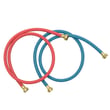
- Inspect inlet hoses periodically for bulges, kinks, cuts, wear, or leaks
- Replace water inlet hoses after about 5 years of use to reduce hose-failure risk
Practical “lifespan drivers” (applies to most Whirlpool top-load washers)
These are the factors that most often shorten service life, regardless of brand.
- Frequent overloading or consistently washing heavy items
- Chronic out-of-balance loads and excessive vibration
- Hard water scale and detergent residue buildup
- Small leaks left unaddressed (hoses, clamps, pump area)
- Poor installation conditions (not level, improper drain setup)
Maintenance schedule at a glance
| Item | What to do | Typical timing |
|---|---|---|
| Cleaning routine | Run the recommended cleaning cycle/procedure | Monthly or every 30 cycles |
| Lid and tub drying | Leave lid open after use | Every load |
| Inlet hoses | Inspect for wear and leaks | Periodically |
| Inlet hoses | Replace hoses | About every 5 years |
Why it matters
Most “end of life” washer problems are tied to vibration damage, water leaks, or buildup-related issues. Following the WTW5057LW0 care steps helps prevent those problems and can extend how long the washer stays reliable.
Last updated: January 2026