Owner’s manual
 View engine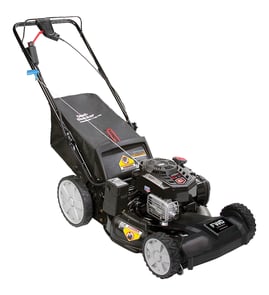


How to find Craftsman model number?
For a Craftsman walk-behind mower like model 247374880, the model number is typically printed on a product label on the mower deck (often near the rear wheel area) or on the rear housing. Use that exact model number to match the correct parts list and diagrams in the 247374880 owner's manual.
Where to look on a Craftsman walk-behind mower
Check these common label locations first:
- Top of the mower deck near the rear discharge area
- Rear of the deck behind the engine (near the height adjusters)
- Side of the deck near a rear wheel
- On the rear housing or frame crossmember
- On a sticker near the handle mounting brackets
What the label looks like (and what to write down)
Most labels include multiple identifiers. Record them exactly as shown.
| Label item | What it’s used for | Example format |
|---|---|---|
| Model number | Finds the correct parts diagrams | 247374880 |
| Serial number | Identifies production run details | Letters and numbers |
| Engine model/type/code | Helps match engine-specific parts | Separate from mower model |
Why it matters
Craftsman mowers can share the same deck size or appearance across different builds, but parts like the blade, drive components, and control cables vary by model. Using the exact model number prevents ordering the wrong blade length, pulley style, or hardware.
Quick parts-matching tip
Once you confirm the mower model number, match it to the parts list before buying. For example, this model’s parts list includes items like the fuel filter 298090S and the correct deck blade options.
You can also search by model number on Sears PartsDirect if you are looking up another Craftsman mower or a different piece of lawn equipment.
Last updated: February 2026
Should I use 87 or 89 gas for lawn mower?
For the Craftsman lawn mower model 247374880, we use 87-octane unleaded (regular) in normal conditions; 89-octane does not improve power or reliability in typical small-engine mower use. The best results come from using fresh fuel and the correct oil level and maintenance schedule in the 247374880 owner's manual.
What to use (and what to avoid)
- Use fresh 87-octane unleaded gasoline.
- Use clean, sealed fuel containers to prevent water and dirt contamination.
- Avoid old gas (stale fuel is a top cause of hard starting and surging).
- Avoid mixing octane grades to “fix” performance issues; address the root cause instead.
- If your mower will sit, plan for proper storage/winterizing.
When 89 octane makes sense
89 octane is only useful when an engine specifically requires higher octane to prevent knock. Walk-behind mower engines like the one used on the Craftsman 247374880 are designed to run on regular fuel, so higher octane typically adds cost without a benefit.
Quick troubleshooting if it runs rough on 87
If the mower surges, stalls, or won’t start, fuel quality and fuel flow are the first things we check:
| Symptom | Common fuel-related cause | What to do first |
|---|---|---|
| Hard starting | Stale fuel or restricted fuel flow | Drain old fuel; refill with fresh 87 |
| Surging at idle | Partially restricted fuel system | Replace the fuel filter 298090S if equipped and dirty |
| Starts then dies | Debris or water in fuel | Clean tank, replace fuel, check fuel line |
Why it matters
Using the correct octane keeps combustion stable and predictable; using fresh 87-octane fuel helps prevent varnish buildup in the carburetor and reduces no-start complaints after storage. For seasonal storage steps, we follow the guidance in the how to winterize a lawn mower article.
You can order replacement parts for your Craftsman 247374880 from the parts list for this model, or search by model number on Sears PartsDirect.
Last updated: February 2026
What are the common problems with Craftsman lawn mowers?
Common problems on a Craftsman gas walk-behind mower like model 247374880 are no-start or starts-then-stalls (fuel, spark, or air restriction), rough running (dirty carburetor or stale gas), poor cutting (dull or bent blade), and self-propelled issues (belt, cable, pulley, or transmission wear). Use the 247374880 owner's manual for model-specific checks and adjustments.
Most common symptoms and what usually causes them
- Won’t start: old fuel, clogged fuel filter, fouled spark plug, dirty carburetor, safety/bail handle not fully engaged
- Starts then dies: restricted fuel flow, dirty carburetor jets, gas cap vent issue, water in fuel
- Runs rough or surges: partially clogged carburetor, stale fuel, dirty air filter
- Cuts unevenly or leaves strips: dull blade, blade installed upside down, deck packed with wet clippings
- Self-propel won’t pull: stretched clutch cable, worn belt, bad idler pulley, transmission wear
- Vibration: bent blade, loose fasteners, damaged mandrel
Quick checks we recommend (in order)
- Drain old gas and refill with fresh fuel (especially after storage).
- Inspect fuel flow; replace a restricted filter such as the fuel filter 298090S.
- Check the spark plug condition and gap; replace if fouled.
- Clean the underside of the deck and confirm the blade is tight and installed correctly.
- For drive problems, check cable tension and look for belt glazing, cracking, or slipping.
Troubleshooting guide by symptom
| Symptom | Fastest thing to check | Common fix |
|---|---|---|
| Won’t start | Fresh fuel and spark | Clean carburetor; replace plug/filter |
| Starts then dies | Fuel cap venting, fuel flow | Clean carburetor; replace filter |
| Won’t move (self-propel) | Cable engagement and belt | Adjust/replace belt or cable |
| Poor cut quality | Blade edge and deck buildup | Sharpen/replace blade; clean deck |
Why it matters
Most “major” mower failures start as simple maintenance issues. Fixing fuel restriction, blade condition, and drive engagement early prevents hard starting, stalling under load, and premature wear on pulleys, belts, and the transmission.
Helpful DIY resources
- How to tune up a lawn mower video
- Lawn mower wont start troubleshooting video fuel ignition and compression
- How to sharpen a lawn mower blade
If you need parts, order replacements from the parts list for model 247374880, or search by model number on Sears PartsDirect.
Last updated: February 2026