 Owner’s manual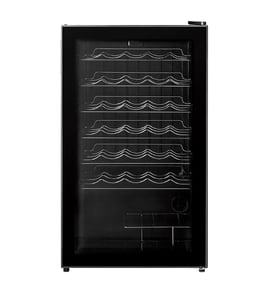



What are some discontinued wine cooler brands?
Some discontinued wine cooler brands you may run into include Cavanova, Liebherr, La Sommelière, and EuroCave. If you own a discontinued unit, the most reliable way to identify compatible replacement parts is to match your exact model number and use the parts diagrams and specifications in the 25599283310 owner’s manual.
Common discontinued (or hard-to-find) wine cooler brands
These brands are often associated with older or limited-distribution wine storage products, so parts availability can vary by model and production year:
- Cavanova
- Liebherr
- La Sommelière
- EuroCave
- Other private-label models sold under major retailers (model number is the key)
How we recommend confirming parts for a discontinued cooler
Even when a brand is discontinued, parts support usually depends on the manufacturer behind the label and the exact model series.
- Find the model and serial tag (typically inside the cabinet near the top or side wall)
- Use the model number to cross-check shelves, door parts, and electrical components
- Compare the part description to what is installed (shape, mounting points, connector style)
- For cooling issues, confirm airflow and door sealing before ordering parts
- Use the manual’s component overview to identify what you are looking at
Quick reference: what “discontinued” usually means for parts
| Situation | What it means for you | Best next step |
|---|---|---|
| Brand discontinued, model supported | Many parts still available | Order by exact model number |
| Brand active, model discontinued | Some parts may be limited | Match part numbers and diagrams |
| Brand and model discontinued | Parts may be scarce | Prioritize wear items (gasket, shelves, door parts) |
Why it matters
Wine and beverage coolers run warmer than refrigerators, and the manual for Kenmore model 25599283310 specifically warns not to store food in the unit because temperatures are not intended for food safety. Using the correct parts (especially door sealing and shelving) helps maintain stable temperatures and reduce condensation.
Last updated: January 2026
What is the most common problem with wine coolers?
The most common problem we see with the Kenmore 25599283310 wine and beverage cooler is temperature not holding steady (too warm, too cold, or slow to recover after door openings). In most cases, the cause is airflow and usage related, but control settings, power supply, and door sealing also play a major role; see the 25599283310 owner's manual for the model’s specific checks and display alerts.
Most common symptoms (and what they usually mean)
- Unit runs but drinks are warm: door opened too often, warm room conditions, or restricted airflow
- Unit is colder than the setting: temperature control set too cold or needs time to stabilize
- Temperature swings after loading: overloading cans or bottles can raise temperature temporarily
- Alarm and flashing “H”: interior temperature is too high (high-temp alert)
- Display shows “Lt”: interior temperature is too low (adjust to a warmer setting)
Quick checks we recommend first
- Confirm power and settings
- Make sure the temperature control is not set to OFF.
- Verify the cooler is plugged into a properly grounded outlet.
- Give it time to stabilize
- After plugging in, allow 2 to 3 hours for initial cooling.
- If it is too warm, recheck several hours later; if too cold, recheck the next day.
- Reduce door openings
- Keep the door closed for 4 to 5 hours to restore the set temperature.
What the display codes tell you
| Display/alert | What it indicates | What to do |
|---|---|---|
| “H” flashes + alarm | Temperature too high | Close door, reduce loading, verify settings |
| “Lt” | Temperature too low | Adjust to a warmer setting |
| “E” and “F” | Service needed | Arrange professional diagnosis |
Why it matters
Wine and beverage coolers are designed to hold a narrow temperature range. Frequent door openings, heavy loading, or poor sealing forces longer run times and makes temperatures drift, which can affect beverage quality and increase wear on the cooling system.
Last updated: January 2026
Does anybody make wine coolers anymore?
Yes. Manufacturers still make wine coolers (appliances), and Kenmore model 25599283310 is a wine and beverage cooler designed to chill cans and bottles. If you mean wine coolers (the drink), those are still sold too, but they are a different product category than a beverage center.
Quick clarification: appliance vs. beverage
| Term people say | What it usually means | Where it’s used |
|---|---|---|
| Wine cooler | Wine and beverage cooler appliance | Home bar, kitchen, entertainment area |
| Wine cooler | Flavored alcoholic beverage | Retail beverage aisle |
What we know about the Kenmore 25599283310 beverage center
From the product documentation, this unit is a freestanding-only beverage center (not built-in), and it is intended for beverages only.
- Freestanding installation only; do not recess or build it in
- Keep the unit upright when moving it; never tilt more than 45 degrees
- After plugging in, allow about 2 to 3 hours for the interior to cool
- Do not store food in this beverage center (temperatures are warmer than a refrigerator)
For operating details, temperature control behavior, and error display meanings, use the owner's manual.
Why it matters
Using the right product for the job protects what you store. A wine and beverage cooler like the 25599283310 is optimized for cans and bottles, while food storage needs colder, refrigerator-safe temperatures.
Last updated: January 2026
What is the difference between a wine cooler and a beverage cooler?
A wine cooler is designed to protect wine quality with steadier, moderate temperatures and storage that supports corked bottles, while a beverage cooler is designed to chill a wider mix of drinks and recover temperature quickly after door openings. Your Kenmore 25599283310 is a beverage center style unit; follow the temperature and use guidance in the 25599283310 owner's manual.
Key differences that affect performance
- Temperature range and stability: Wine coolers typically run warmer and prioritize tight stability; beverage coolers commonly run colder for ready-to-drink cans and bottles.
- Humidity and bottle orientation: Wine storage often benefits from horizontal racking to help keep corks from drying; beverage coolers usually use adjustable shelves for mixed packaging.
- Door openings and recovery: Beverage coolers are built for frequent access; wine coolers are often used with fewer door openings to keep conditions steady.
- What you should store: This Kenmore beverage center is intended for beverages only; do not store perishable food items.
Quick comparison
| Feature | Wine cooler | Beverage cooler (beverage center) |
|---|---|---|
| Primary goal | Preserve wine flavor and aging conditions | Chill a variety of drinks for everyday use |
| Typical storage | Horizontal racks for bottles | Shelves for cans, bottles, mixers |
| Typical use pattern | Less frequent door opening | Frequent door opening and quick access |
| Common setpoints | Moderate (often mid 40s to 60s °F) | Colder (often mid 30s to 50s °F) |
Why it matters for your Kenmore 25599283310
Using the right appliance for the right job helps prevent temperature swings and spoilage risk. For this model, we recommend using it strictly as a beverage center and letting it run empty until it reaches the set temperature before loading drinks.
Tips for best results in a beverage cooler
- Let the unit reach the set temperature before fully loading it.
- Avoid overpacking; heavy loads can temporarily raise internal temperature.
- Minimize long door openings to reduce condensation and warm air intrusion.
- Keep the cabinet level so the door seals evenly.
- If the unit was tilted or laid down, keep it upright and wait before powering on (per the manual).
Last updated: January 2026