





Where to put laundry detergent in GE washer dryer combo?
For the GE PFQ97HSPV1DS washer dryer combo, add laundry detergent to the detergent compartment in the dispenser drawer, then set the compartment flap for the detergent type: flap up for powder, flap down for liquid. This helps the unit dispense detergent at the right time.
Where detergent goes (and what not to do)
- Use the detergent compartment in the dispenser drawer for your main wash detergent.
- Set the detergent flap correctly: up for powder, down for liquid.
- Do not pour detergent directly into the drum unless your detergent specifically instructs that method.
- Do not overfill the compartment; excess detergent can cause oversudsing and poor rinsing.
- If you use detergent pods, place them in the drum before loading clothes (not in the dispenser drawer).
Quick setup guide for common detergent types
| Detergent type | Where to add it | Flap position |
|---|---|---|
| Liquid HE detergent | Dispenser drawer detergent compartment | Flap down |
| Powder HE detergent | Dispenser drawer detergent compartment | Flap up |
| Pod or packet | Directly in the drum before clothes | Not used |
If detergent is not dispensing correctly
- Remove the drawer and rinse it with warm water to clear residue.
- Check for clogs or buildup around the detergent siphon area.
- Use HE detergent and measure carefully; too much can leave soap behind.
- Run a hot cleaning cycle (or the hottest cycle available) with an empty drum to reduce buildup.
Why it matters
Correct detergent placement and flap position prevent leftover soap, odors, and poor cleaning. It also helps protect key components like the control system and water handling parts over time.
Related help: GE error codes
Last updated: January 2026
Do all-in-one washer dryers really work?
Yes, all-in-one washer-dryer combos like the GE PFQ97HSPV1DS really do work; they wash very well and can dry effectively, but drying usually takes longer than a traditional vented dryer and performance depends heavily on load size, spin speed, and lint and airflow maintenance.
What to expect from a combo unit
Combo laundry centers are designed for convenience and space savings. The tradeoff is that the same drum and airflow path must handle both washing and drying.
- Washing performance is typically comparable to other front-load washers.
- Drying is usually slower than a standalone vented dryer.
- Smaller loads dry faster and more evenly.
- High-spin cycles reduce dry time by removing more water up front.
- Lint and moisture management matter more because restrictions slow drying.
Common reasons combo drying feels “slow”
If clothes come out damp or cycles run long, these are the most common causes.
- Overloading (the most common issue)
- Low final spin speed or extra-rinse options that leave more water behind
- Lint screen not cleaned every load (or not seated correctly)
- Heat pump or airflow path partially restricted by lint buildup
- Sensor-related issues that end the cycle early or extend it unnecessarily
| Situation | What you’ll notice | Best first step |
|---|---|---|
| Load too large | Outer items dry, inner items damp | Dry half-loads and use higher spin |
| Lint restriction | Dry times creep up over weeks | Clean and inspect the lint screen |
| Moisture sensing issue | Stops too soon or runs very long | Check for error codes and clean sensors |
Parts that can affect drying and cycle completion
If maintenance and load sizing do not help, these model-specific parts are commonly involved in drying complaints or cycle interruptions.
- GE laundry center dryer lint screen WH01X35685: damaged or clogged screens restrict airflow.
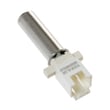
- Rh sensor WE04X35682: humidity sensing problems can cause under-drying or extended cycles.
- Heat pump module & support assembly WE03X36780: heat pump performance issues can reduce drying effectiveness.
Why it matters
With a combo unit, the fastest path to better drying is usually reducing load size and keeping airflow and sensing components clean. That improves dry time, energy use, and helps prevent repeat overheating or “still damp” complaints.
For symptom-based troubleshooting steps, we recommend laundry center clothes still damp. For code-based troubleshooting, use GE error codes.
Last updated: January 2026
Does the GE Profile have a lint trap?
Yes. The GE PFQ97HSPV1DS Profile combo has a lint filter system you need to clean regularly; it acts like the lint trap on a traditional dryer and helps the unit dry efficiently and avoid “clothes still damp” complaints.
Where the lint collects on this combo
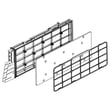
On PFQ97HSPV1DS, lint is captured by internal mesh filters (not a big top-mounted screen like many standalone dryers). Plan on cleaning the filters:
- After heavy-lint loads (towels, fleece, pet bedding)
- When drying performance drops
- About every 50 cycles, or when the display prompts you
How to clean it (quick steps)
- Power the unit off.
- Open the filter frame.
- Remove the first mesh filter, then the second mesh filter.
- Rinse both filters under running water.
- Shake off excess water, let them air-dry fully, then reinstall.
What to check if drying is still slow
If filters are clean and loads are still damp, these items commonly affect drying on a laundry center/combo:
- Lint screen not seated flat or filters installed in the wrong order
- Overloading (airflow cannot move through the load)
- Cycle selection (eco or low-heat cycles take longer)
- Humidity sensing issues (sensor contamination or failure)
- Heat pump airflow restrictions
| Symptom | Most common cause | What we recommend |
|---|---|---|
| Clothes still damp | Filters restricted | Clean and fully dry the mesh filters |
| Long dry times | Load too large | Reduce load size; run a higher dryness setting |
| Stops early | Sensor reading wrong | Clean sensor area; consider sensor diagnosis |
Parts that may be involved
If the unit is prompting for maintenance or drying performance is inconsistent after cleaning, these model-matched parts are often involved in airflow or sensing:
Why it matters
A clean lint filter system keeps airflow moving through the heat pump drying path. That improves dry time, reduces overheating risk, and helps the control accurately sense moisture.
For more troubleshooting steps, use laundry center clothes still damp.
Last updated: January 2026
How to force GE washer to drain and spin?
On the GE PFQ97HSPV1DS laundry center/combo, force a drain and spin by selecting Drain + Spin (or Spin Only if that is what your panel shows) and pressing Start/Pause. If it will not drain, clear the pump filter and confirm the door locks.
Fast steps to run Drain + Spin
- Press Power.
- Select Drain + Spin.
- Choose a spin speed if the option appears.
- Press Start/Pause to start.
- Wait for the door to unlock before opening.
If it still will not drain
A drain-and-spin cycle stops when the washer cannot pump water out, detects a door-lock problem, or senses an unsafe load condition.
- Check the drain hose for kinks, clogs, or a crushed section behind the unit.
- Clean the pump filter area; remove lint, coins, and small items.
- Reduce or redistribute the load; then rerun Drain + Spin.
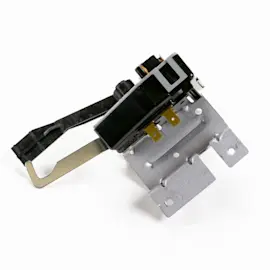
- If the door will not lock or unlock reliably, inspect the GE washer door lock WH01X29528.
- If you suspect a blockage or weak pumping, inspect the drain pump & filter WH11X39237.
Quick symptom guide
| What you notice | What it usually points to | What we check first |
|---|---|---|
| Humming, little or no draining | Filter or hose blockage | Pump filter, drain hose |
| Stops mid-cycle, won’t spin | Door not locked or drain fault | Door lock, filter |
| Spins briefly then stops | Unbalanced load or sensing | Rebalance, smaller load |
Why it matters
Running Drain + Spin removes standing water so you can troubleshoot safely and prevents odors. It also helps confirm whether the problem is drainage, door locking, or load balance.
For code-based troubleshooting on this GE laundry center, use GE error codes.
Last updated: January 2026